
Key takeaways
- Facebook engagement includes reactions, comments, shares, saves, clicks, and video views, and higher engagement signals the algorithm to show your content to more people.
- Short-form video (especially Reels), user-generated content, and community-driven posts consistently drive the strongest engagement on Facebook in 2026.
- Tracking your engagement rate against industry benchmarks helps you understand what’s working and where to adjust your strategy.
What is Facebook engagement?
Facebook engagement is any action someone takes on your Facebook Page or your posts. It covers both active interactions and quieter, passive ones.
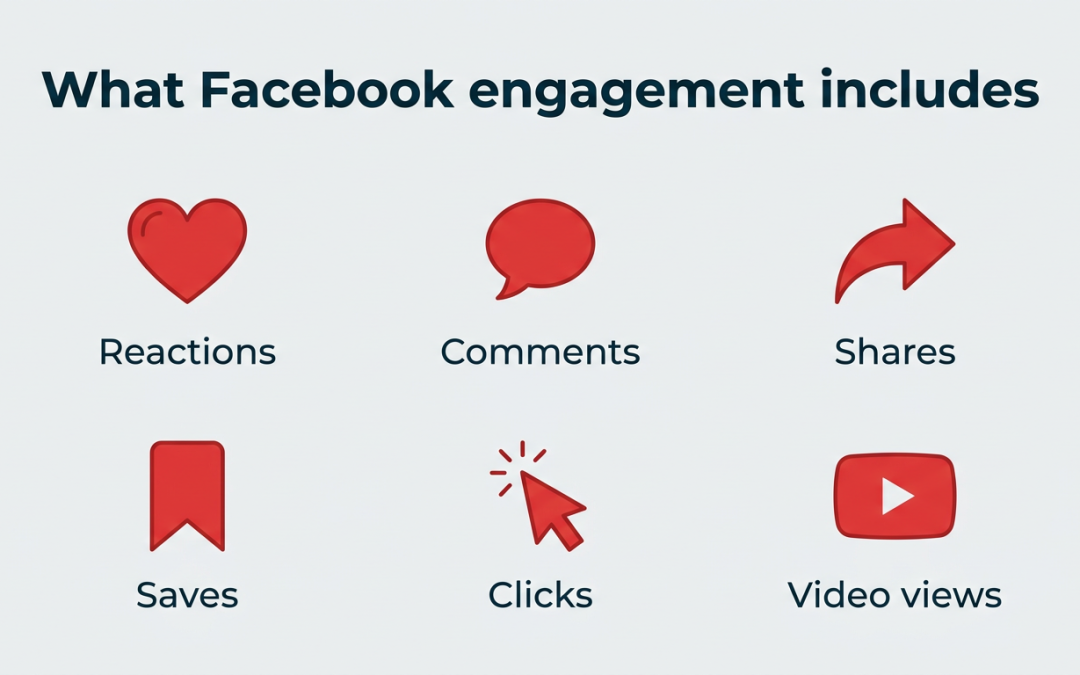
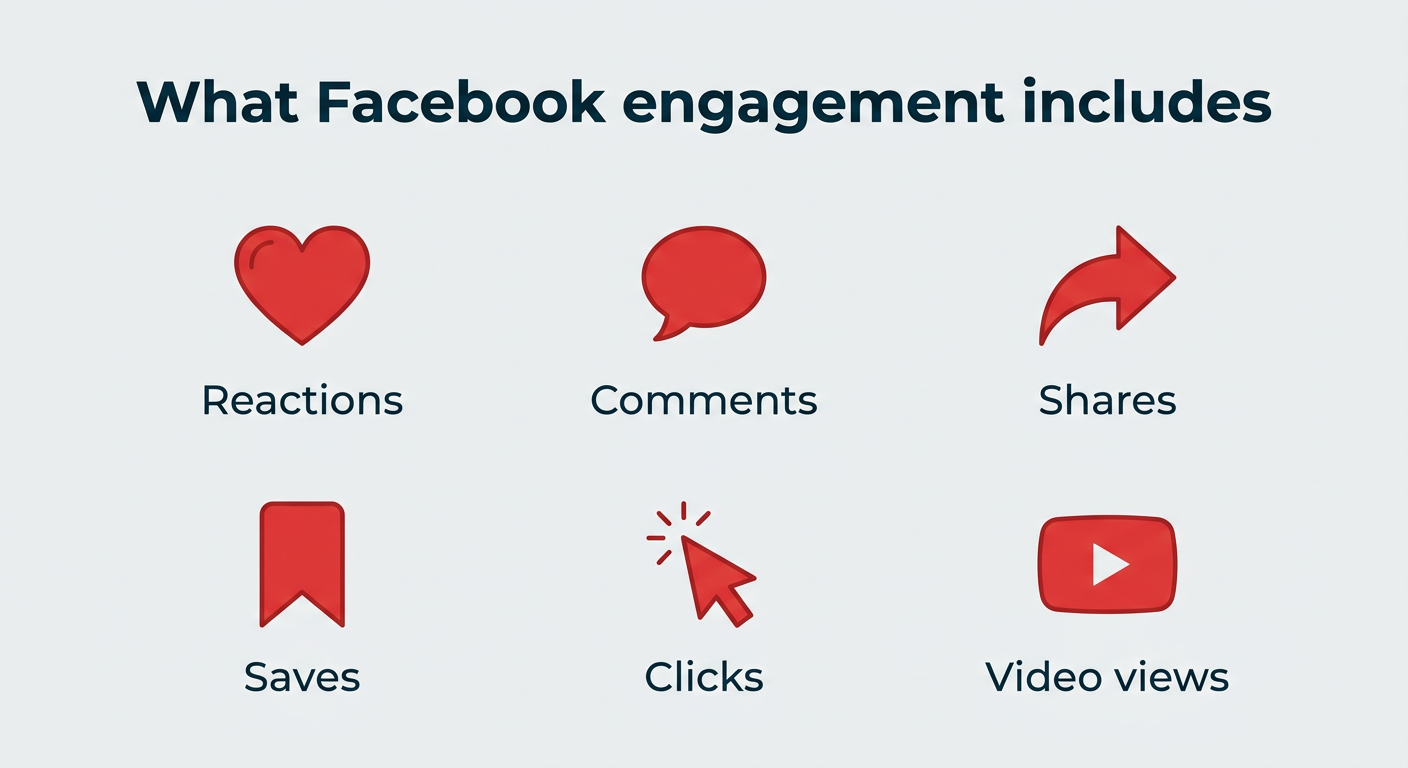
Engagement can include:
- Reactions: Likes, loves, and other emoji responses
- Comments: Replies and conversations on your posts
- Shares: When people repost your content to their own networks
- Saves: When people bookmark a post to revisit later
- Clicks: Link clicks and other taps on your content
- Video views: Watching a video you posted
Why does Facebook engagement matter?
Facebook engagement matters because it helps your posts reach more people. When someone reacts, comments, or shares, the algorithm takes that as a cue to push your content higher in the feed.
Engagement also helps your content travel beyond your existing followers. A single like or share can surface your post to an entirely new group of people. In short, more engagement means more organic reach.
For enterprise teams, engagement is also a reportable business metric, not just a vanity number. 36% of marketers worldwide named Facebook the most important social platform for their work in 2026. It shows that your audience cares about what you’re posting. If your engagement is low, it’s a helpful signal to explore new ideas, formats, or directions.
How can you increase Facebook engagement in 2026?
You can increase Facebook engagement by posting consistently, sharing high-quality content, leading with short-form video like Reels, and encouraging interaction through comments, questions, and community features.
The tips below fit into any Facebook engagement strategy, but especially one focused on interaction. Let’s get into the deets below.
1. Lead with Reels and short-form video
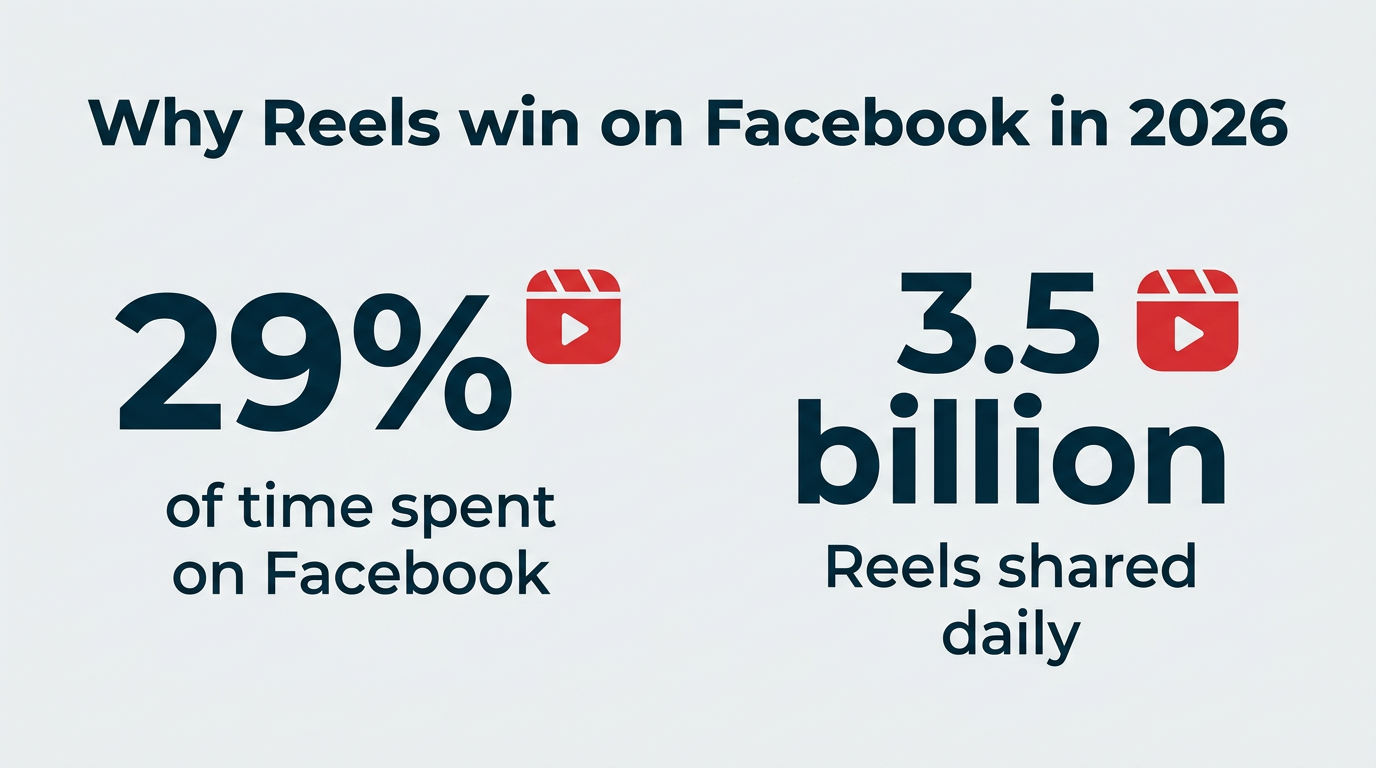
Short-form video isn’t just an Instagram play anymore. Reels now account for 29% of time spent on Facebook, making it the single best format for growing engagement in 2026.
Reels continue to grow across Meta’s platforms. Users share 3.5 billion Reels every day across Facebook and Instagram, a clear sign that people are paying attention to this format.
Most short videos you upload to Facebook now publish as Reels by default. That gives your content more chances to be recommended in the feed and discovered by people who don’t follow your Page yet.
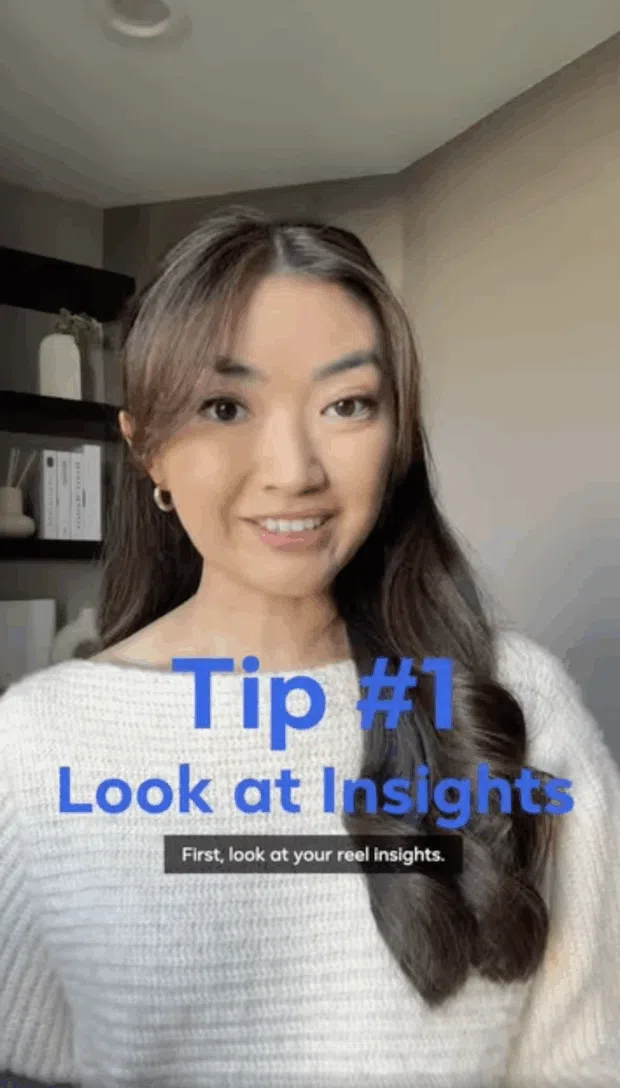
Source: Facebook for Creators
And you don’t need to reinvent anything to get started. Repurposing a strong Instagram Reel or TikTok can work well, as long as it feels native to Facebook.
Video content also sees even higher post engagement than photo posts, and it can be simple and inexpensive to produce with your phone.
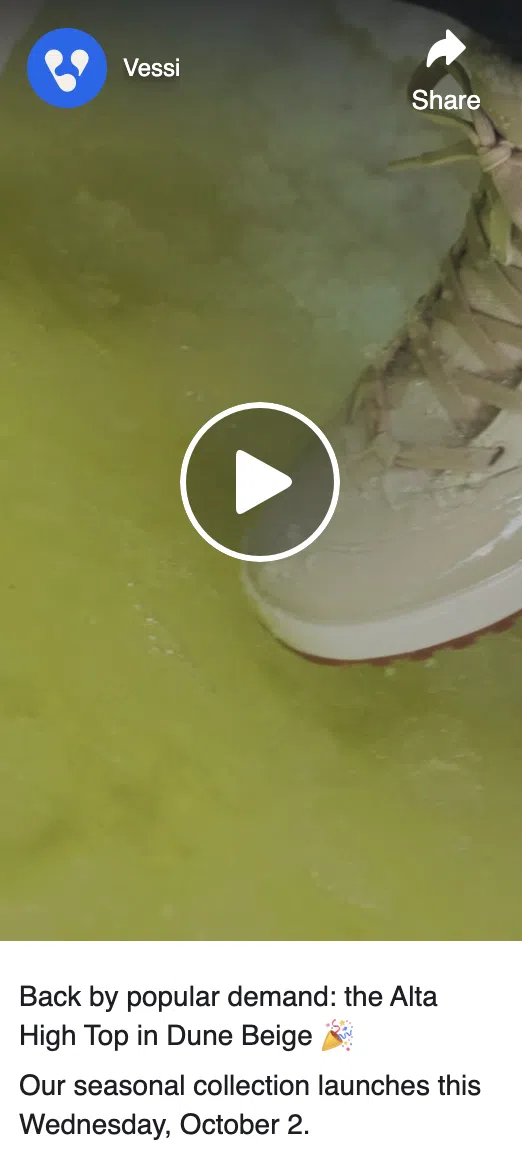
Even a short, atmospheric video like this one from Vessi can catch the eye of a rampant scroller.
Facebook Live videos see the highest engagement of all, so incorporate a real-time broadcast (ideally with dogs involved, like this Helping Hounds Dog Rescue example) into your social strategy every once in a while.

Keep in mind that vertical video gives you the most screen real estate on mobile devices. And because Facebook’s algorithm prioritizes native videos, you’ll get the best results when you upload directly to the site instead of sharing a link.
2. Teach, entertain, inform, or inspire
Your Facebook audience is not looking for a sales pitch, and they’re certainly not going to engage with one.
They want to engage with content that will make them smile, make them think, or improve their lives in some way.
H&R Block, for example, doesn’t just post useful tax-filing tips — it also shares relatable memes that keep its audience entertained.

Source: H&R Block
3. Know your audience inside and out
What you find entertaining or inspiring is not always relevant. When you’re seeking engagement, it’s the wants and needs of your audience that matter.
And it’s tricky to understand what those wants and needs are unless you really understand who your audience is. Knowing Facebook tricks and Facebook Page Insights provides a ton of useful demographic information about your audience. Study it carefully, and look for unexpected details that could help you create a more meaningful connection with fans.
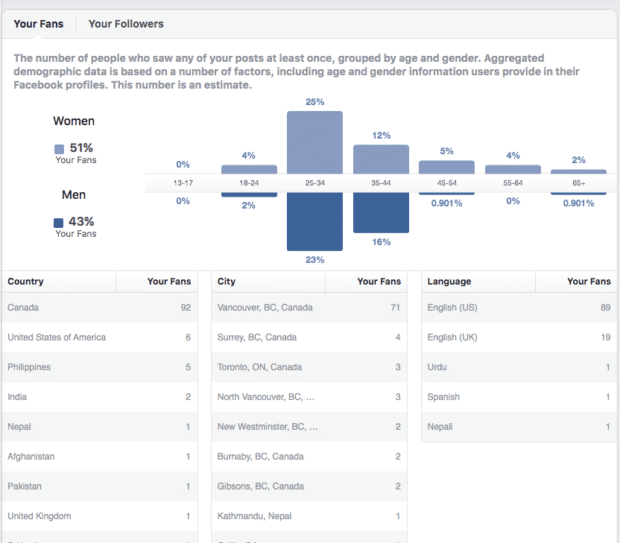
One thing you’ll learn quickly: the vast majority of people use Facebook on mobile, a whopping 98.3% of users. Keep your posts short and sweet to capture attention quickly and entice people to stop scrolling and engage.
Skincare company Glossier lets the photos do the talking. Their winning formula? 1-2 sentences with a bunch of tagged products, like in the example below.

4. Prioritize quality visuals over quantity
With people moving down their feed quickly, there’s no time for sub-par graphics, videos, or text. Facebook posts that include a strong photo see higher-than-average engagement, and simple shots work well.
If you’re running out of original content to post, content curation can be a great way to share quality, informative content that gets your audience excited. Pantone mixes things up by sharing colorful photography from shutterbugs every so often.

Quality doesn’t have to be complicated or expensive. In fact, Facebook recommends keeping things simple with a consistent color scheme and recognizable images.
Facebook also advises users that, “pictures can make your business appear friendlier. You don’t need professional or stock photos for your posts. Original photos and ones you take with your phone can feel more personal and relatable.”
Candle brand Paddywax posts a mix of product shots and lifestyle shots, but everything is well-lit, well-framed, and visually striking.

Source: Paddywax Candles
You don’t need a fancy camera or photography equipment — your mobile phone is all you need to get started. This guide to taking better Instagram photos has tips that are just as applicable to Facebook.
5. Be relatable and human
Whether it’s sharing some behind-the-scenes content, presenting some honest and vulnerable emotions, standing up for your values, or sharing a relatable meme, audiences are hungry for messaging that’s authentic.
For example, the UEFA football organization doesn’t just post about the excitement of the game or hot pics of soccer players: it celebrates the real volunteers working outside of the spotlight to help make their tournaments happen.
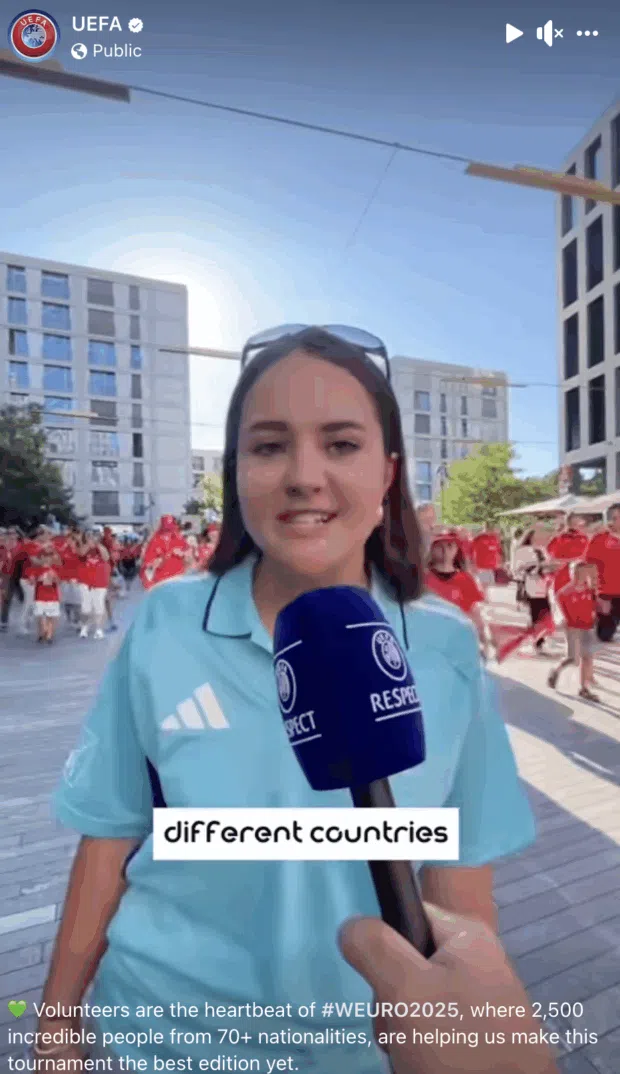
Source: UEFA
Don’t be afraid to get a little intimate or raw with your content — in some cases, being overly polished can actually feel cold.
6. Share user-generated content
User-generated content, or UGC, is any social content — text, videos, images, reviews, etc. — created by people rather than brands.
It’s one of the best ways to show a little love to your audience and encourage other users to create content that you might re-share in the future. Plus, user-generated content posts reliably earn high engagement.
If you’ve already got an active audience tagging you in posts (lucky!), just start re-sharing — with credit, of course.
However, if you’re still building your audience, consider hiring a UGC creator to make content for you, as seen in this ASOS post below.
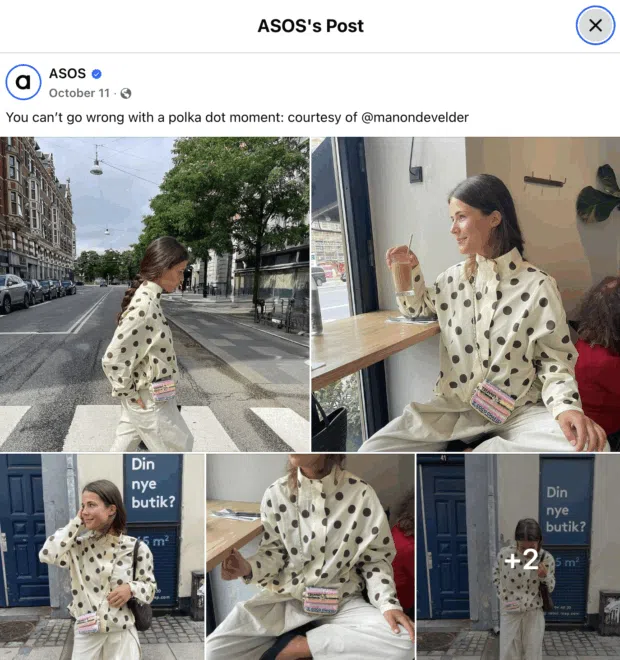
Source: ASOS
7. Ask questions that spark real conversation
Asking a thoughtful question is an easy way to spark a busy comments section, and the algorithm rewards those meaningful interactions. The key is quality: ask something your audience actually wants to answer. A few simple prompts you can try:
- How do you [complete this action]?
- Why do you [like this event or brand]?
- Do you agree with [a notable statement, event, person, etc.]?
- What’s your favorite [fill in the blank]?
Burger King, for example, asked fans to pick their fav deal to start the new year. (Chicken fries and a Junior Whopper? Dare to dream!)

You could also ask fans what type of content they want to see from you. Then, give them what they ask for. This targeted content will inspire even higher engagement.
8. Respond to every comment that matters
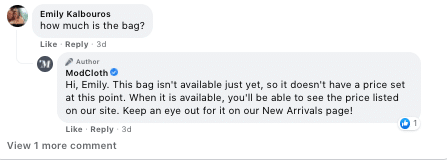
If someone takes the time to comment on your post, try to reply. People want to feel seen, and if they’re engaging with your content, they’re hoping you’ll engage back.
It helps to have someone on your team keeping an eye on comments so nothing slips through. Sometimes a quick “thanks for sharing” is enough. Other times, a question might need a proper customer support follow-up.
In those cases, point them to the right place or loop in the right person. For enterprise teams handling high comment volumes, an inbox tool like Nest by Hootsuite helps route messages to the right people so nothing gets missed. Brands like ModCloth handle this really well.
9. Post consistently and at the right times
Because the Facebook News Feed is algorithm-driven, your audience won’t always see your content right when you post it, even though 37% of Americans visit several times daily.
Timing still matters, though. Facebook itself says that you’re more likely to see engagement if you post when your fans are online.
Tools like Perch by Hootsuite show you the best times to post for each of your accounts, based on when your specific audience is active.
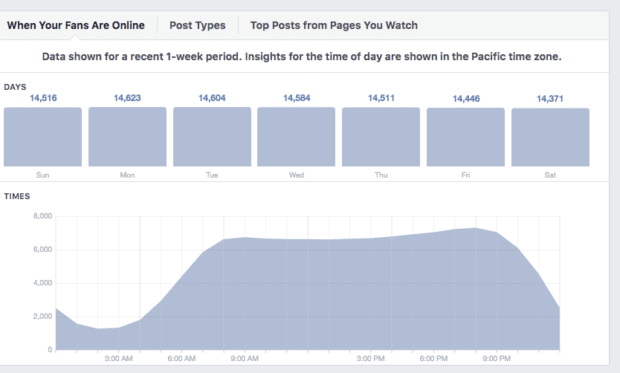
Of course, that doesn’t mean you need to get up in the middle of the night to post. This is a great reason to schedule Facebook posts using a social media management tool.
More than anything, consistency is what matters. Posting regularly helps your audience know when to expect new content. Testing can help you fine-tune your cadence, but most social media experts recommend aiming for at least two to three posts per week.
10. Use Facebook Stories for casual, frequent touchpoints
Facebook Stories sit right at the top of the News Feed, which is prime real estate. And with 500 million people using Stories every day, it’s an easy way to get more eyes on your content.
Stories are also a great place to be more casual. You can post as often as you want without crowding anyone’s feed, and the expectations are lower when it comes to polish. This makes it easier to share moments that feel personal, real, and even spontaneous.
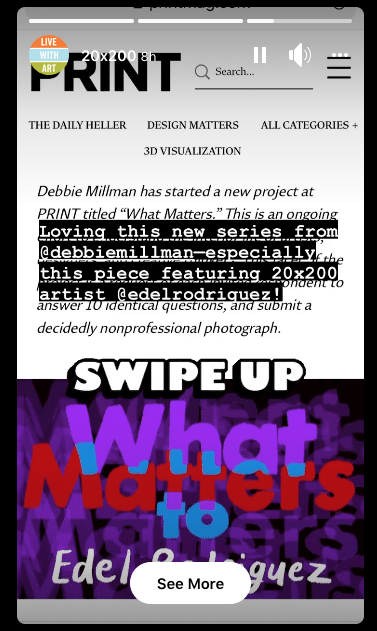
Source: 20×200
That stronger connection builds a desire to see more of your content, making followers more likely to check out and engage with the content posted on your Page.
11. Build community through Facebook Groups
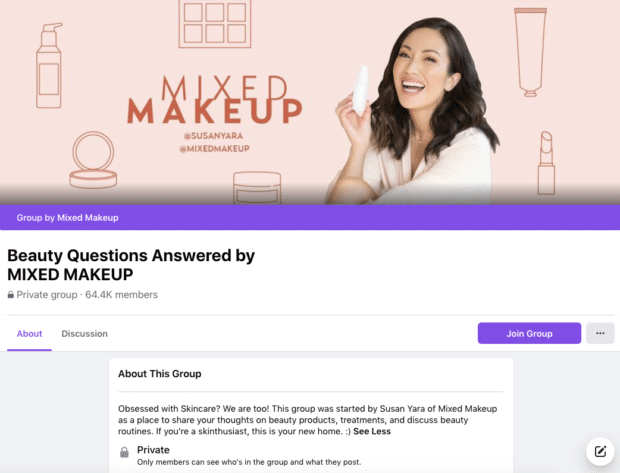
Creating a Facebook group is a great way to get fans involved and engaged, and setting clear group guidelines from the start keeps the conversation productive. Almost 1.8 billion people use Facebook groups. And those meaningful interactions in groups can create brand loyalty and lead to increased engagement on your Facebook Page.
Mixed Makeup has a private group for fans to share skincare tips and ask beauty questions — with over 64,000 members, it’s a great example of community building.
Joining other relevant Facebook groups is also a great way to connect with fellow entrepreneurs and thought leaders in your industry.
12. Tap into employee advocacy and influencer partnerships
When people share your content, that’s a hint to Facebook that this is the good stuff. Encouraging your team, family, or friends to share your posts with their own network doesn’t just get you in front of their followers: it helps boost you in the newsfeed for everyone.
The benefits of employee advocacy include:
- Wider reach: Your posts get seen by your employees’ networks, not just your followers
- Stronger algorithm signals: More shares tell Facebook your content is worth surfacing
- More credibility: People trust content shared by real people over brand pages
Some brands use an employee advocacy tool like Parliament by Hootsuite to accomplish this. Parliament makes it easy to curate pre-approved, on-brand content employees can share across their social networks.
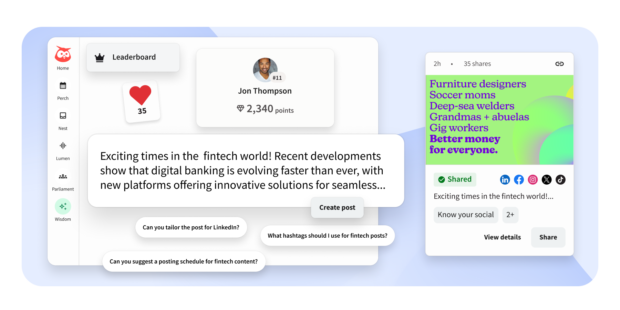
Another option for spreading your reach is to team up with ambassadors, influencers, or partners — though this would likely be a paid endeavor.
13. Boost posts and run targeted ads
Boosting a post is an easy way to reach more people on Facebook. It’s a lightweight form of advertising that helps your content get seen by a wider audience, which can naturally lead to more engagement.
Want more details? Check out our full guide to using the Facebook Boost Post button.
And if you want to take it up a notch, you can always build a full campaign through Facebook ads. Meta’s Ads Manager gives you deeper control over audiences and budgeting, and managing paid alongside organic from one dashboard makes it easier to scale.
14. Join trending conversations
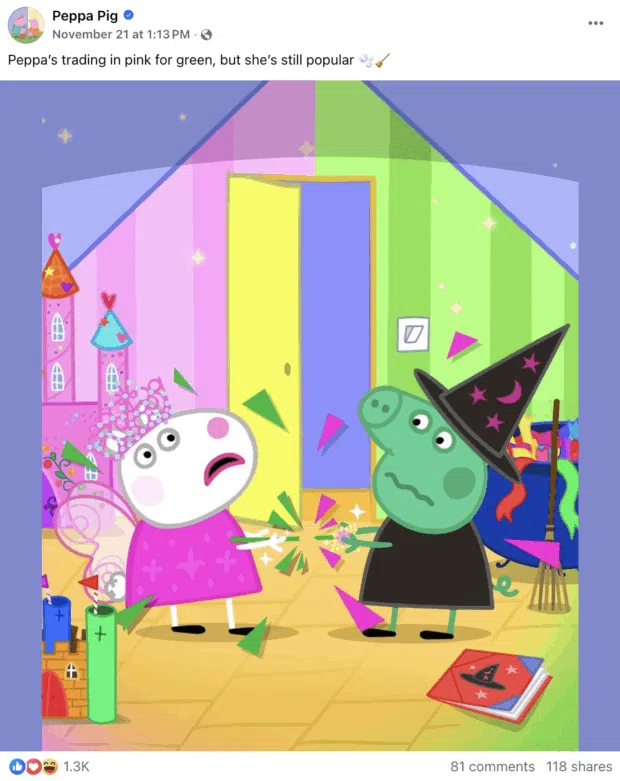
Piggybacking on major events or trending topics is a great way to diversify your Facebook content and show that your brand has some range.
Speaking of pigs: even Peppa was getting in on the Wicked movie craze.
15. Get verified to build trust
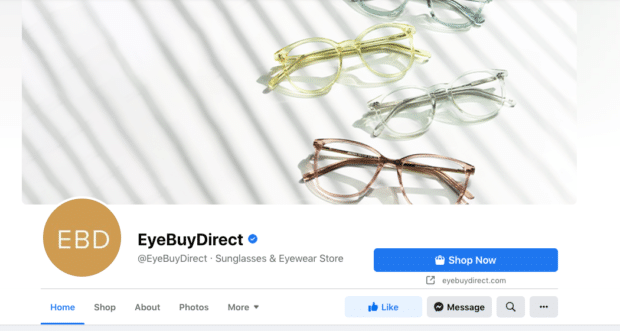
People want to know who they’re talking to online. This applies to brands, too. A verified badge shows visitors that you’re the real deal, and they can feel safe engaging with your posts.
We can trust that anything from this Showtime account, for example, is coming directly from the network.
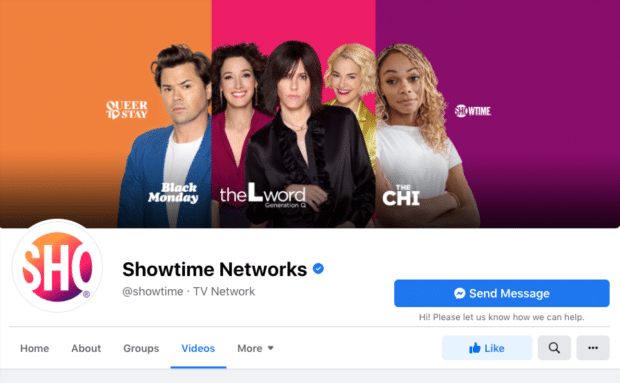
After all, no one wants to be the one to like or share a post from a fake Page misrepresenting a brand.
16. Avoid engagement bait
When you’re trying to boost likes or shares, it can be tempting to ask for them directly. Try to skip that urge. Facebook sees this as engagement bait and will downrank your posts if you use it.
Engagement bait is any prompt that asks people to react, comment, or share solely to boost reach, even if the action doesn’t add real value.
To be clear: it’s totally fine to ask real questions or invite genuine feedback. The issue is when you ask for empty actions that don’t require any thought (think: react or comment baiting).
Ultimately, Facebook wants to surface posts that spark authentic conversation. Focusing on original, relevant content will always serve you better than quick-hit tactics.

Source: Facebook
17. Use social listening to find what resonates
It’s easy to make assumptions about what your audience wants, but listening and testing remove the guesswork. Keeping an eye on what your nemesis is up to also helps make sure you’re not left behind or missing out on something that’s working well.
Use Perch by Hootsuite to monitor brand mentions, trending topics, and conversations your audience cares about. Quick Search in Perch can help you spot what’s getting attention in your industry, so you can turn timely insights into Facebook content that earns more engagement.
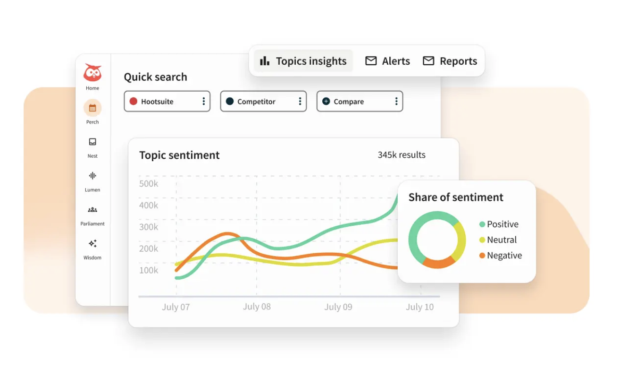
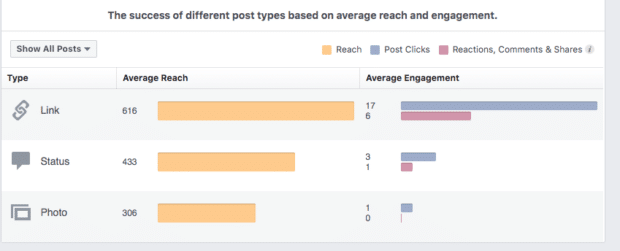
From there, keep testing. The data often says video performs best, but that might not be the case for your brand. Maybe your audience prefers quick photo posts. You won’t know until you try, which is why we created a whole guide on running social media analytics and A/B tests the right way.
Want to go deeper? Use Lumen by Talkwalker to track sentiment, competitors, share of voice, and broader industry conversations across the social web.
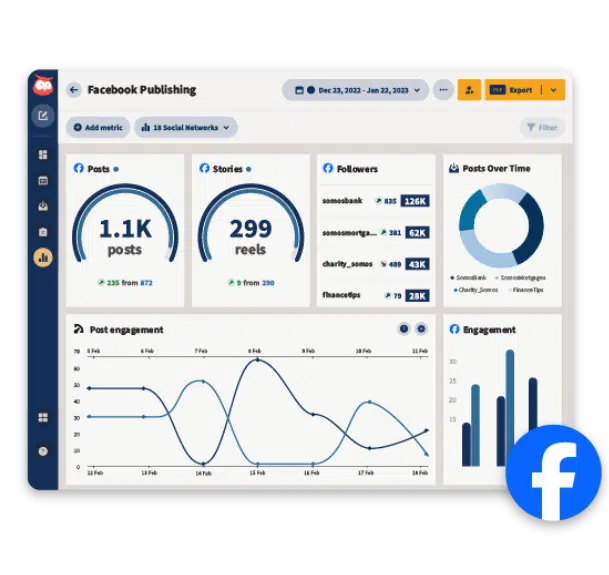
#1 for Facebook marketing
Schedule posts, answer messages, and manage ads from one place. Then, show off your results in beautiful reports. It’s so easy.
18. Repurpose your best-performing content
If a post worked well, don’t just pat yourself on the back and call it a day. Start brainstorming about how you can repackage that winning content and get a bit more out of it. Who knows: a great post can even spark bigger marketing campaigns.
For instance, if a how-to video is a hit, can you spin a blog post out of that? Or turn an Instagram Reel into a Facebook Reel? Cross-platform repurposing helps your best ideas reach more people with less effort.
You can also drive traffic to Facebook from your other channels. Link to your Page from your website and email signature. Many companies (like The Cut) do this at the bottom of their website or on their “About” page.
Of course, you’ll want to spread those posts out, maybe by a few weeks, so it’s not obvious you’re repeating yourself.
How do you calculate your Facebook engagement rate?
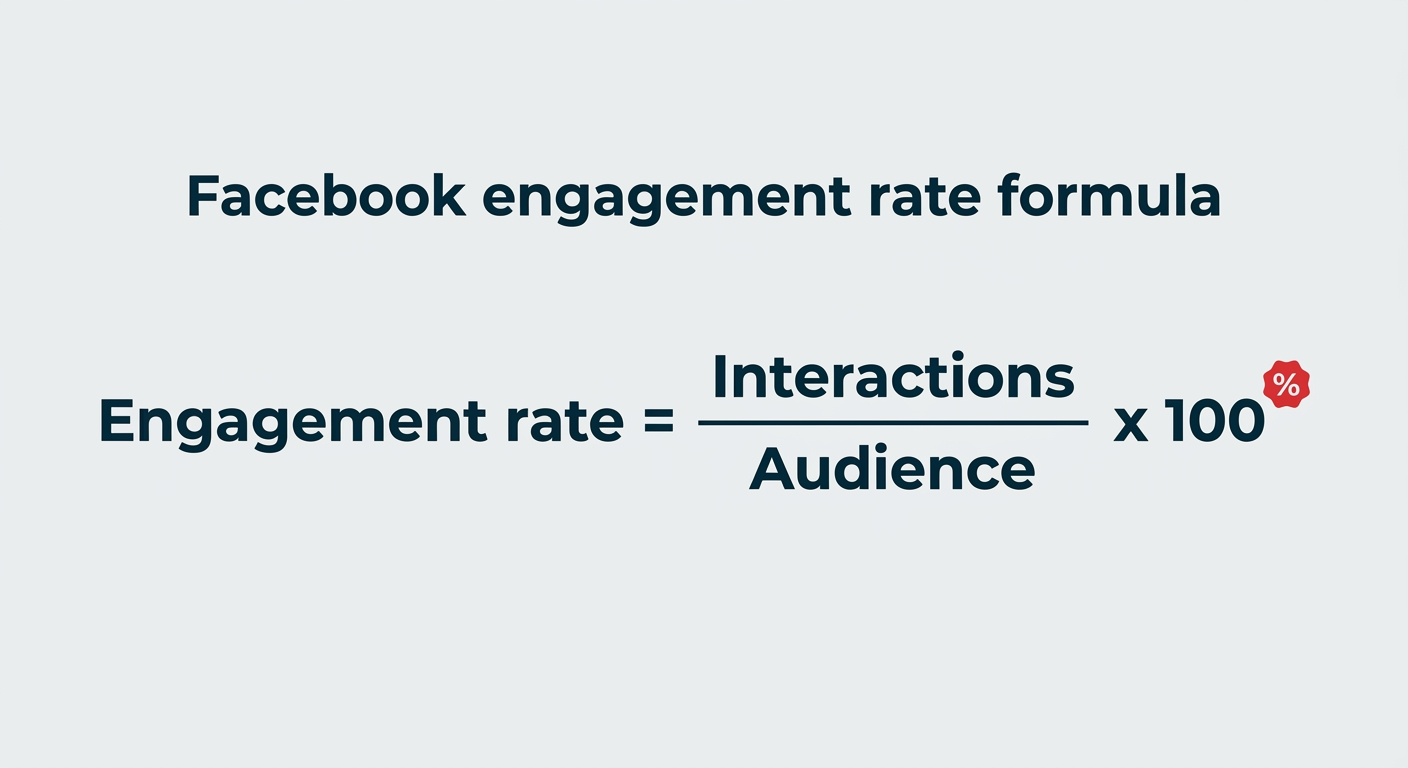
Use the formula below to find out your Facebook engagement rate by post.
Prefer to do the math yourself? A free engagement rate calculator can do the heavy lifting, but the core formula is worth knowing. Your Facebook engagement rate measures the amount of interaction your content earns relative to your followers or reach: the percentage of people who saw your post and engaged with it.
Depending on your social media goals, there are a few ways to get to that number. At its core, the formula is simple: Engagement rate = (Interactions / Audience) x 100
How can you track Facebook engagement with Hootsuite?
Tracking your Facebook engagement doesn’t have to mean juggling spreadsheets and native dashboards. Here’s how to manage the whole process in one place with Hootsuite.
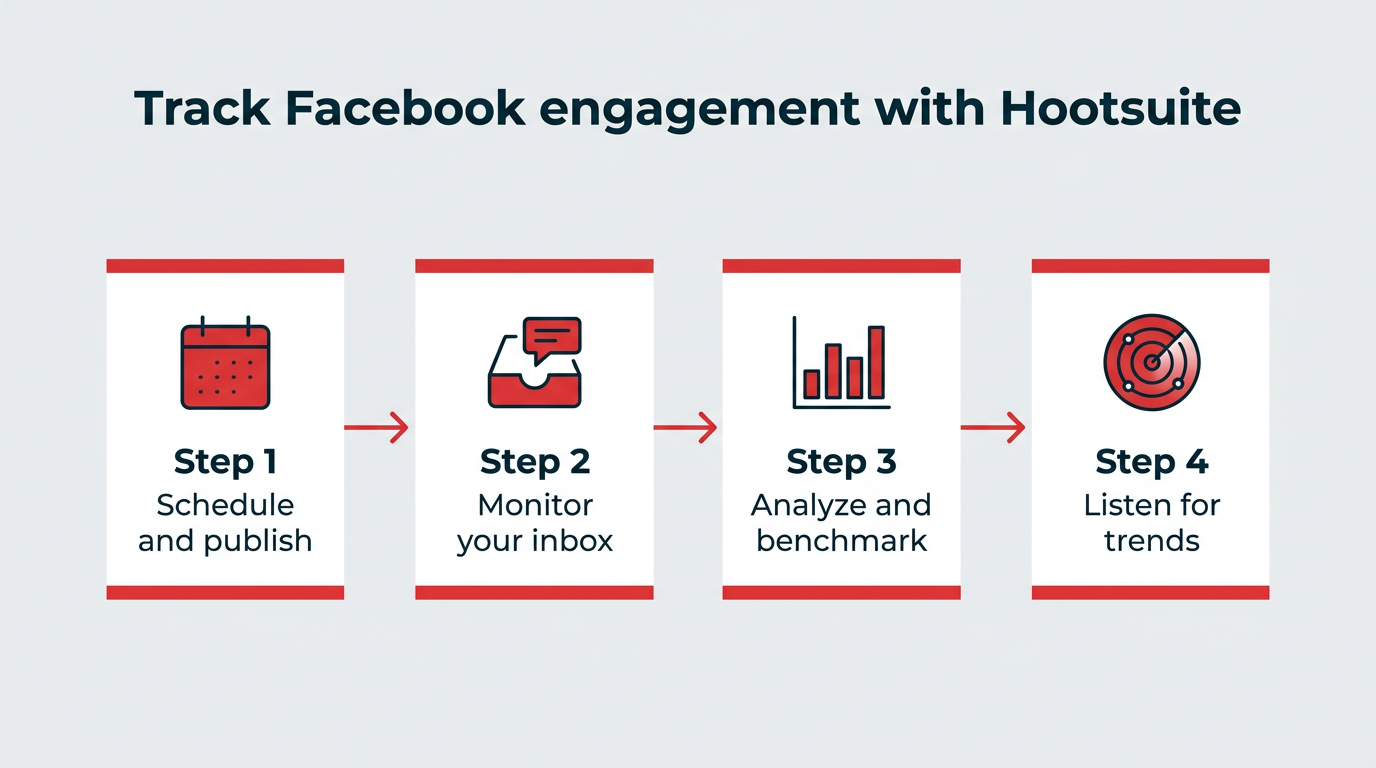
At a glance, the steps are:
- Schedule and publish your Facebook content with Perch
- Monitor comments and messages in one inbox
- Analyze engagement and benchmark against competitors
- Listen for trends and sentiment with Lumen
Here’s the detailed breakdown:
1. Schedule and publish with Perch. Plan your Facebook posts alongside your other channels using a shared content calendar. The Whiteboard feature gives your team a shared space to brainstorm and turn loose ideas into scheduled content.
2. Monitor comments and messages. Keep an eye on all your incoming comments and DMs from one unified inbox, so your team can respond quickly and nothing slips through.
3. Analyze and benchmark. Perch collects your stats from Facebook, Instagram, X, LinkedIn, and TikTok so you can replicate what works. You can also view industry benchmarks and see how you stack up against competitors.
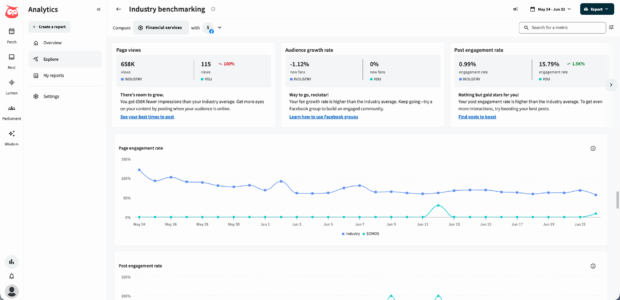
4. Listen for trends. Use Lumen by Talkwalker to track sentiment, share of voice, and broader industry conversations, then feed those insights back into your content.
FAQ: Facebook engagement
How do enterprises generate ongoing social media content ideas at scale?
What content ideas work across Instagram, TikTok, LinkedIn, and Facebook?
What should I post on social media to increase engagement?
What types of content drive the highest social engagement?
What is a good Facebook engagement rate in 2026?
Is Facebook engagement declining?
How do you get paid for Facebook engagement?
How does the Facebook algorithm affect engagement?
Do Facebook contests still work for engagement?
Should I add a call-to-action button to my Facebook Page?
Save time managing your social media marketing strategy with Hootsuite. Publish and schedule posts, find relevant conversions, measure results, and more â all from one dashboard. Try it free today.
The post How to increase Facebook engagement in 2026: 18 tips appeared first on Social Media Marketing & Management Dashboard.