
Key takeaways
- Government agencies use social media to share public updates, respond during crises, and build trust with constituents across platforms like Facebook, Instagram, TikTok, and Threads.
- Compliance, security, and accessibility are non-negotiable for government social media, covering frameworks like FedRAMP, FOIA, Section 508, and First Amendment considerations.
- AI is reshaping how government teams create content, monitor conversations, and respond to constituents, but it requires strong governance guardrails.
- The most effective government social media strategies combine authentic, human content with centralized tools for publishing, listening, and compliance.
What are the benefits of social media in government?
Social media gives governments a direct way to communicate with the public, build trust, and respond in real time. Below are the biggest benefits of using social media in government.
Engage with the public
Social media is always a solid place to keep the general public informed and updated about important issues. With over half of U.S. adults getting news from social media, platforms like TikTok, X, and Facebook let you meet the public where they already are.
For example, the Toronto Police Traffic Unit hosts regular AMA (ask me anything) sessions on TikTok. A representative fields questions from the audience — everything from “Can I drink coffee at a red light?” to “Are after-market steering wheels legal?”
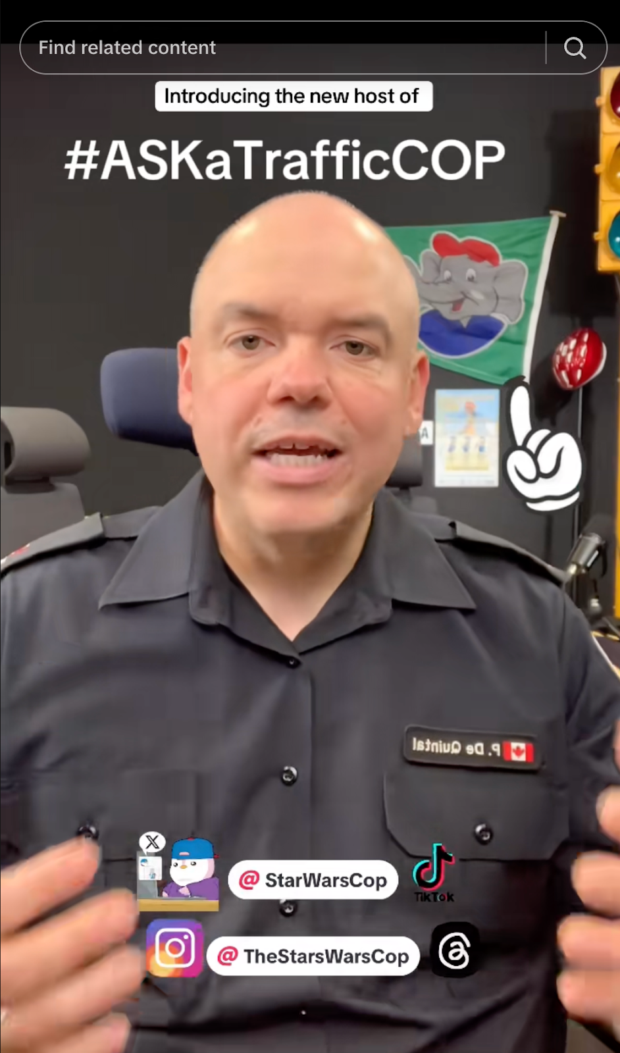
Source: Toronto Police Traffic Unit
When done right, communicating with constituents online helps build trust and credibility. The key is actually engaging (not just broadcasting) and responding to people who follow you. More on this later!
If you’re serious about using social media to mobilize voters, check out Nextdoor, an app that local governments use to organize town halls, educate residents on safety issues, and engage community groups.
Show people who you really are
When used strategically, social media allows government officials to build a personal brand rooted in authenticity and transparency.
That matters, because politicians don’t exactly have the best reputation. Only 17% of Americans say they trust the government to do what is right.
Take Alexandria Ocasio-Cortez (commonly known as AOC), for example. As the U.S. Representative for New York’s 14th Congressional District, she uses X (Twitter) to speak directly to constituents by showing up as herself. No overly polished press releases or political jargon.
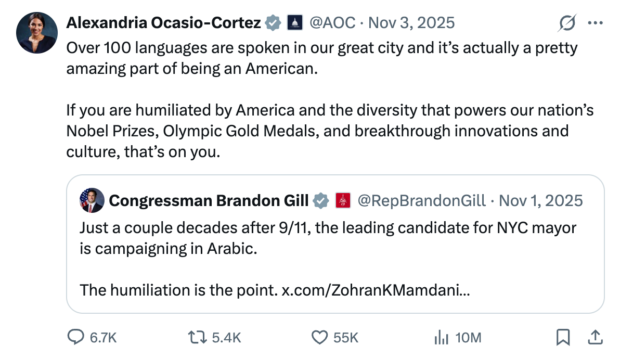
Source: AOC
As a result, AOC has grown her following from under 500K in 2018 to more than 12 million in 2026. And on Bluesky, she became the first person to reach 1 million followers.
Generally speaking, social media also helps humanize politicians, making them more accessible to the general public. Of course, this can backfire if a politician posts social media content deemed socially unacceptable.
Which is why anyone hitting “publish” on social media posts from an official government account needs clear guidelines. A solid social media policy keeps everyone aligned (more on that in the best practices section below).
Crisis communication
During crises, the public often turns to social media first to seek out information, manage fear, and follow breaking updates. At the same time, governments are expected to provide leadership and act as a reliable source of truth.
However, social media can quickly become a breeding ground for misinformation. As a historical reference point, during the COVID-19 pandemic roughly 47% of surveyed US adults said they had encountered news about the crisis that seemed completely made up. The challenge has only grown as AI-generated content makes false narratives faster to produce and harder to spot.
To counter this, governments need to invest in social listening through tools like Lumen. Monitoring conversations with a tool like Lumen helps identify false narratives early and respond with clear, accurate updates from official channels.
Quick disclaimer here: not every incorrect comment needs a response. Some claims are too inaccurate or too fringe to justify engagement. But if you see many social media users spreading the same misinformation, use official channels to set the record straight.
Need more intel? Read this guide on how to manage a social media crisis in 9 steps and set your organization up for success.
Launch and grow campaigns
Social media is a powerful tool for launching political campaigns and building public support.
For politicians, social platforms essentially function like a virtual town hall. They provide a direct way to introduce initiatives and ideas.
Social media is also an effective testing ground for campaign messaging. The stakes are low, feedback is immediate, and engagement metrics make it easy to see what resonates.
On top of that, politicians can use social media to publicly align themselves with key issues and movements.
For example, Elizabeth Warren used social media to communicate her position on the U.S. Roe v. Wade decision, reinforcing her stance directly with her audience. More recently, Zohran Mamdani’s 2025 New York City mayoral run showed how a coordinated, platform-native content strategy can turn online attention into real-world momentum (more on that campaign further down).
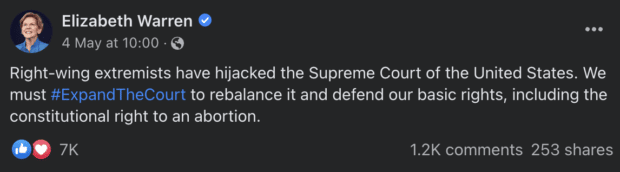
Used strategically, social media helps campaigns grow faster, adapt messaging in real time, and meet voters where they already are.
Cost-effective with measurable impact
Social media offers political campaigns a low-cost, highly measurable way to build awareness, grow influence, and engage voters.
Before social media, governments and politicians depended on traditional outreach like TV ads, newspaper placements, and door-to-door flyers, all high-cost channels with limited visibility into actual impact.
Digital channels changed that math. In the 2024 U.S. election cycle, political advertisers spent more than $1.3 billion on digital advertising across Google and Meta alone, a reflection of how much outreach has shifted online. Just as important, performance is fully measurable, making it easier to track spending, evaluate results, and understand which campaigns deliver the strongest return.
Want to go deeper? Check out our guide on how to track, prove, and improve your social media ROI for valuable tips and insights on measuring campaign performance.
Who manages social media in government?
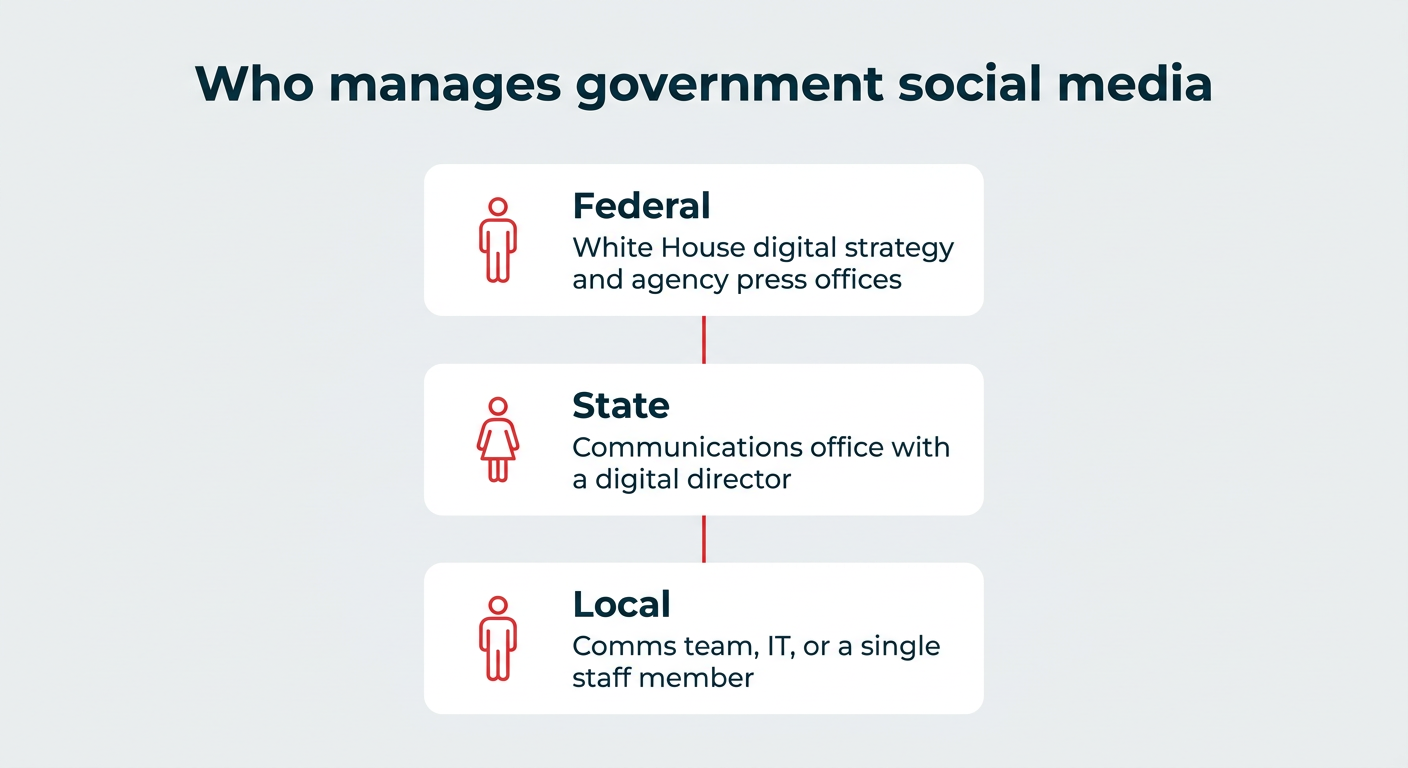
Social media in government is usually managed by public affairs or communications teams, though the exact structure depends on the level of government and the size of the agency. Behind most official accounts is a small group of dedicated staff working within strict approval and compliance rules, not a single person posting freely.
Here’s how responsibility typically breaks down across levels of government:
- Federal: At the highest level, the White House Office of Digital Strategy manages presidential and administration social channels. Individual agencies (such as the CDC or FDA) run their own accounts through their public affairs or communications offices.
- State: State agencies usually assign social media to a communications or press office, often with a dedicated digital director coordinating across departments like health, transportation, and emergency management.
- Local: Municipal and county governments vary the most. Social media may sit with a communications team, the IT department, a public information officer, or in smaller towns, a single staff member juggling multiple roles.
Across all levels, one trend is clear: government is investing in dedicated social media roles and teams rather than treating the channel as an afterthought. That shift reflects how central social has become to public communication and crisis response.
Which social media platforms do government agencies use in 2026?
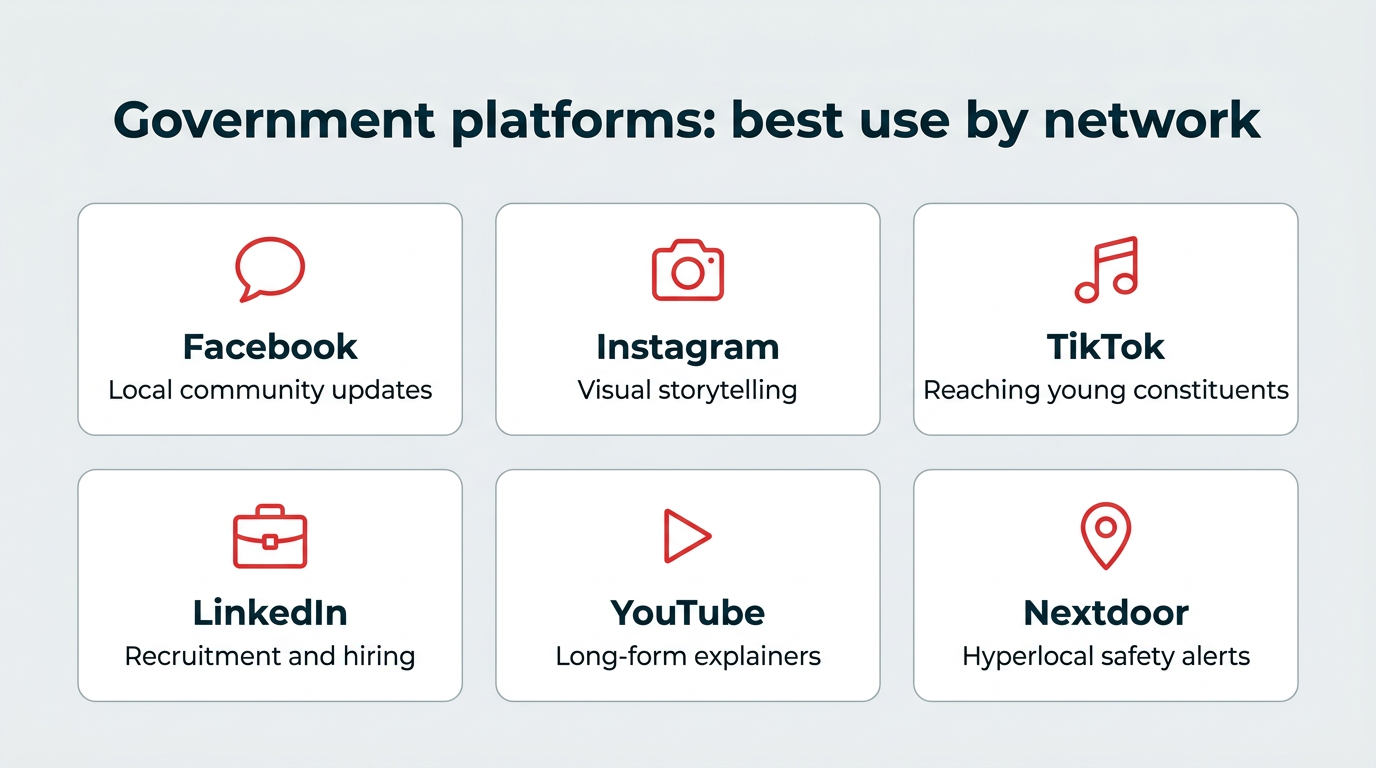
Government agencies use a mix of platforms in 2026, and the right choice depends on your audience and goals. Facebook still dominates for local government updates, while newer networks like Threads and Bluesky are drawing agencies looking for text-based conversation as X’s landscape shifts.
Here’s a quick guide to the major platforms and where each fits in a government context:
|
Platform |
Best government use case |
Primary audience |
Key consideration |
|---|---|---|---|
|
|
Local updates, community notices, events |
Broad, older-skewing |
Still the workhorse for municipal government |
|
X (Twitter) |
Real-time alerts, breaking updates |
News-focused, shrinking |
Reach and moderation have shifted significantly |
|
|
Visual storytelling, programs, campaigns |
Millennials, Gen Z |
Reels drive the most reach |
|
TikTok |
Reaching young constituents, awareness |
Gen Z |
Confirm your agency’s policy on official TikTok use |
|
|
Recruitment, workforce, thought leadership |
Professionals, job seekers |
Strong for hiring and agency credibility |
|
Threads |
Text conversation, community engagement |
Instagram crossover |
Growing fast as an X alternative |
|
Bluesky |
Text updates, transparent engagement |
Early adopters, journalists |
Emerging but active civic community |
|
YouTube |
Long-form video, hearings, explainers |
All ages |
Best for archived, searchable content |
|
Nextdoor |
Hyperlocal alerts, safety, town halls |
Local residents |
Purpose-built for local government |
A note on TikTok: because government use of the platform has faced regulatory scrutiny, always confirm your agency’s official policy before posting. The safest approach is to maintain a presence on multiple platforms so you’re never dependent on any single channel, and staying current on emerging social trends helps you adjust before your audience moves.
What are the challenges of social media in government?
Government agencies can face real challenges on social media, including messaging mishaps, loss of control over content, and public scrutiny. Understanding these risks helps governments decide when, how, and if social media is the right tool to use.
Here’s what to watch out for:
Messaging is tricky to get right
Even well-intentioned government messaging can backfire if it’s not carefully tested and reviewed.
In 2014, South Dakota launched a campaign to warn people against jerking the steering wheel when swerving on black ice. The hashtag chosen — “Don’t Jerk and Drive” — was intended to be attention-grabbing, but its double meaning quickly overshadowed the message.
Ultimately, the campaign was pulled, and Trevor Jones, secretary of the Department of Public Safety, said in a statement, “This is an important safety message, and I don’t want this innuendo to distract from our goal to save lives on the road.”
The takeaway is simple: messaging should always be tested for tone, interpretation, and unintended meanings before going live. Otherwise, you’ll have a public affairs issue on your hands.
Public scrutiny is inevitable
On social media, audiences fact-check in real time, so proactive reputation monitoring and authenticity matter.
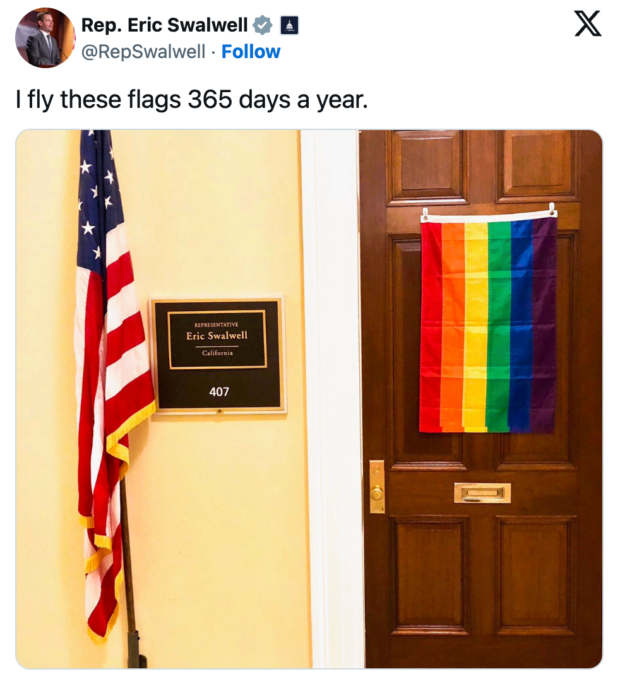
A clear example comes from Congressman Eric Swalwell, who once tweeted a photo of a Pride flag with the caption, “I fly these flags 365 days a year.” Members of the public quickly noticed the flag still had visible creases from being unpacked moments earlier, calling the claim into question.
Public platforms are unforgiving, so if you’re going to say something publicly, be prepared to back it up.
Viral moments are uncontrollable
On social media, public figures should expect their words, images, and moments to be turned into memes.
Content shared online is easily remixed, repurposed, and spread far beyond its original context. Once that happens, control over how it’s used is basically gone.
(In case you missed it, below is the infamous Bernie Sanders meme that spread like wildfire across social media following the January 2021 presidential inauguration.)
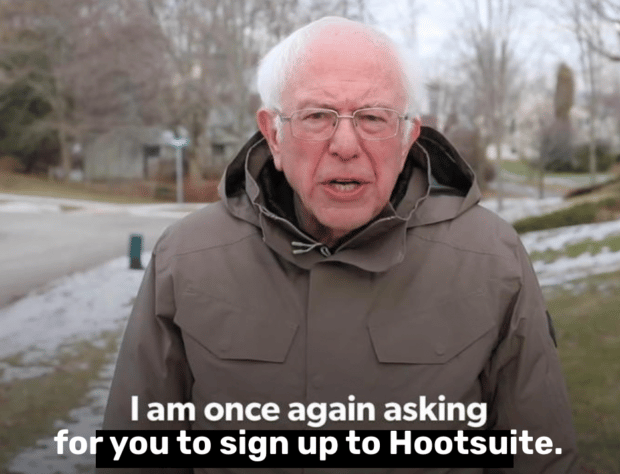
Most political memes are lighthearted. But proceed with caution: assume anything you post can be turned into a meme, whether you intended it or not.
Sometimes social media is not the right channel
Not every political situation benefits from public social media attention. While social media is excellent at amplifying messages, that same amplification can create pressure, misinformation, or derail government business.
For example, in February 2022, WNBA star and American citizen Brittney Griner was detained in Russia on a drug-smuggling allegation with little to no fanfare on social media.
This lack of public attention was a conscious choice. At the time, geopolitical tensions were already high due to Russia’s invasion of Ukraine, and there was concern that public pressure could turn Griner into a bargaining chip — particularly given her visibility as a Black, openly lesbian athlete.
There were no major public callouts from President Joe Biden or other senior U.S. officials during the early stages of her detention. In this case, restraint was part of the strategy.
Can government social media accounts block users?
Government social media accounts used for official business generally cannot block users, because courts have ruled that doing so can violate First Amendment protections. When a public official uses an account to conduct government business, that account can function as a public forum, and deleting critical comments or blocking constituents may cross a constitutional line.
The legal picture became clearer in 2024, when the U.S. Supreme Court ruled in Lindke v. Freed. The Court set a test for when a public official’s social media activity counts as “state action”: the official must have both the authority to speak for the government and be exercising that authority in the posts at issue. In practice, that means the line between a personal account and an official one matters a great deal.
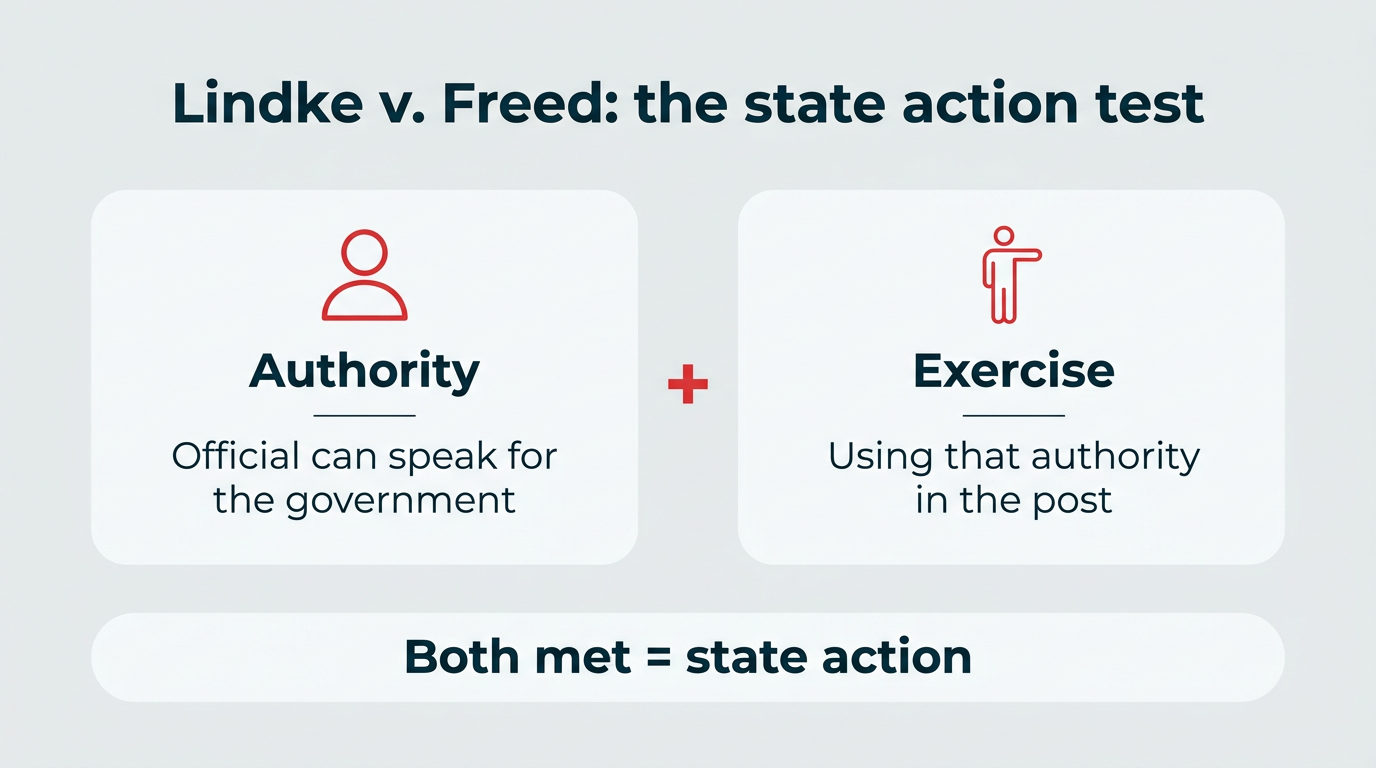
For government social media managers, the practical takeaways are straightforward:
- Keep personal and official accounts separate. Mixing government business into a personal profile can blur the line and expose you to legal risk.
- Resist the urge to block critics or delete comments on official accounts. Removing dissent can create First Amendment issues.
- Apply moderation policies consistently. Hiding spam, threats, or clearly off-topic content is different from silencing viewpoints you disagree with. Document your policy and enforce it evenly.
This is general guidance, not legal advice. When in doubt, consult your agency’s legal counsel before removing content or blocking users.
8 best practices for government social media in 2026
Following government social media best practices requires a clear strategy, the right tools, and strong guardrails. Here are our top eight practices for getting started:
- Learn where your constituents spend time online
- Share relevant, valuable content
- Keep residents engaged
- Build a clear social media policy
- Make content accessible
- Stay secure
- Remain compliant
- Measure and report on performance
1. Learn where your constituents spend time online
Understanding where your target audience hangs out online can help you avoid wasting valuable time, effort, and resources in irrelevant spaces.
A clear example is Zohran Mamdani, mayor of New York City. From his campaign announcement in 2024 right through the final week of the race, Mamdani’s team leaned into short, emotionally charged videos on TikTok — a platform where 43% of adults under 30 regularly get news.
And it worked: exit polls showed Mamdani winning 78% of voters aged 18 to 29, TikTok’s core audience, proving that the right platform can make all the difference.
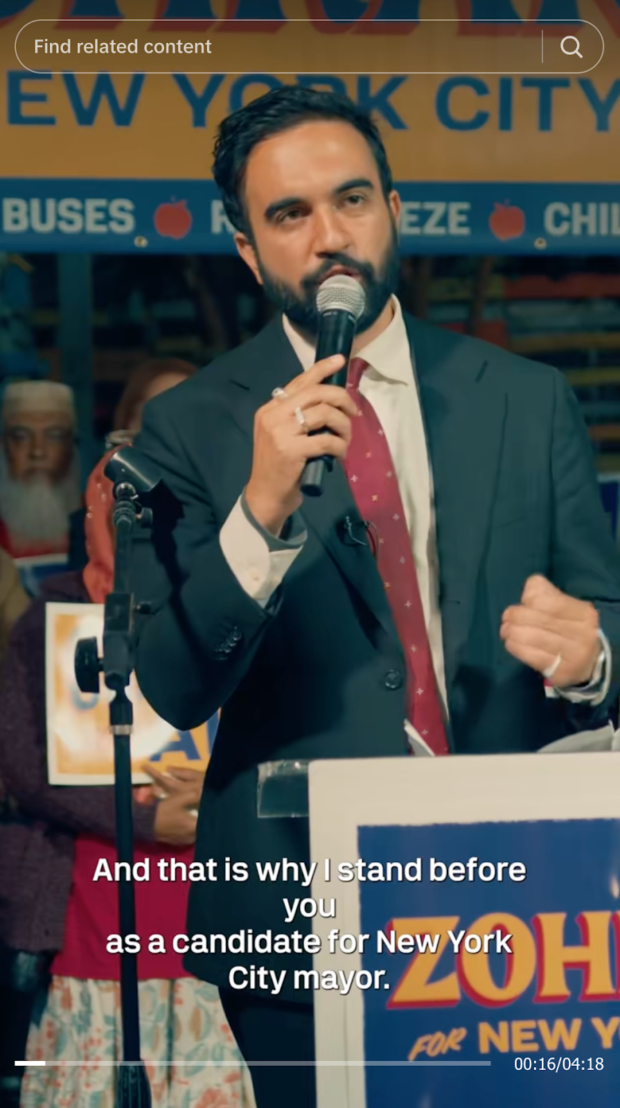
Source: Zohran Mamdani
If you need help understanding how to uncover your target audience on social media sites, check out this guide on how to find your target social media audience to get started.
2. Share relevant, valuable content
Build audience trust and engagement by sharing relevant and interesting content. Do this consistently, and audiences will naturally turn to you as a legitimate source of information.
The BC Parks Instagram account does this well. The organization uses Instagram to share information, tips, and insights into what’s happening across the province’s extensive roster of parks.

Source: yourbcparks
3. Keep residents engaged
Social media is all about creating community, so government officials, lawmakers, and official government accounts need to engage with their audiences. This kind of two-way citizen engagement is what turns a broadcast channel into a relationship.
This means replying to messages, joining conversations, and answering questions. You never know whether your response will change a voter’s mindset.
If you’re struggling to keep up with all the messages you receive, onboard a tool like Nest, the customer care app inside Hootsuite Social OS, to streamline your comms into one tidy workspace.
With Nest, you can manage all of your social media messages in a single unified inbox.
This includes:
- Private messages and DMs
- Public messages and posts on your profiles
- Dark and organic comments
- Mentions
- Emoji reactions
… and more.
The all-in-one agent workspace makes it easy to:
- Track response times and CSAT metrics
- Track the history of any individual’s interactions with your social accounts across platforms, giving your team the context needed to personalize replies
- Add notes to individual constituents’ profiles (Nest integrates with Salesforce and Microsoft Dynamics)
- Handle messages as a team, with intuitive message queues, task assignments, statuses, and filters
Plus, Nest comes with handy automations:
- Automated message routing
- Auto-responses and saved replies
- Automatically triggered satisfaction surveys
- AI-powered chatbot features
4. Build a clear social media policy
A clear social media policy is what keeps a government team aligned when multiple people are posting on behalf of an agency. It removes guesswork, protects against costly mistakes, and gives staff confidence about what they can and can’t say.
At a minimum, a government social media policy should cover:
- Who can post: Named roles and individuals with publishing access.
- Approval workflows: Who reviews and signs off before content goes live.
- Tone and voice: Guidelines for how the agency sounds across channels.
- Crisis protocols: Steps for responding during emergencies and misinformation events.
- Personal vs. official boundaries: Clear separation between staff personal accounts and government business.
- Records retention: How posts, comments, and messages are archived to meet public records laws.
Not sure where to start? Our guide to creating a social media policy for employees walks through the essentials you can adapt for a government context.
5. Make content accessible
Accessibility is a legal requirement for government content, not a nice-to-have. Under Section 508 of the Rehabilitation Act, federal agencies must make digital content usable by people with disabilities, and Web Content Accessibility Guidelines (WCAG) set the standard most agencies follow.
For social media, that means building accessibility into every post. Use this checklist as a starting point:
- Alt text: Describe every image so screen readers can convey it.
- Captions and transcripts: Add captions to all video and audio content.
- Plain language: Write clearly so content is easy for everyone to understand.
- Camel case hashtags: Capitalize the first letter of each word (#GovtSocialMedia) so screen readers parse them correctly.
- Emoji use: Limit emojis and place them at the end of a sentence, since screen readers read each one aloud.
Accessible content reaches more people and demonstrates that your agency serves every constituent, not just some of them. Hootsuite publishes its own accessibility commitments and VPATs as part of that same standard.
6. Stay secure
Social media security is essential for maintaining public trust in government communications.
A compromised account can quickly undermine credibility and confidence. On top of that, U.S. federal agencies are required to use cloud services that meet strict security standards, known as FedRAMP.
One of the simplest ways to reduce risk is by managing social accounts through a centralized platform.
For example, Hootsuite Social OS is FedRAMP-authorized and comes with two-factor authentication for an additional layer of security. Vigil, the governance layer within Hootsuite Social OS, adds another safeguard by giving teams control over permissions, approvals, and activity logging across every account.
Plus, when you centralize your social media management with Hootsuite Social OS, you have complete control to review and approve messages, log all activity and interactions, and set up post review and approvals.
If you need more details, read through our step-by-step guide to social media security for more tips on how to protect your organization online.
7. Remain compliant
Compliance is non-negotiable for government social media, and it needs to scale across teams. Government accounts operate under a web of overlapping compliance requirements, and falling short can carry real legal consequences.
Key frameworks government social media teams need to account for include:
- Freedom of Information Act (FOIA): Social media posts and messages can be public records subject to disclosure requests.
- Section 508: Digital content must meet accessibility standards.
- State public records laws: Many states have their own retention and disclosure requirements that go beyond federal rules.
- GDPR: Agencies interacting with residents of the EU must handle personal data accordingly.
Social media archiving is what keeps you covered across most of these frameworks. If you manage social for a government or agency using Hootsuite, our partners’ social media archiving integrations make it easy to stay compliant with the Freedom of Information Act (FOIA), General Data Protection Regulation (GDPR), and other public records laws.
Public expectations around government communication have changed. Today’s audiences expect content that’s timely, engaging, and human, without crossing legal or ethical lines. The most effective government teams are adapting by creating compelling social content while remaining fully compliant and secure.
8. Measure and report on performance
Government teams need to prove their work matters, both to leadership and to the public they serve. Consistent measurement turns social media activity into a story you can tell with data.
Focus on the metrics that reflect real public value:
- Reach and impressions: How many constituents your content is actually getting in front of.
- Engagement rate: Whether people are responding, sharing, and participating.
- Response time: How quickly your team answers constituent questions.
- Sentiment: How the public feels about your programs, policies, and messaging.
Hootsuite Social OS analytics pull these numbers into shareable reports, so you can show leadership exactly how social supports agency goals. For a deeper look at what to track, see our guide to the social media metrics that matter most.
#1 Social Media Tool for Government
Engage citizens with the only tool that makes it easy to communicate, deliver services, and manage crises.
How is AI changing government social media?
AI is changing government social media by helping teams create content, monitor conversations, and respond to constituents faster than ever, but it comes with a critical caveat: government use demands strong governance and human oversight. In a public-sector context, a wrong AI-generated answer isn’t just an inconvenience; it can erode public trust or spread misinformation from an official source.
Here’s where AI is making the biggest difference for government social teams in 2026:
- Content creation and scheduling: AI helps draft posts, suggest optimal posting times, and repurpose long-form content into platform-native formats.
- Social listening at scale: AI-powered listening tools like Lumen surface relevant conversations across millions of posts, so teams can spot emerging issues early.
- Constituent response drafting: AI can suggest replies to common questions, which staff review before sending.
- Misinformation detection: AI flags coordinated false narratives faster than manual monitoring, buying teams time to respond.
The key word for government is governance. Agencies need AI governance guardrails that keep humans in the loop and make AI outputs traceable and cited, not black-box automation. Within Hootsuite Social OS, Wisdom orchestrates AI-powered insights while Vigil enforces the governance layer, so teams get contextual intelligence they can act on with confidence.
The bottom line: AI should augment human judgment in government communication, never replace it. The agencies getting this right treat AI as a force multiplier for their teams while keeping accountability firmly with people.
Government social media benchmarks and stats for 2026
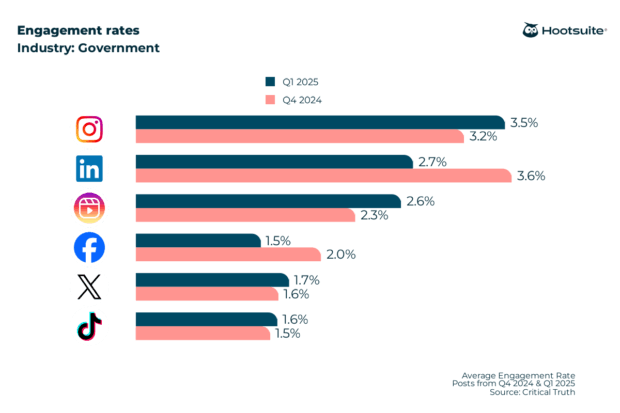
Benchmarks give government teams a realistic baseline for what “good” looks like on each platform. Here’s a snapshot of how government accounts are performing, based on the most recent Hootsuite benchmark data available (Q4 2025).
|
Platform |
Avg. weekly posts |
Engagement rate |
Follower growth |
|---|---|---|---|
|
|
16.1 |
1.5% |
1.38% |
|
|
— |
3.5% |
2.17% |
|
Instagram Reels |
— |
2.6% |
— |
|
|
— |
2.7% |
0.39% |
|
X (Twitter) |
— |
1.7% |
0% |
|
TikTok |
2.4 |
1.6% |
0.7% |
How often should government agencies post on social media?
Our research found that government institutions post on Facebook more often than on other social platforms, an average of 16.1 times a week. TikTok sits on the opposite side of the scale, with only an average of 2.4 weekly uploads.
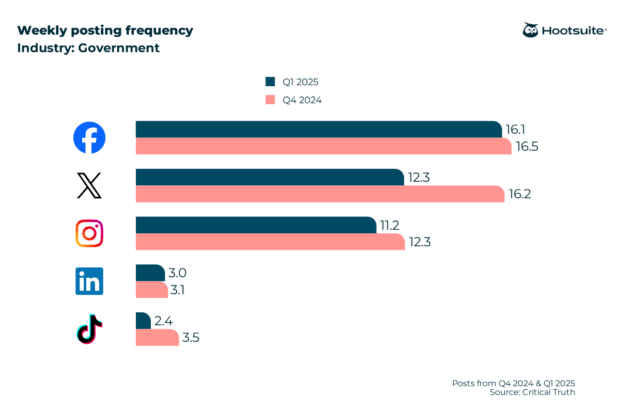
That said, every government agency and official’s ideal posting schedule is unique, and you should test different posting frequencies to find out what works best for your audience.
Average engagement rates in government
Here are the industry averages across all major social networks based on the latest benchmark data:
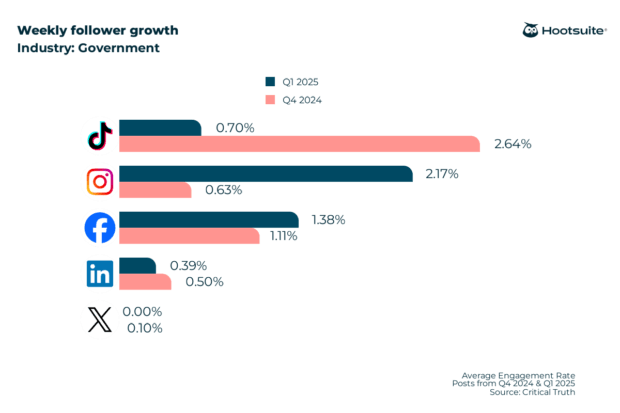
Follower growth rate in the government sector
If your social media strategy revolves around growing your audience, make sure you’re setting realistic goals. Here is how other government profiles are performing:
For more government-specific research, including the best times to post, the most engaging content formats, and network-specific breakdowns of the stats above, check out our dedicated post on government social media benchmarks.
Examples of government social media campaigns
Sometimes the best way to understand good government social media is to see it in action. Here are standout campaigns worth learning from.
CDC
During the COVID-19 pandemic, the U.S. Centers for Disease Control and Prevention was understandably a little busy. But that didn’t stop the government agency from pulling off effective COVID-related campaigns and messaging on social media to help keep the general public informed. It remains a strong case study in crisis communication at scale.
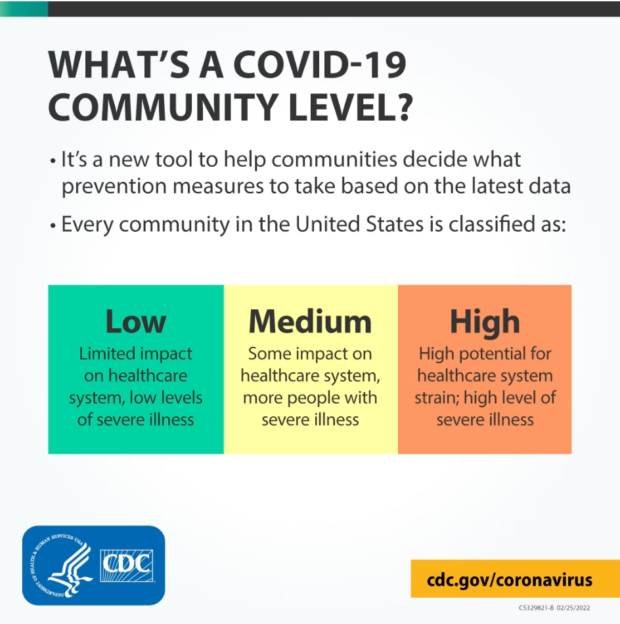
Source: CDC
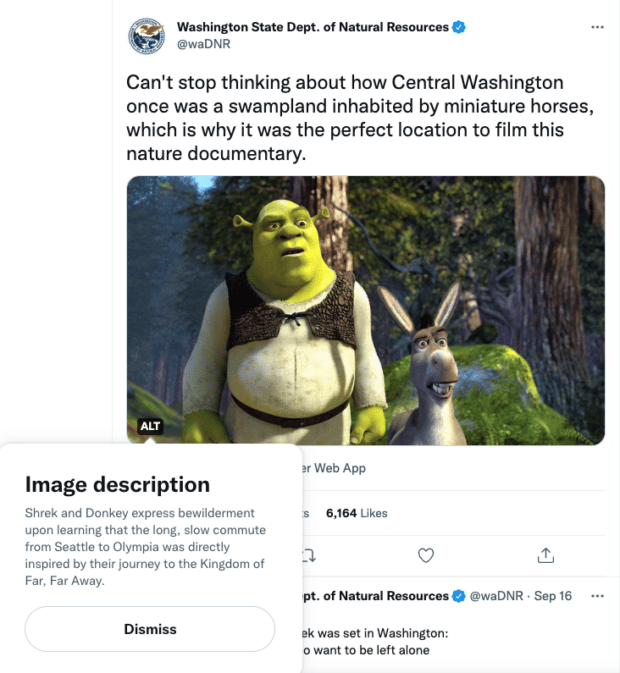
Washington State Dept. of Natural Resources
Government social media doesn’t have to be dry or boring — just ask whoever’s running social accounts for the Washington State Department of Natural Resources.
Their account offers timely, relevant information packaged in meme-friendly posts that often go viral.
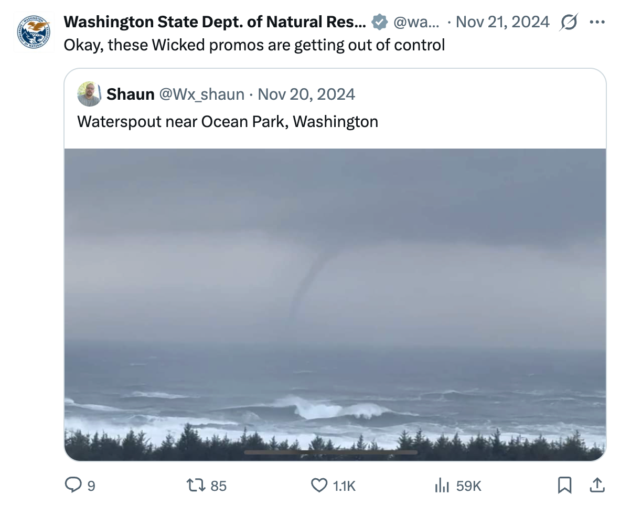
Source: The Washington State Department of Natural Resources
Their alt text game is pretty strong too, a great example of accessibility done well:
Source: The Washington State Department of Natural Resources
Zohran Mamdani’s TikTok-first campaign
Zohran Mamdani’s 2025 New York City mayoral campaign is one of the clearest recent examples of platform-native strategy paying off. Rather than spreading thin across every channel, his team went all-in on TikTok, the platform where their target audience of young voters already spent their time.
The content matched the platform: short, emotionally resonant videos that felt native rather than like polished political ads. That authenticity translated into results, with exit polls showing Mamdani capturing 78% of voters aged 18 to 29. The lesson for government and campaign teams alike is that meeting your audience where they are, in the format they expect, beats a scattershot approach every time.

Ready.gov emergency preparedness
FEMA’s Ready.gov campaign is a strong model for how federal agencies can drive action through consistent, useful social content. During events like National Preparedness Month, the campaign shares clear, practical guidance on building emergency kits, making family plans, and staying safe during disasters.
What makes it work is repetition with purpose: the same core safety messages, delivered in fresh formats across platforms, timed to moments when the public is most receptive. It’s a reminder that government social media doesn’t need to go viral to succeed. Reliable, actionable information that people can act on builds long-term public trust.
FAQ: Social media in government
How do government agencies use social media effectively?
What are social media best practices for government and public sector organizations?
What are the risks of social media use in government?
How does social media improve public engagement for government agencies?
What are examples of successful government social media campaigns?
Who manages social media for government agencies?
Can government social media accounts block followers?
Is the U.S. government banning social media for users under 16?
What compliance requirements apply to government social media?
How are government agencies using AI for social media in 2026?
Save time managing your social media marketing strategy with Hootsuite. Publish and schedule posts, find relevant conversions, measure results, and more â all from one dashboard. Try it free today.
The post Government social media in 2026: Best practices & strategy appeared first on Social Media Marketing & Management Dashboard.