
Key takeaways
- TikTok’s largest user base is aged 25 to 34, making it a strong channel for reaching both Millennials and Gen Z with real purchase intent.
- A complete TikTok marketing strategy combines organic content, creator partnerships, TikTok ads, and TikTok SEO to drive discovery and conversions.
- Consistency matters more than virality. Posting 3-5 times per week and tracking performance helps brands build sustainable growth.
- Hootsuite Social OS lets teams plan, publish, monitor, and measure TikTok alongside every other social channel.
What is TikTok marketing?
TikTok marketing is the practice of using TikTok to promote a brand, product, or service. With an advertising reach of over 1.59 billion users, the platform has grown well beyond entertainment. Today, features like TikTok Shop and TikTok Search make it a powerful engine for product discovery and social commerce.
TikTok marketing includes different tactics, such as:
- Influencer marketing: Working with TikTok creators to promote your brand.
- Organic content: Creating TikTok videos that follow platform trends, use popular audio, and feel native to the For You Page.
- User-generated content: Encouraging followers to create and share content featuring your products or brand.
- Paid content: Promoting posts or running ads through TikTok’s ad platform to reach specific audiences or scale content.
Using these tactics, TikTok marketing can help businesses:
- Increase brand awareness
- Build engaged communities
- Sell products and services
- Get feedback from customers and audiences
- Provide customer service
- Boost social commerce with shopping ads
Bonus: Get a free TikTok Growth Checklist from famous TikTok creator Tiffy Chen that shows you how to gain 1.6 million followers with only 3 studio lights and iMovie.
What is TikTok influencer marketing?
TikTok influencer marketing involves businesses partnering with creators to promote their brand.
Typically, brands and influencers agree on a partnership where payment or perks are exchanged for TikTok content. For example, a kitchen brand might pay a foodie influencer to post a TikTok promoting their blender.
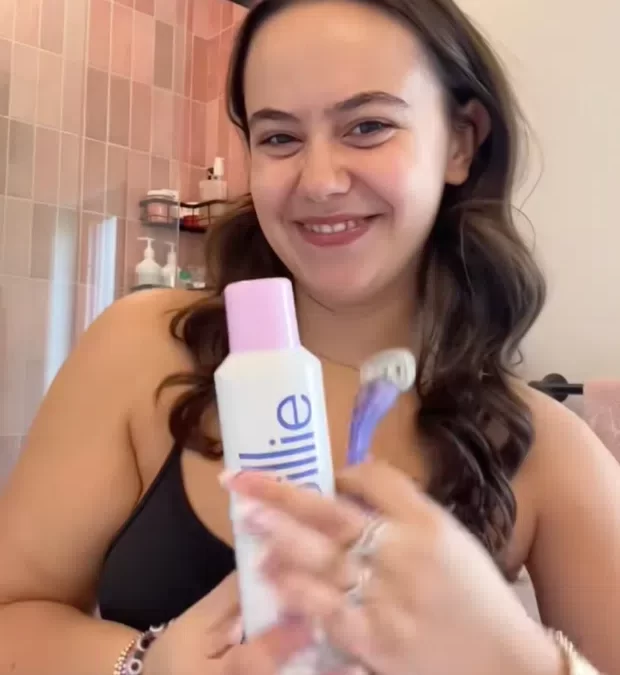
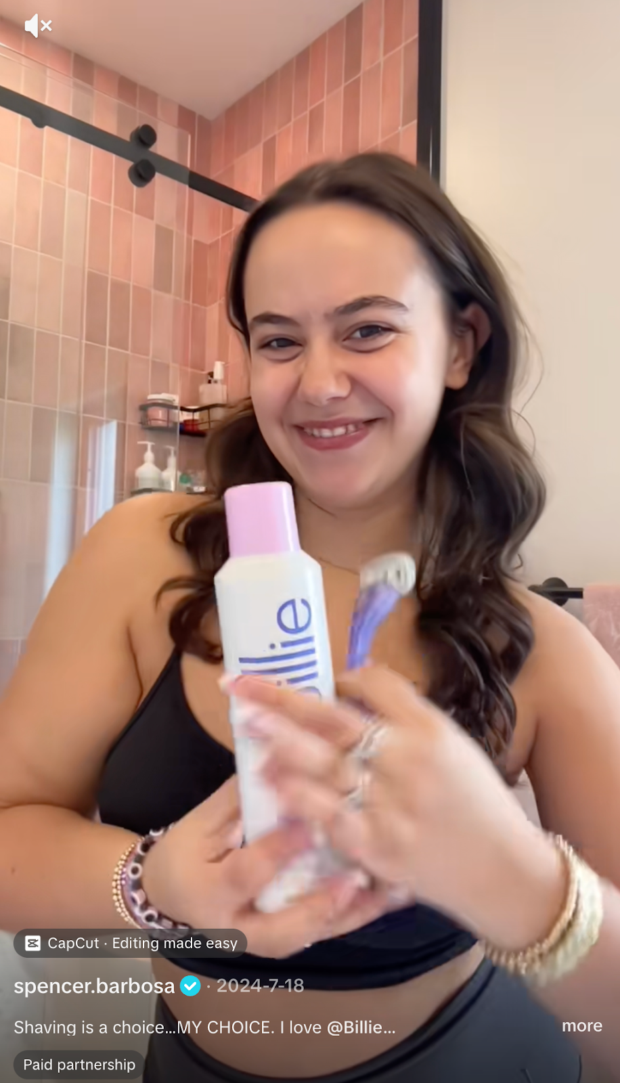
Sometimes influencer marketing can be subtle, blending seamlessly into a creator’s video through casual product placement, like in the example below:
Source: @spencer.barbosa
Influencer marketing is everywhere on TikTok, from Bretman Rock promoting hair products to Emily Mariko selling her own tote bags. But don’t let its popularity fool you: finding the right creator for your brand takes a solid influencer strategy and understanding of your audience.
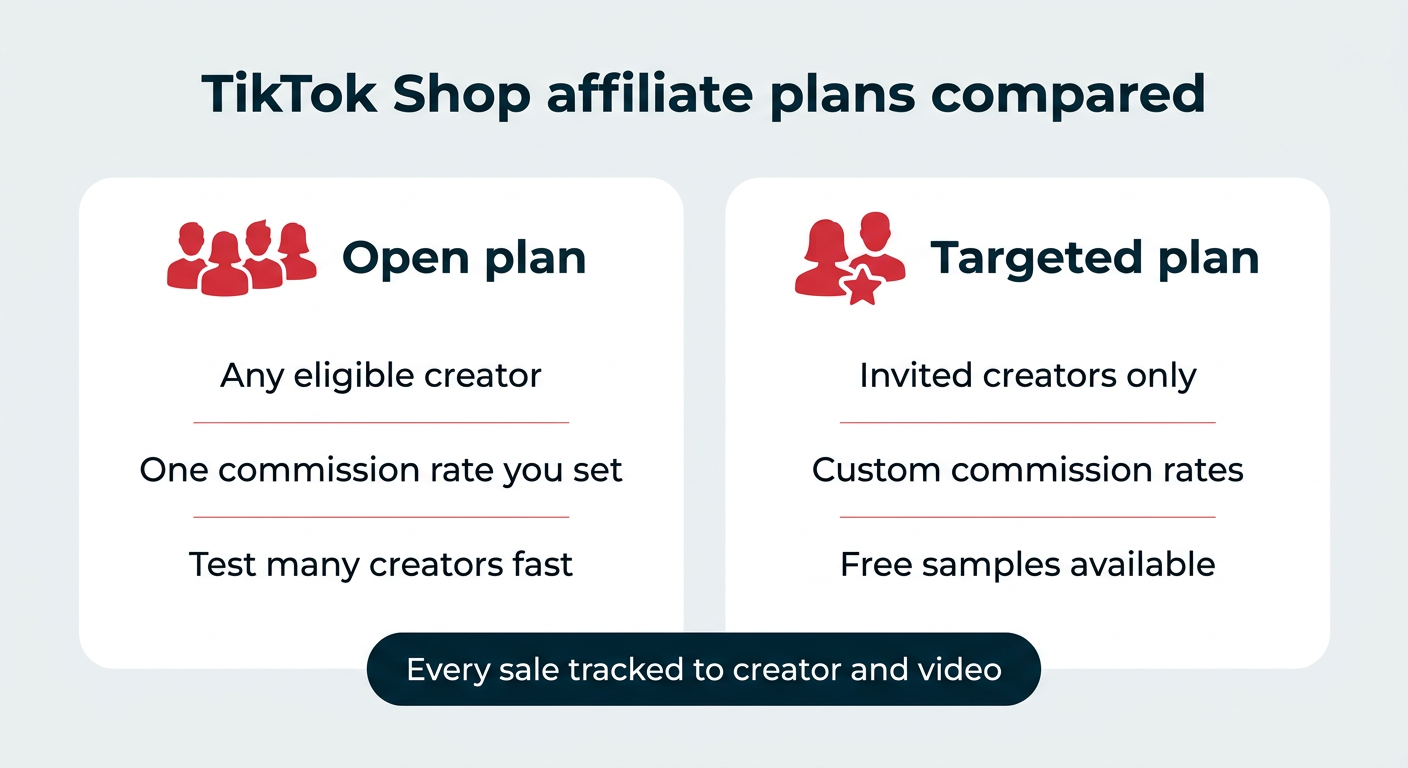
There’s also a performance-based route. TikTok affiliate marketing runs through TikTok Shop, where brands list products in the affiliate marketplace and creators earn a commission on every sale they drive. Because each sale is attributed to a specific creator and video, results are fully trackable, which makes it easier to tie creator spend to revenue rather than reach alone.
Brands can set commission rates themselves and run two types of collaborations at the same time: open plans, where any eligible creator can promote a product, and targeted plans, where you invite specific creators and offer custom rates or free samples. It’s an official, platform-approved option that goes beyond simply tagging sponsored content, and it works well for testing dozens of creators before committing budget to a few.
Why use TikTok for marketing in 2026?
TikTok marketing can help brands reach engaged audiences, with U.S. users spending an average of 44 hours per month on the app. It can also drive product discovery and convert viewers into customers, often at a lower cost than other channels. If you’re trying to justify the investment to stakeholders, here are the main reasons TikTok belongs in your 2026 marketing mix.
- Massive reach and engagement: With an advertising reach of over 1.59 billion users, TikTok offers some of the highest engagement rates of any major social platform.
- A real search engine: Many users, especially Gen Z (with 65% using TikTok to search), now use TikTok’s search bar to find products, tutorials, and reviews, which makes TikTok SEO a genuine discovery channel.
- Paid search inside the app: TikTok Search Ads let brands bid on keywords and appear directly in search results, so discovery is now both an organic and a paid play.
- A thriving creator economy: TikTok’s deep bench of creators makes it easy to find authentic voices that match your brand and audience, a shift reflected in broader social media trends for 2026.
- Built-in social commerce: TikTok Shop lets users discover and buy products without leaving the app, shortening the path from interest to purchase, with sales projected to surpass $20 billion in 2026.
- Cost-effective reach: Organic content and creator partnerships can deliver strong results without the heavy media spend other platforms often require.
Here’s how TikTok compares to other major short-form video platforms for marketers:
|
Platform |
Primary audience age |
Ad formats available |
Search advertising |
Commerce features |
|---|---|---|---|---|
|
TikTok |
25-34 (strong Gen Z base) |
In-Feed, TopView, Spark Ads, Branded Hashtag, Shopping Ads, Search Ads |
Yes, keyword bidding in TikTok search results |
TikTok Shop, in-app checkout |
|
Instagram Reels |
25-34 |
In-Feed Reels ads, Stories ads, Explore ads |
Limited, search results placement within Meta Ads |
Instagram Shopping, product tags |
|
YouTube Shorts |
25-44 |
In-feed video ads, Shorts ads |
Yes, via Google Ads keyword targeting |
YouTube Shopping, product links |
Is TikTok still worth it in 2026?
TikTok remains widely available to marketers in 2026, and it continues to operate as a major advertising and commerce channel, on track to generate over $17 billion in US ad revenue this year. Its regulatory status has been subject to review in some markets, including the U.S., where ownership and data governance requirements have been the focus of ongoing policy discussion.
For marketers, the practical implication is simple: plan for continuity, but build for flexibility. Keep your creative portable so the same vertical video can run on TikTok, Reels, and Shorts without a reshoot, and avoid making TikTok the only channel that drives a critical business outcome like lead capture or sales.
That’s easier when your channels are managed in one place. Hootsuite Social OS lets teams plan and publish across TikTok and every other network from a single system, so shifting distribution weight between platforms is a scheduling decision rather than a rebuild.
How to set up a TikTok business account
To get started with TikTok marketing, you need a TikTok business account. It unlocks features personal accounts don’t offer, including TikTok Analytics, the business creative hub, the commercial music library, calls to action, and DM auto-replies.
If you already have a personal TikTok account, it’s easy (and free) to switch it to a business account. Here’s how:
Step 1: Go to your profile and tap the menu button, which is the three horizontal lines in the top right corner.
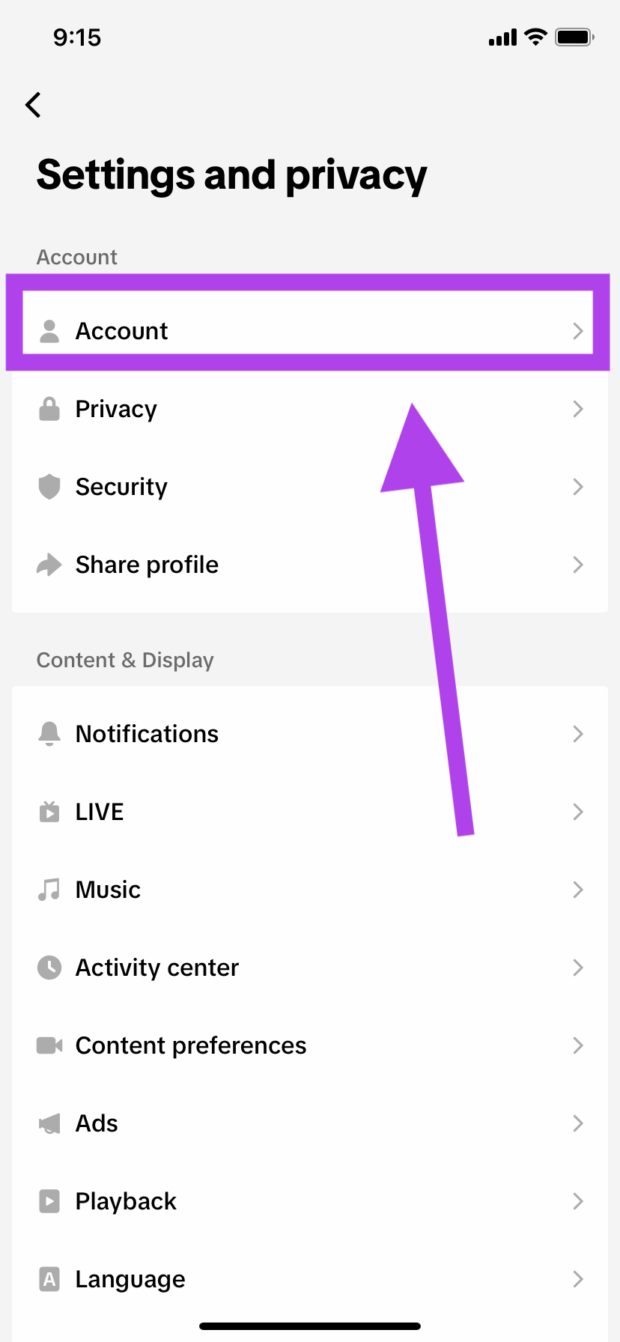
Step 2: Hit Settings and privacy.
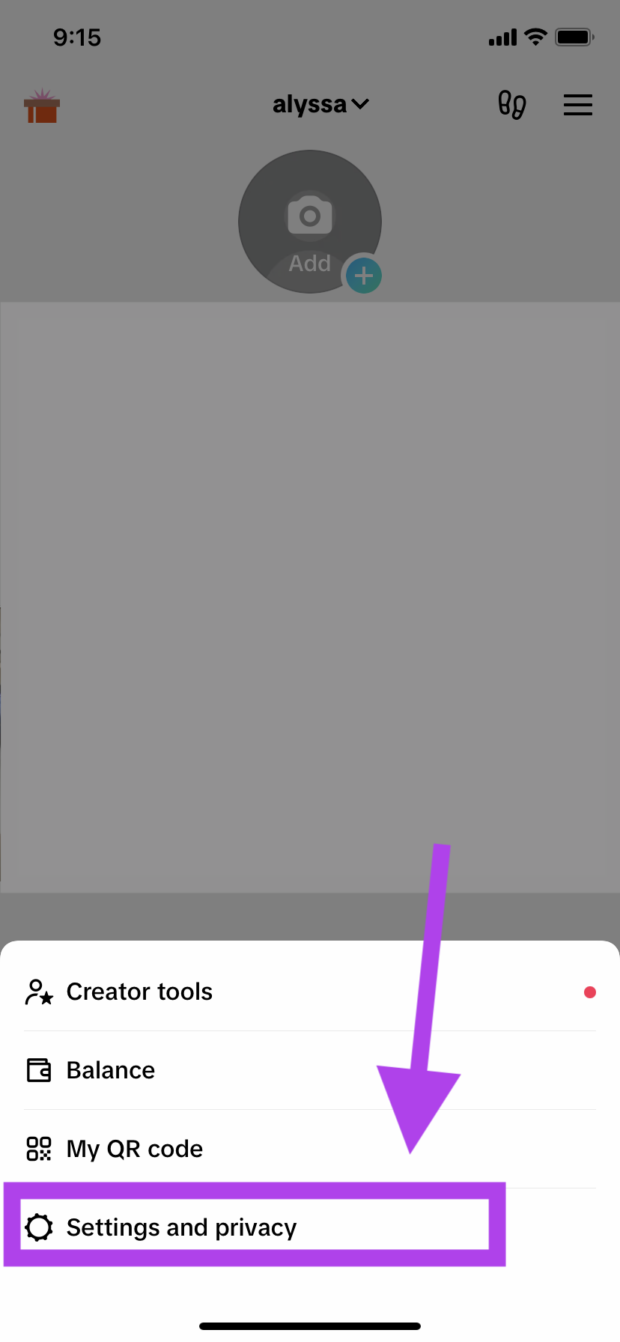
Step 3: Select Account.
Step 4: Switch to Business Account.
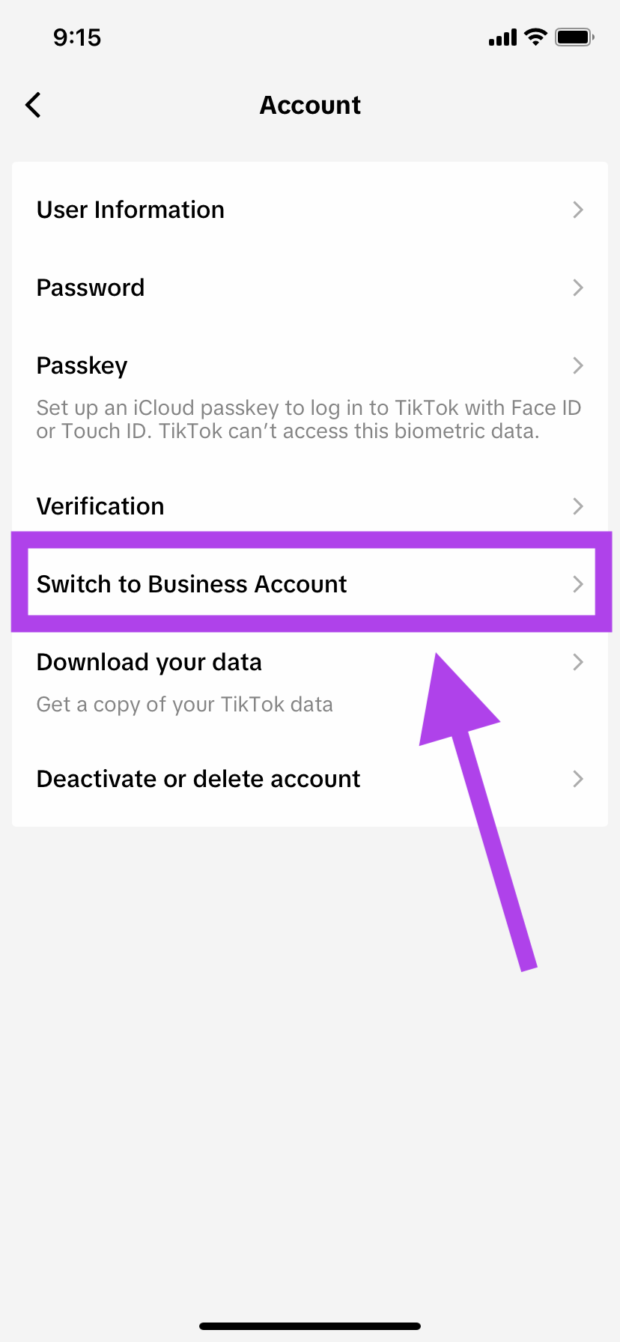
There you have it: a new TikTok business account. When you first switch, the platform will walk you through some of the business account features to help get you started.
How to optimize your TikTok profile
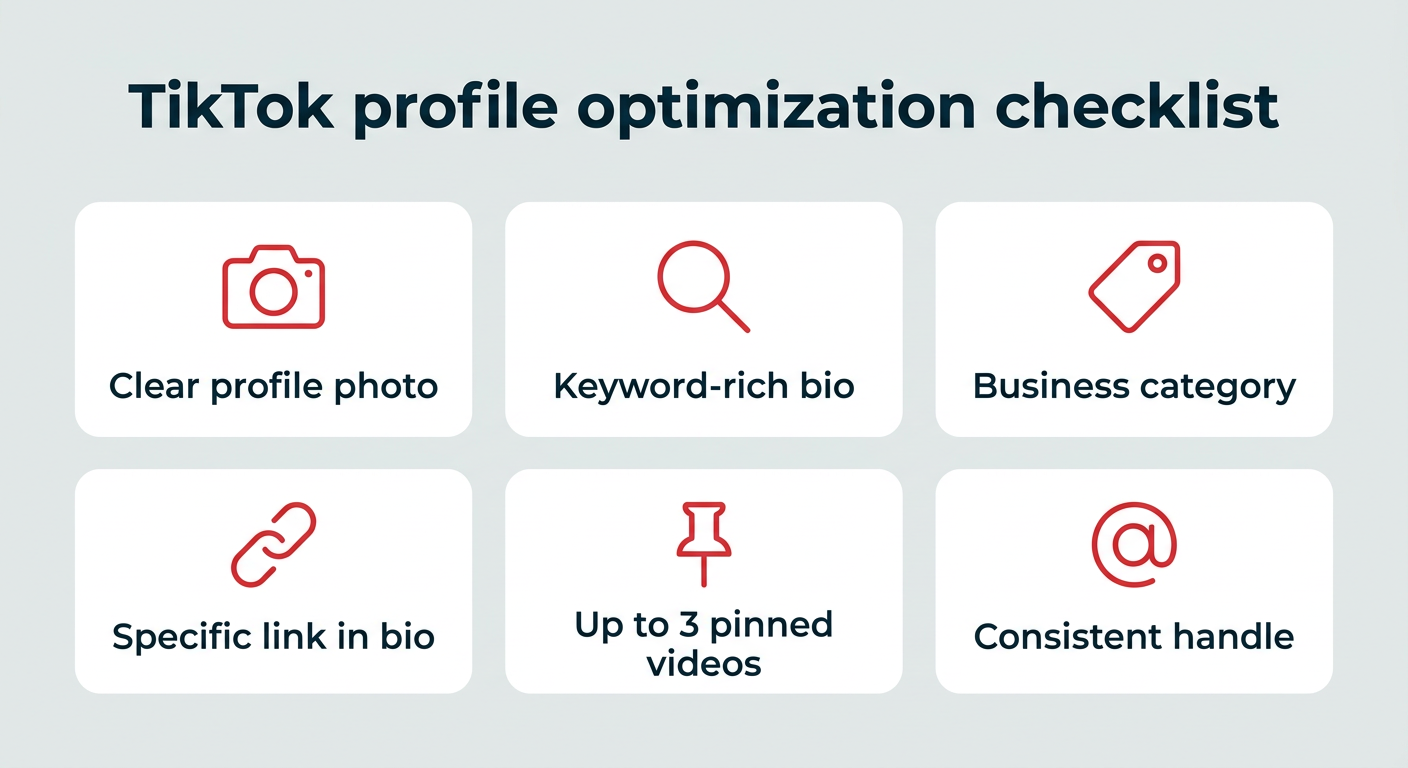
Once your account is set up, spend a few minutes tightening the profile itself. It’s the page people land on after a video hooks them, and it’s also indexed by TikTok search, so small details affect both conversion and discoverability.
- Profile photo: Use a clean logo or a recognizable face that reads clearly at thumbnail size.
- Keyword-rich bio: Describe what you sell in the words your audience actually searches, not internal brand language. You get 80 characters, so lead with the category.
- Business category: Choose the category that matches your products so TikTok can surface your account to relevant users.
- Link in bio: Send traffic somewhere specific, like a product page or a multi-link landing page, rather than your homepage.
- Pinned videos: Pin up to three posts. Use one to introduce the brand, one to show your best-selling product, and one proven top performer.
- Consistent handle: Match your username across platforms so people can find you after they leave TikTok.
How do you create a TikTok marketing strategy?
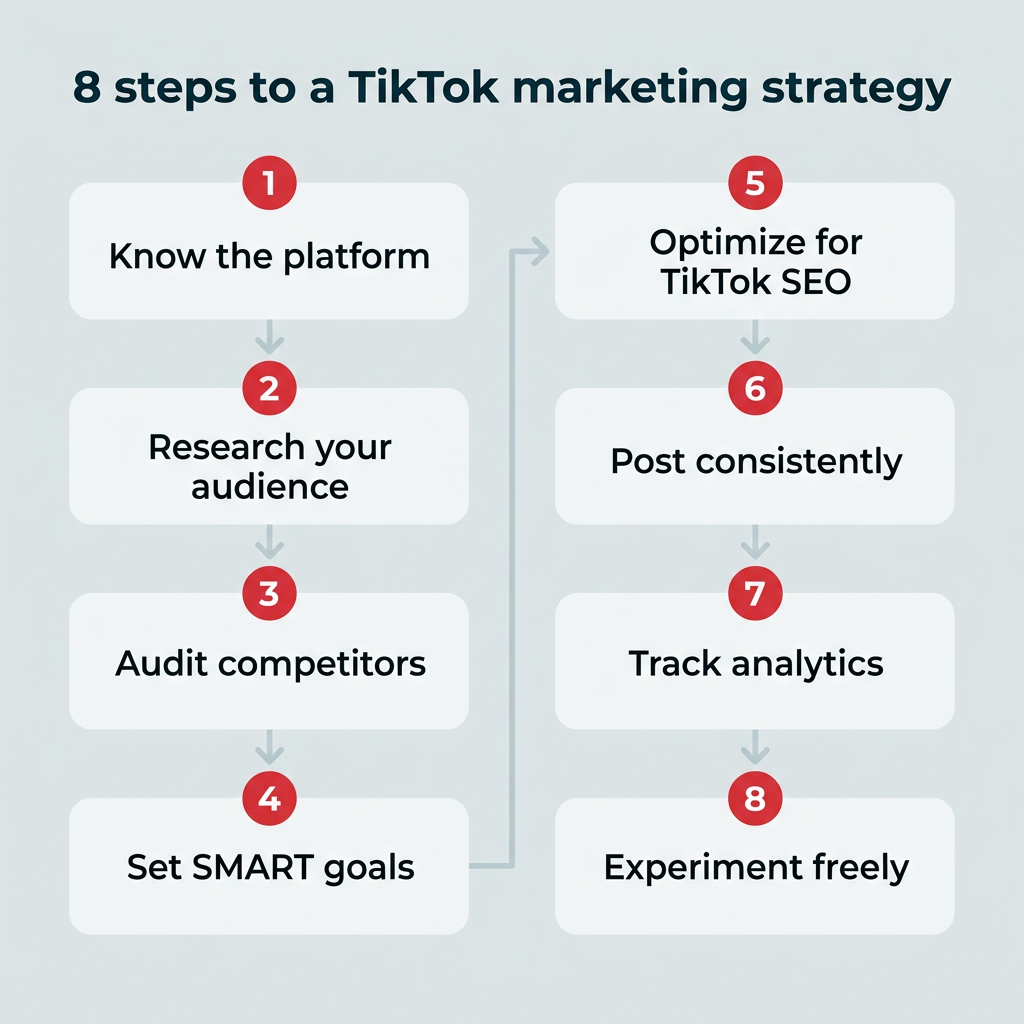
Building a TikTok marketing strategy follows a clear, repeatable process. Here’s a quick summary of the steps before we break each one down:
- Get to know the platform
- Research your audience
- Perform a competitive audit
- Set goals that align with your business objectives
- Optimize for TikTok SEO and discoverability
- Post regularly and at the right times
- Track your analytics and measure ROI
- Create space to experiment
Get to know the platform
Take some time to get to know the platform (beginners, start here). Explore the different features available on the TikTok app, and note what challenges, editing styles, and sounds are trending.
Read up on the TikTok algorithm, too. Understanding how TikTok ranks and displays videos in the For You tab can inform your content, hashtag, and engagement strategy.
You can also brush up on all things TikTok by taking courses in the TikTok Business Learning Center.
Research your audience
It’s important to research your target audience to make sure that TikTok is right for you. Before you start creating content, learn about TikTok demographics and identify any overlap in your user base.
TikTok has a reputation for being popular with teens, but the platform’s user stats may surprise you: the average age of TikTok users is between 25 and 34 years old. With 37% of US adults now on the platform, TikTok is clearly reaching Millennials with real purchase intent.
However, it is true that TikTok’s Gen Z users are loyalists, with nearly a third of its audience between 18 and 24 years old.
For enterprise teams, audience research often means segmenting across brands, products, or regions. TikTok’s Audience Insights tools can help you understand how each segment behaves so you can tailor content accordingly. Once you’ve zeroed in on a potential audience, research what types of content they like and engage with, then start to brainstorm content ideas for your brand.
Perform a competitive audit
Are your competitors on TikTok? If they are, you could be missing out on the action. If they aren’t, TikTok may be a way to gain a competitive advantage.
Whether or not your competitors are on the platform, find at least three to five similar brands or organizations and see what they’re up to. If it’s helpful, use the S.W.O.T. framework to identify each competitor’s strengths, weaknesses, opportunities, and threats. Lumen, the insights and listening app inside Hootsuite Social OS, can also help you track how your TikTok performance stacks up against rivals over time.
Because TikTok is a creator-led platform, don’t rule out influencers in this exercise. Find personalities that specialize in your area of expertise.
Learn more in our complete guide to running a competitive analysis on social media (free template included).
Set goals that align with your business objectives
You can use TikTok to experiment, but it’s better to have goals in mind that tie directly to your business objectives.
Whether you plan to reach a new audience, improve brand image, build partnerships with influencers, promote awareness for a product, or develop a stronger community, it’s important to back your efforts with concrete goals.
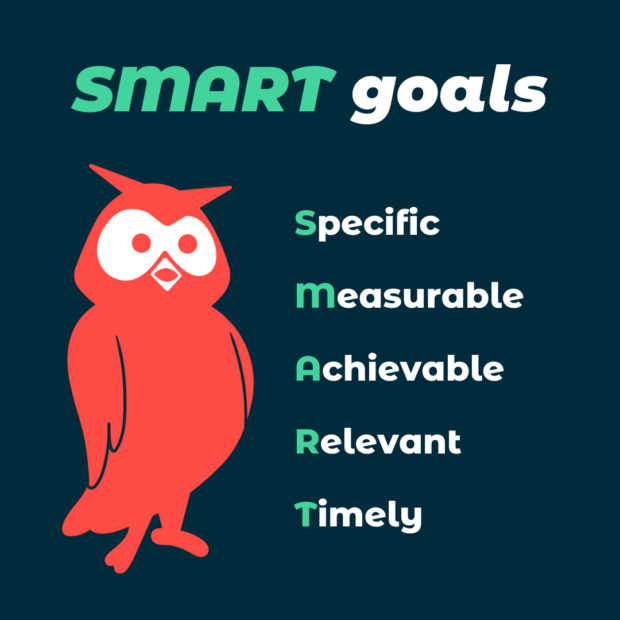
Consider using the S.M.A.R.T. goal framework to set goals that are Specific, Measurable, Attainable, Relevant, and Timely. For enterprise teams, that might look like “Increase TikTok-driven website traffic by 25% in Q3” or “Generate 500 leads from TikTok Shop in H2 2026.”
Optimize for TikTok SEO and discoverability
TikTok SEO is the practice of optimizing your content so it appears when users search the platform. According to Adobe, 49% of consumers now use TikTok as a search engine, typing queries into the search bar to find products, tutorials, and recommendations, so getting discoverable matters.
To improve your discoverability, do a little keyword research and weave relevant terms into your captions, on-screen text, and spoken words. TikTok’s search algorithm pays attention to all of these, not just hashtags. A focused mix of broad and niche hashtags also helps the platform understand and surface your content.
Search optimization isn’t only organic anymore. TikTok Search Ads let you bid on specific keywords so your video appears in search results for those queries, much like a Google search campaign. That makes paid search a useful complement when you’re trying to own a high-intent term your organic content hasn’t cracked yet.
For deeper keyword ideas and trend tracking, Hootsuite’s TikTok SEO tool can help you find the terms your audience is actually searching for.
Post regularly and at the right times
The best way for brands to stay visible on TikTok is to post consistently, because the algorithm favors fresh content. In fact, TikTok recommends posting one to four times per day.
Hootsuite research agrees, finding that posting 3-5 times per week is the sweet spot for strong performance on TikTok.
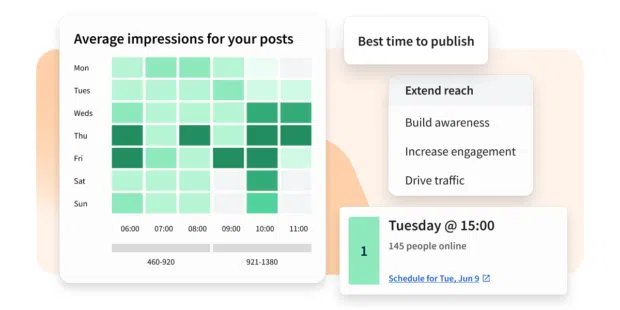
For most social media teams, TikTok’s recommendation just isn’t reasonable, so start with a handful of videos per week.
Making a content calendar and sticking to it is key to a successful social media strategy. There’s no shortage of tools out there to get you started (we’ve created a free social media calendar template).
Timing matters too. Since the algorithm prioritizes newer content, it’s always best to post your TikToks when the majority of your audience is using the app.
Based on Hootsuite’s experiments, the best overall time to post is Thursday morning (6 to 9 am) and Saturday midday (10 am to 6 pm).
Thanks to scheduling platforms like Hootsuite, you don’t actually have to be online in order to post a TikTok. Here’s a guide on how to schedule TikToks for later.
Track your analytics and measure ROI
The best way to measure TikTok marketing performance is to track engagement, traffic, and conversions using TikTok analytics, then adjust your strategy accordingly.

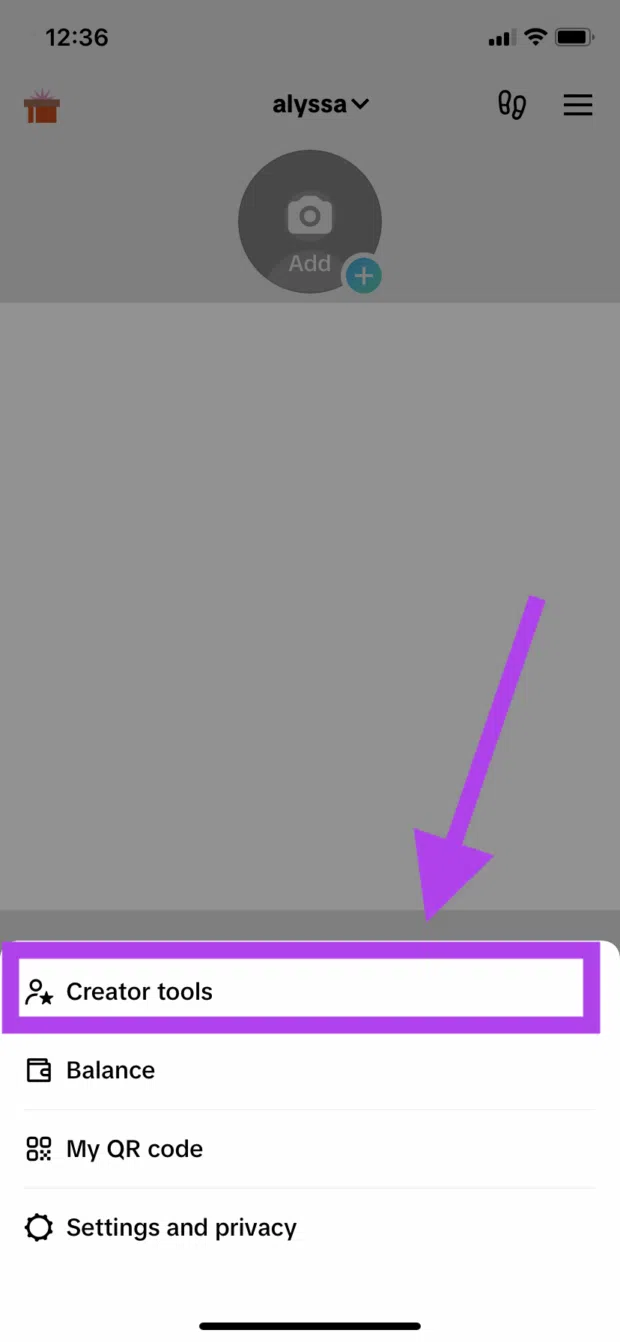
To access your TikTok analytics, go to your profile and select the menu button (the three horizontal lines in the top right).
Then, select Creator Tools.
A snapshot of your analytics will open automatically. This includes video views, net followers, and likes. To see a more in-depth review of your metrics, select View all.
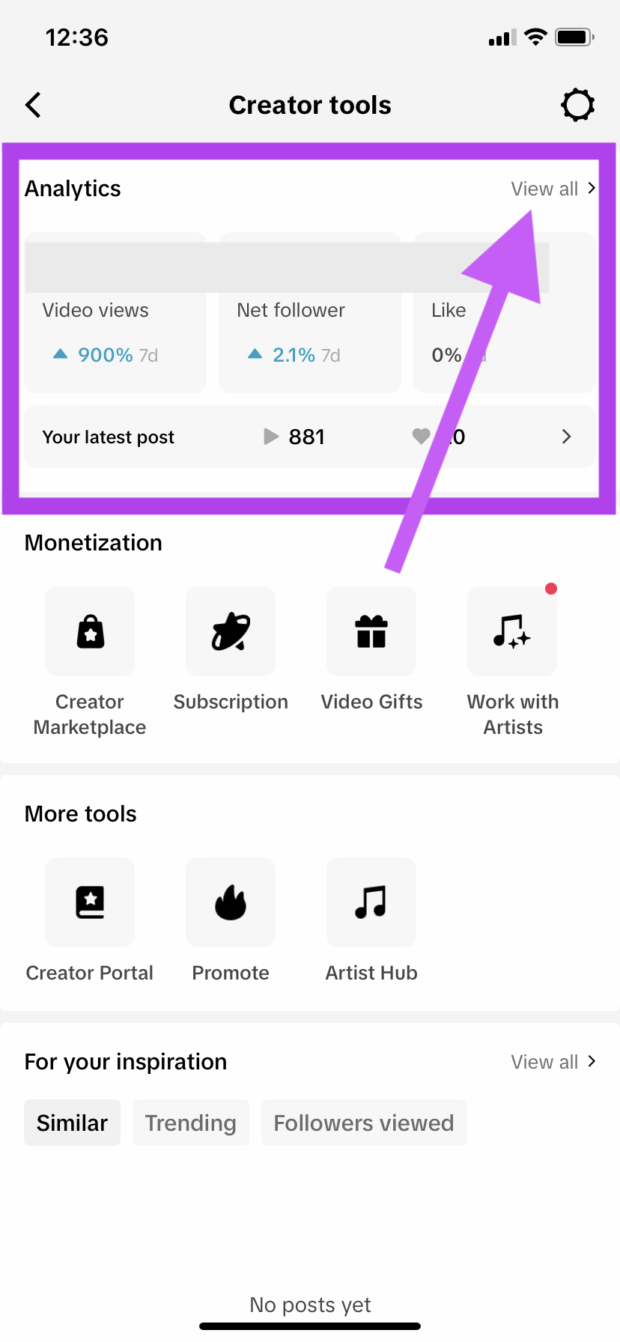
The metrics worth watching most closely include video views, engagement rate, follower growth, click-through rate, and conversion rate. To calculate your ROI, compare the value generated (leads, sales, or traffic) against the time and money you invested in TikTok.
Native analytics are a great start, but enterprise teams usually need more. Hootsuite Social OS brings TikTok performance into the same connected system as every other channel, so you can compare results side by side, build custom reports for stakeholders, and track trends over time without exporting spreadsheets. Unsure how to interpret the numbers? Read our complete guide to TikTok Analytics.
Create space to experiment
There’s no formula for going viral on TikTok (but you can follow our tried tips to increase your odds).
Leave space to be creative and experiment. For example, try out a live stream or leverage a trending sound.
If something flops, learn from it and move on to the next experiment. If your brand ends up accidentally trending like Josh wine, make the most of it and keep letting the memes flow.
Be in on the joke. Don’t plan to be taken too seriously on TikTok.
How do you create TikTok content that performs?
The best TikTok content feels native to the platform, hooks viewers fast, and fits one of the formats TikTok rewards. Before you film, it helps to understand the content types available to you in 2026.
- Standard short-form video: The core TikTok format, ideal for hooks, tutorials, and storytelling.
- Photo carousels: Swipeable image posts that work well for tips, before-and-afters, and product showcases.
- TikTok Stories: Short, casual updates that disappear, great for behind-the-scenes moments.
- Duets and Stitches: Formats that let you react to or build on another creator’s content.
- Live video: Real-time streaming for Q&As, launches, and community building.
- TikTok Series: Longer-form content for deeper tutorials or episodic storytelling.
No matter the format, a strong social media hook in the first few seconds is what stops the scroll. Add clear on-screen text, keep captions searchable, and finish with a simple call to action. For inspiration on formats, sounds, and trends that are working right now, the TikTok Creative Center is a great place to start.
What are TikTok ad formats and how do you build an advertising strategy?
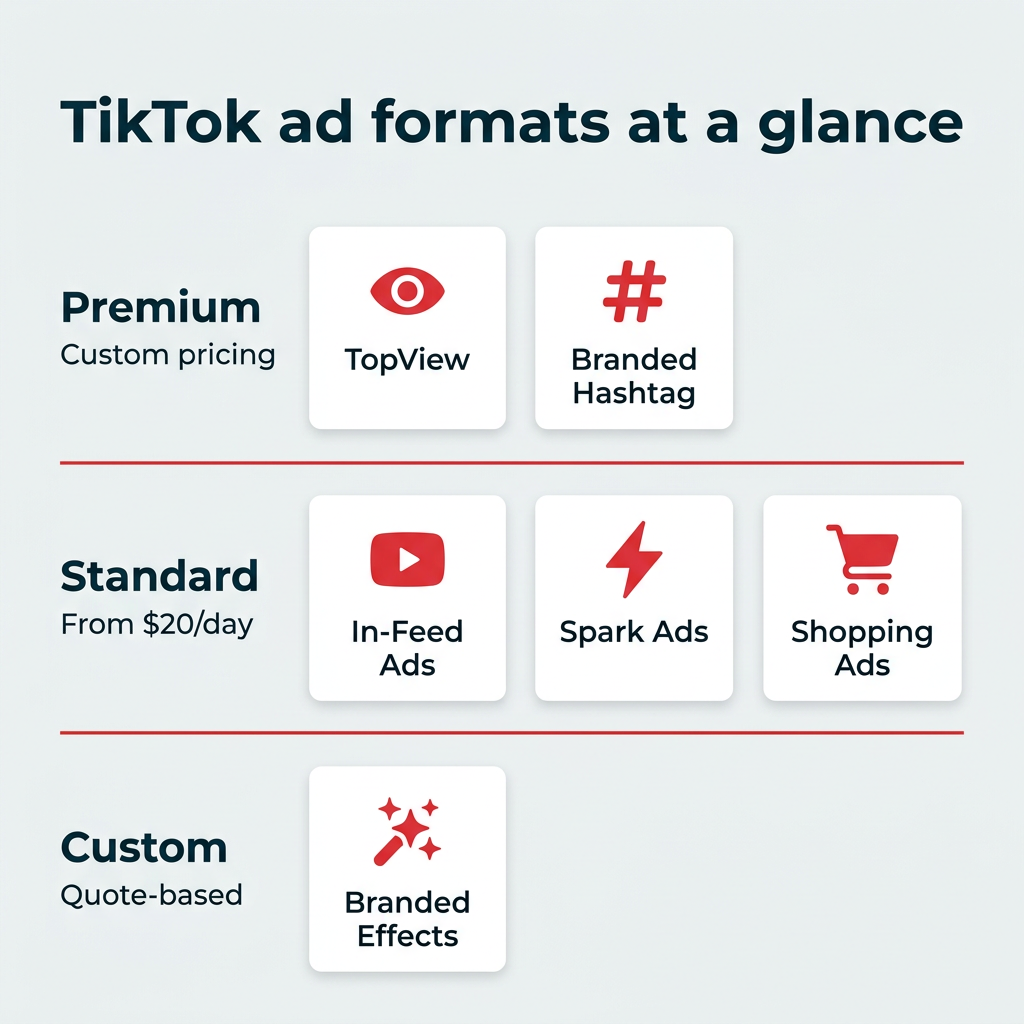
TikTok ads let you scale your reach beyond organic content by promoting videos to specific audiences through TikTok Ads Manager. Choosing the right ad format depends on your goal, whether that’s awareness, engagement, or direct sales.
Here’s a quick overview of the main TikTok ad formats, with minimum budgets based on TikTok’s published budget requirements:
|
Ad format |
Description |
Best use case |
Approx. minimum budget |
|---|---|---|---|
|
In-Feed Ads |
Native videos that appear in the For You feed |
Driving traffic and conversions |
$20/day minimum (ad group); $50/day minimum (campaign) |
|
TopView |
Full-screen ad shown when users open the app |
Maximum awareness for launches |
Custom (premium) |
|
Branded Hashtag Challenge |
Sponsored challenge that invites user participation |
Mass engagement and UGC |
Custom (premium) |
|
Branded Effects |
Custom filters, stickers, and effects |
Interactive brand experiences |
Custom |
|
Spark Ads |
Boosts existing organic posts (yours or creators’) |
Amplifying authentic content |
$20/day minimum (ad group); $50/day minimum (campaign) |
|
Shopping Ads |
Product-focused ads tied to TikTok Shop |
Driving in-app sales |
$20/day minimum (ad group); $50/day minimum (campaign) |
|
Search Ads |
Keyword-targeted ads that appear in TikTok search results |
Capturing high-intent search demand |
$20/day minimum (ad group); $50/day minimum (campaign) |
TikTok Ads Manager also offers detailed targeting options to help you reach the right people:
- Demographics: Age, gender, location, and language.
- Interests and behaviors: Based on the content users engage with.
- Keywords: Search terms users type into TikTok, used for Search Ads campaigns.
- Custom audiences: Built from your own customer data.
- Lookalike audiences: New users who resemble your best customers.
For the best results, design ads that feel native to the platform rather than polished commercials. Spark Ads are built for exactly this. The detailed advertising guide linked earlier walks through campaign setup and creative best practices in depth.
What TikTok marketing examples work in 2026?
The most effective TikTok marketing examples use strong hooks, authentic storytelling, and formats that drive engagement.
Let’s dive into a few real-world examples:
Why start with a hook?
A strong hook grabs a viewer’s attention and convinces them that the content is worth experiencing. When that hook comes from a source that the audience trusts, even better.
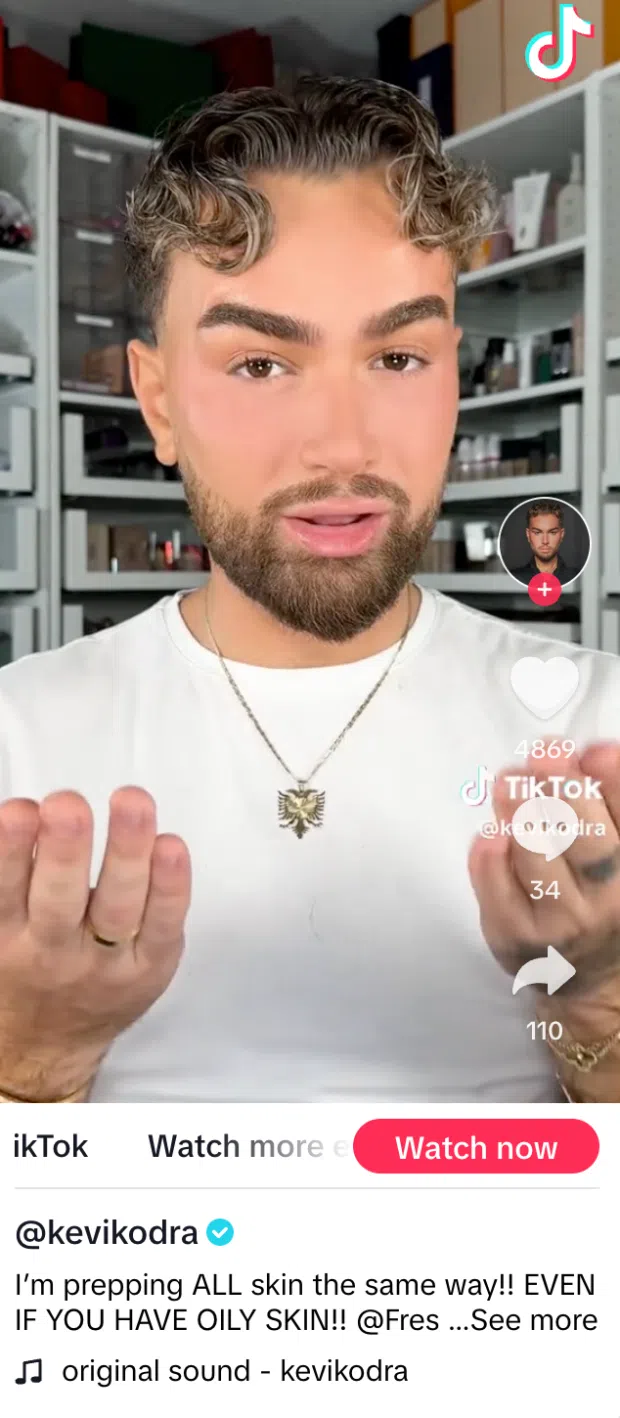
Source: @kevikodra
In this TikTok, a makeup brand partnered with a makeup influencer to show off a product. It starts with a unique and intriguing hook (“This is the biggest rule I love to break. What if I told you regardless if you have dry skin or oily skin, I’m prepping everyone the exact same way?”), followed by a clip of the cleanser in action.
Why this works
- The video starts with a hook that immediately captivates the target audience
- The brand partnered with an influencer that’s seen as an expert in their field, which boosts trust and credibility
- The video shows the product in action instead of just talking about how great it is (show, don’t tell!)
Why encourage comments?
The more engagement a TikTok receives, the better it will fare when it comes to the algorithm’s ranking. Metrics like comments, likes, and saves will determine how good TikTok thinks your short-form videos are, so the more you can encourage them, the better.
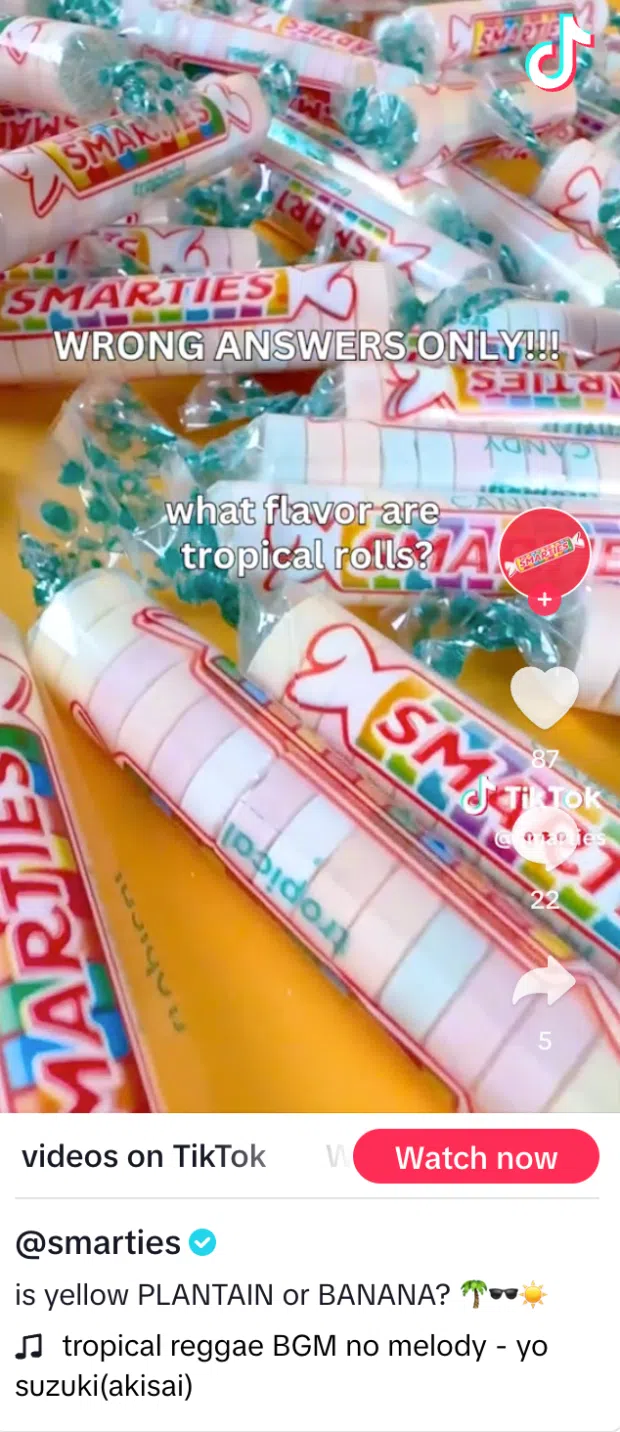
Source: @smarties
Videos like this one from Smarties are an awesome example of this. The business teases the viewer to comment by asking a question, and also gives them the freedom to answer however they wish (“Wrong answers only” indicates a no-judgment zone).
Why this works
- The TikTok asks for comments straight up, encouraging audiences to interact with the content
- There’s lots of room for followers to share and debate in the comments (and TikTok users love to do just that)
- The brand is liking and replying to many of the comments, which can boost engagement in the comment section
How do you lean into the algorithm?
Because the TikTok algorithm is so difficult to master, sometimes anyone seeing your videos can feel like a miracle. Why not lean into that?
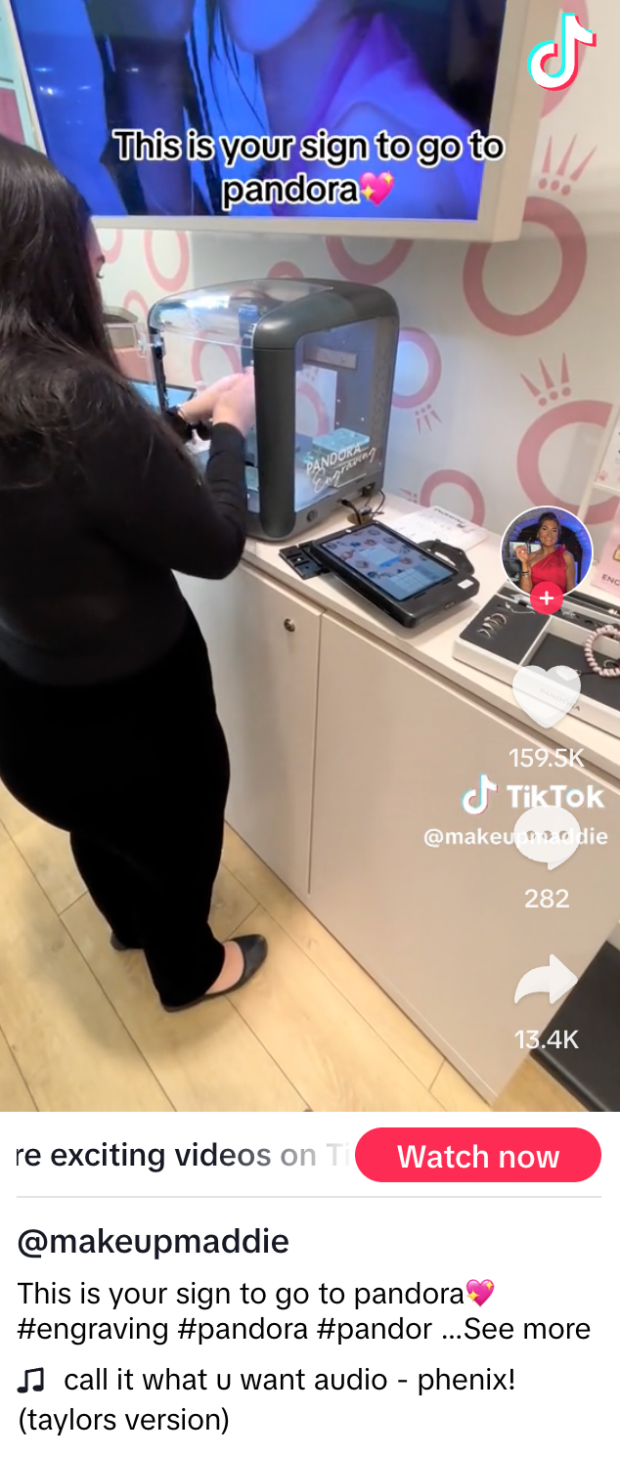
Source: @makeupmaddie
This creator-made video is awesome marketing for Pandora. The text “This is your sign to go to Pandora” makes the video feel like a lucky find, as if it showed up at just the right moment. The trending song also helps make this video feel authentic and personal.
Why this works
- The video suggests viewers are lucky to be seeing it, framing the algorithm as a “sign”
- It clearly shows both the product and the service by walking through the custom engraving process step by step
- The TikTok uses a trending song for the audio, making the video feel familiar and timely to the audience
Why reply to comments with another TikTok?
Comments play a major role in TikTok’s algorithm, so the more comments a post gets, the higher that video will rank. And TikTok makes it easy to show commenters that you’re listening: just reply to a comment with a video.
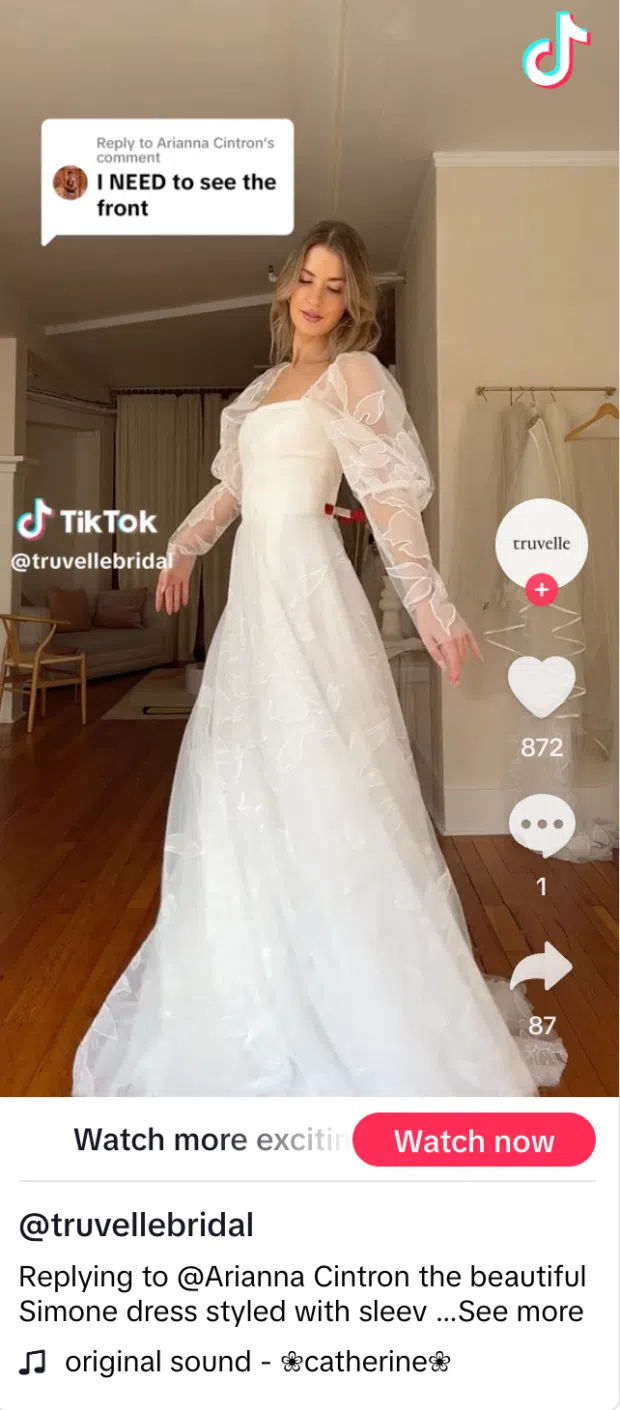
Source: @truvellebridal
This TikTok from Truevelle Bridal was made in response to a comment asking to see a wedding dress from the front. The brand obliged, responding to the comment with another video (and another opportunity to show off the pretty dress).
Why this works
- By only showing the back of the dress in the first video, the brand encourages comments
- Audiences are more likely to comment on your TikToks when they see you actively engaging back. In other words, liking and replying to comments shows your followers that you care
- The brand is directly addressing a curious potential customer rather than just putting out an ad
Why show behind-the-scenes content?
TikTok audiences love authentic content. The more honest your marketing feels, the more likely viewers will be to trust you.
Showing behind-the-scenes content is a fantastic way to humanize your brand and make your followers feel like they are taking a journey along with you.
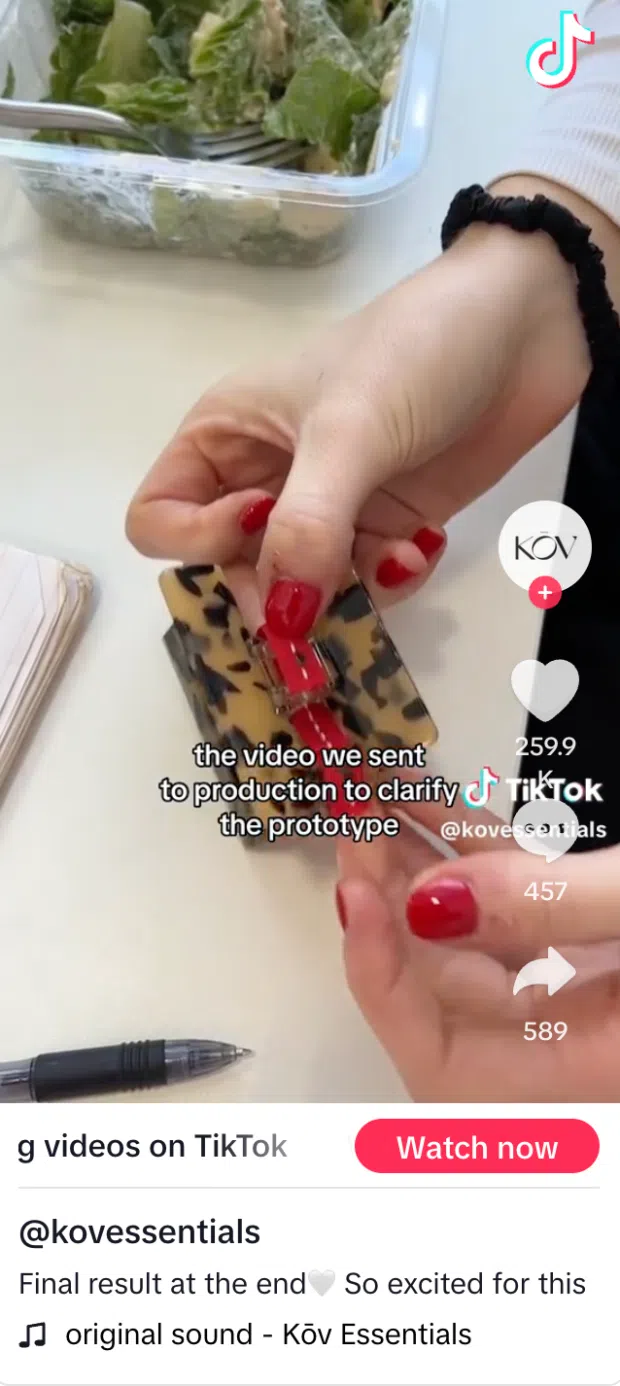
Source: @kovessentials
This TikTok doesn’t just show off the product (a claw clip with a bow attached), it explains part of the process of manufacturing. It opens the door to a not-often-shared part of the retail process, and all the imperfections and trial-and-error that goes along with it.
Why this works
- Audiences feel like they really know this product, because they saw a prototype and understand how the final result came to be
- The brand shows transparency by allowing viewers a peek at the design process
- The video is a satisfying watch, as you can see the prototype and the end result all in one video
How do you inspire shares?
Not every marketing TikTok has to look like an ad. In fact, just-for-fun posts often perform better than strictly business content.
So don’t count out those cute, funny, or outside-the-box ideas. Creating engaging content that users will want to share with their friends or family is half the battle.

Source: @peli.roja.pets
This TikTok doesn’t promote specific services or offerings from the business, a pet daycare company, but it does succeed in being adorable and highly sharable.
Why this works
- The TikTok prompts audiences to share the video, which helps the video to rank higher in TikTok’s algorithm
- The video doesn’t come across as an ad, but it still promotes the business in a more subtle way
- Puppies are adorable and the internet loves them (and this video targets a specific emotional group: people who don’t have a dog but want one)
What are common TikTok marketing mistakes to avoid?
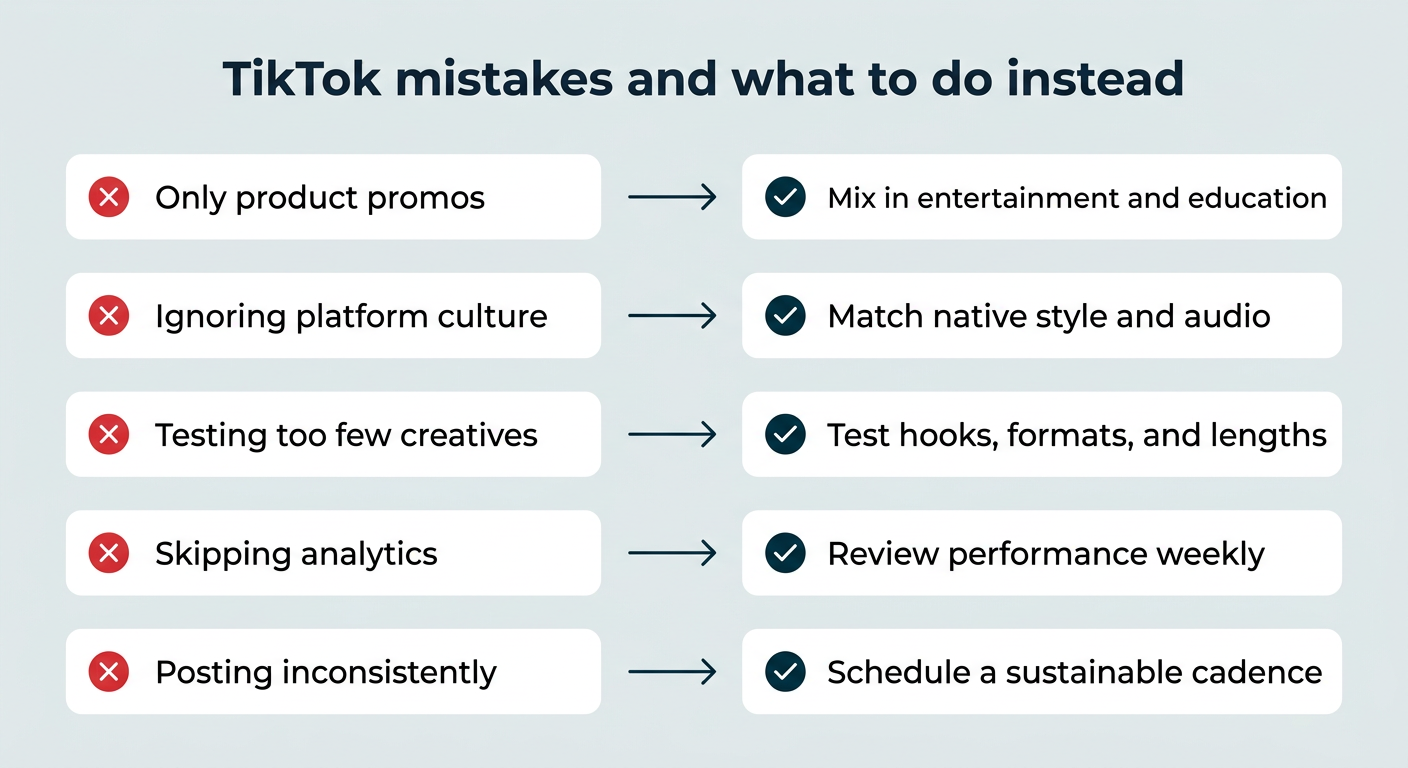
Most TikTok accounts that stall aren’t failing because of the algorithm. They’re repeating a handful of avoidable habits. Here are the mistakes worth checking your own account against, and what to do instead.
- Posting only product promos: An endless stream of product shots wears out an audience fast. Mix in entertainment, education, and storytelling so people have a reason to keep following between launches.
- Ignoring platform culture: TikTok rewards content that feels native, so repurposed TV spots and overly polished ads tend to underperform. Match the editing style, pacing, and audio people already expect in the feed.
- Testing too few creatives: Running one hook on repeat caps your reach. Test different openings, formats, and video lengths, then put budget behind the versions that earn watch time.
- Skipping analytics: Without a regular review of what’s working, you’re guessing. Check TikTok analytics weekly and use Hootsuite Social OS to compare TikTok results against your other channels in one place.
- Posting inconsistently: Momentum compounds, and long gaps reset it. Set a cadence you can actually sustain, even if that’s three videos a week, and schedule in advance so busy weeks don’t break the streak.
What are the best TikTok marketing tools for 2026?
The best TikTok marketing tools help you plan content, publish in advance, track performance, and manage engagement all in one place.
Here are our top picks:
Hootsuite
Hootsuite Social OS is a social operating system for social media teams, and it’s where you build out your TikTok calendar and publish on a schedule instead of posting in real time.

Using Hootsuite, you can:
- Plan and schedule all your TikToks in Perch so they go live when your audience is most active
- Write engaging captions with Wisdom and a built-in AI-powered hashtag generator
- Monitor TikTok trends and conversations with Lumen, the insights and listening app inside Social OS
- Benchmark your performance against competitors
- Manage governed approval workflows for TikTok content across teams and brands
- Get personalized recommendations for the best times to post to reach more people on the platform
- Monitor and engage with comments
- Track your results in real time
- Create custom reports to showcase your success
- Handle TikTok, Instagram, Facebook, X, LinkedIn, YouTube, and Pinterest from one connected system
Start growing your following on TikTok right now — for free
Try Hootsuite free for 14 days and see how it can help you skyrocket followers, reach, and engagement on TikTok.
CapCut
TikTok’s native video editing app, CapCut is built for fast, mobile-first creation. It comes with ready-made templates, auto-captions, effects, and smooth transitions that make polished videos easy to produce. Because it integrates directly with TikTok, you can edit and publish without leaving your workflow.
Canva
Canva is a graphic design platform that allows you to edit photos, videos, marketing assets and more. It’s very user-friendly and comes with templates and millions of images and graphics built-in.
Psst: Hootsuite has a Canva integration, making designing even easier.
TikTok Creative Center
TikTok Creative Center is a free tool from TikTok for discovering trending content, ads, songs, creators, and hashtags. It’s invaluable for competitive research and content inspiration, helping you spot what’s resonating before you plan your next campaign.
Link-in-bio tools
As TikTok grows, there are more ways than ever to make money directly on the platform. Still, one tactic continues to work well: using TikTok to drive traffic and sales off the app.
Think of TikTok as a bright arrow pointing people toward your brand. To turn views into action, you need one simple thing: a link in bio.
A link-in-bio tool, like Hootbio, makes that possible. It lets you send people to your YouTube channel, online store, blog, or any other site you want. It’s an easy way to turn one link into many opportunities.
FAQ: TikTok marketing
What is TikTok marketing, and is it effective for businesses?
How do brands create a successful TikTok marketing strategy?
Is TikTok marketing effective for B2B companies?
What are TikTok marketing best practices for brands in 2026?
How do you measure ROI from TikTok marketing?
Does TikTok have affiliate marketing?
What is the 3-second rule on TikTok?
What is the 3-3-3 rule in marketing?
How much does TikTok advertising cost?
How often should brands post on TikTok?
Save time managing your social media marketing strategy with Hootsuite. Publish and schedule posts, find relevant conversions, measure results, and more â all from one dashboard. Try it free today.
The post TikTok marketing: How to build a winning 2026 strategy appeared first on Social Media Marketing & Management Dashboard.