
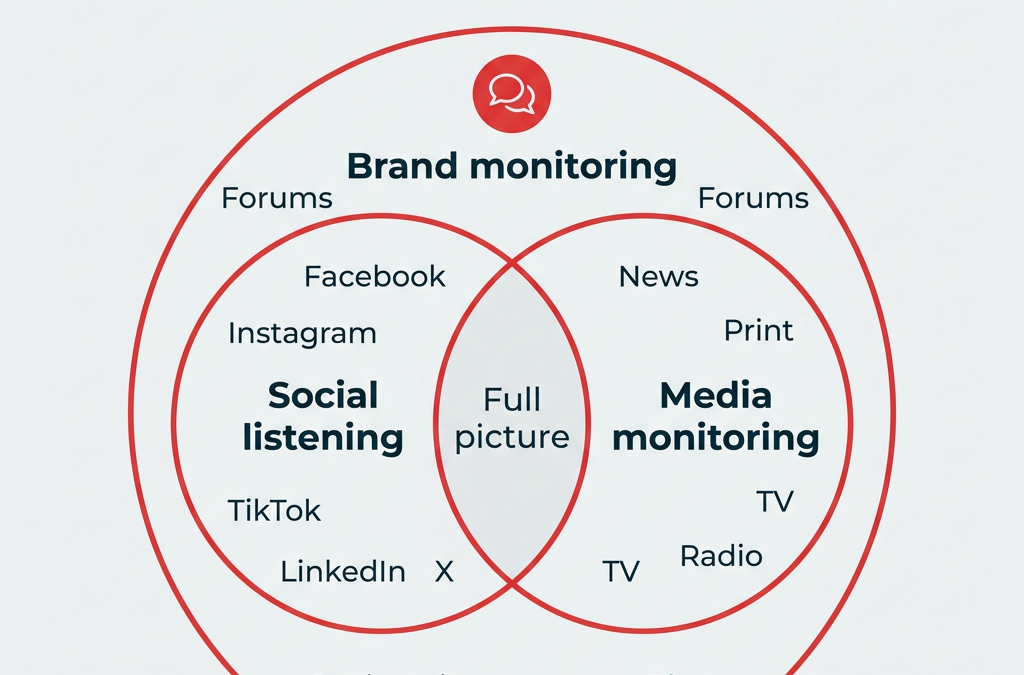
Key takeaways
- Brand monitoring is the ongoing process of tracking, analyzing, and acting on what people say about your brand across social media, news, forums, podcasts, review sites, and more.
- A strong brand monitoring strategy helps you catch PR crises early, benchmark against competitors, track product feedback, and surface UGC and influencer opportunities.
- Brand monitoring goes beyond social listening by pulling from a wider range of sources, including blogs, podcasts, print media, and review sites, giving you a fuller picture of brand sentiment.
- The right brand monitoring tools can automate mention tracking, sentiment analysis, and competitive benchmarking across millions of sources.
What is brand monitoring?
Brand monitoring is the process of finding, following, analyzing, and acting on mentions and discussions of your brand. That goes for all forms of media, from social platforms to podcasts to traditional media outlets.
In other words, brand monitoring is a holistic look at what is being said out there in the world about you. Smart brands follow that data-gathering up with analysis and action. Rather than just cataloguing the conversation, use the information to guide your strategy in both the short and long term.
How is brand monitoring different from social listening?
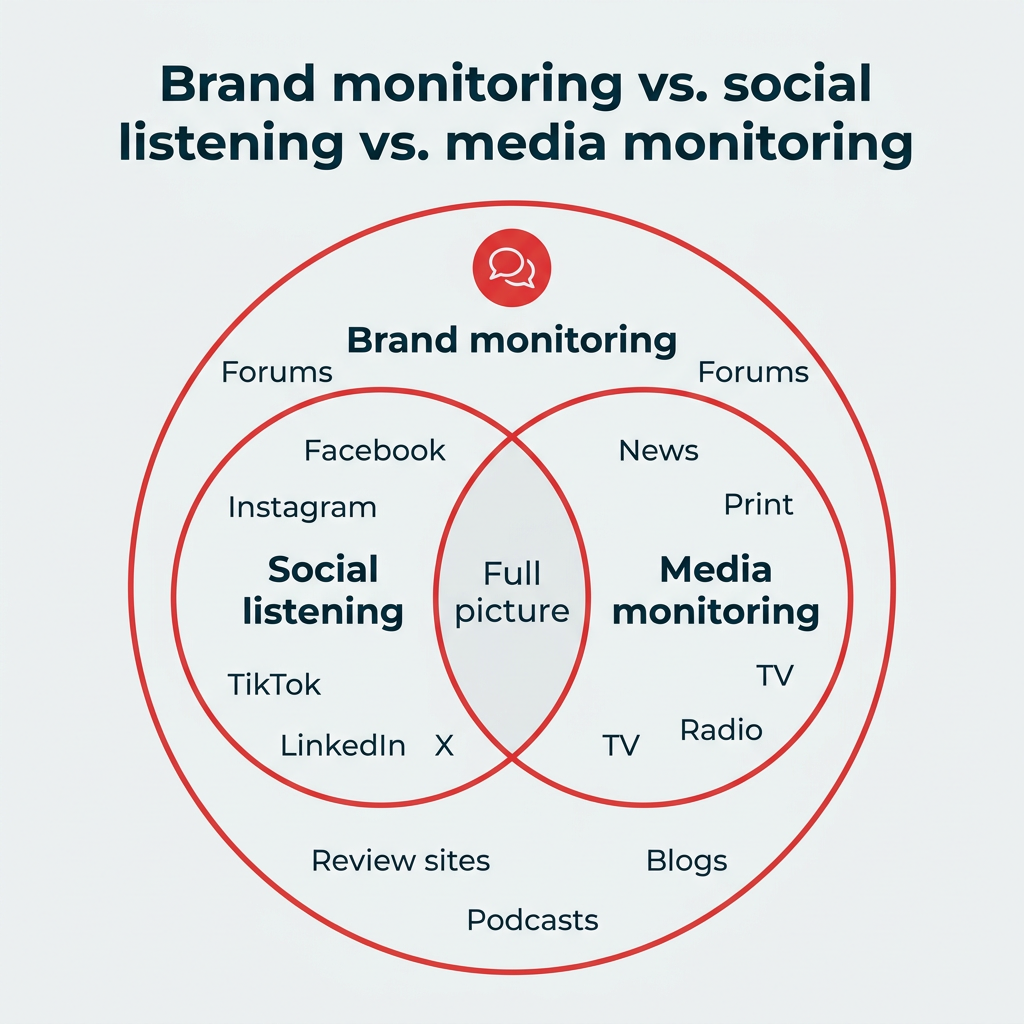
Social listening is part of brand monitoring, but it only focuses on social media coverage.
Social listening provides a chance to track valuable social metrics, measure brand awareness, and understand the overall online mood.
This info is valuable for tracking ROI or testing social marketing strategies, and you can also use this key data to pinpoint trends and insights. From there, you can develop an action plan and social strategy.
Brand monitoring incorporates all of this work but also includes many more data sources. You’ll get the bigger picture of what people are saying about your brand beyond social media channels. This can expand the demographic breadth of your dataset, too.
There’s also a third related concept worth knowing: media monitoring. Media monitoring traditionally focuses on earned media coverage in news outlets, print, and broadcast. Brand monitoring encompasses both social listening and media monitoring, along with forums, review sites, podcasts, and more.
Here’s a quick comparison:
|
Brand monitoring |
Social listening |
Media monitoring |
|
|---|---|---|---|
|
Scope |
All public conversations about your brand |
Social media conversations only |
News, print, and broadcast coverage |
|
Channels covered |
Social, news, blogs, forums, podcasts, review sites, print, broadcast |
Social media platforms (Facebook, Instagram, TikTok, LinkedIn, X, etc.) |
Newspapers, magazines, TV, radio, online news |
|
Primary use case |
Full-picture brand health, competitive intelligence, crisis detection |
Social engagement, campaign tracking, audience sentiment |
PR measurement, earned media tracking |
|
Data depth |
Broadest coverage across the most source types |
Deep social analytics including engagement, reach, and audience data |
Coverage volume, reach, and media value |
In short, brand monitoring is the umbrella that brings all of these disciplines together.
Why is brand monitoring important?
Brand monitoring isn’t just a nice-to-have. It’s how you stay ahead of the conversations shaping your brand’s reputation, competitive position, and growth. Here’s what it helps you do.
How does brand monitoring help you understand sentiment?
Brand monitoring reveals not just how much people are talking about you, but how they’re talking about you. Beyond measuring mention volume, you want to understand the feelings and intent behind the conversations.
You also want to know what kinds of topics are creating positive or negative sentiment about your brand, so you can figure out a strategy to amplify positive topics and mitigate negative ones.
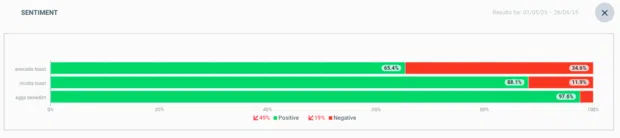
We don’t want to call out any specific brand here, but we do want to show you what this looks like. So, here’s a basic sentiment analysis for the topic of avocado toast. You can see that if avocado toast was a brand, they would want to lean into recipes but maybe stay away from talking about millennial financial habits (or at least tread carefully on that front).
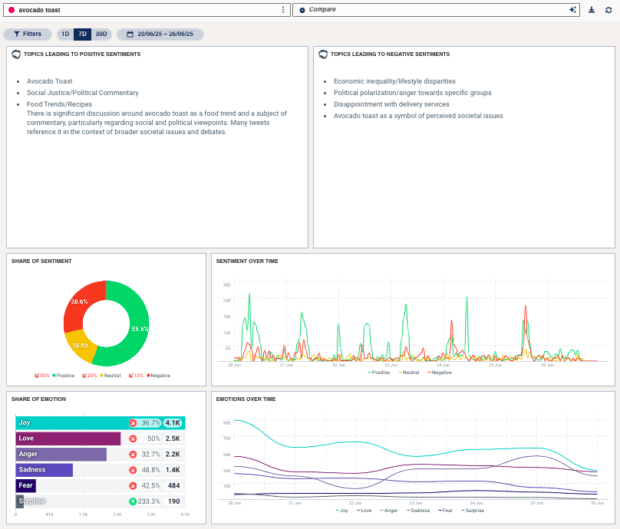
In particular, watch for sudden dives or peaks in people’s affection and affinity for your brand, and make sure you figure out their source. For example, the avocado toast people would want to look into what happened toward the end of the week to cause a couple of spikes in negative sentiment.
If something you’ve posted has resulted in a sudden drop in brand sentiment, you may have a PR crisis on your hands.
How does brand monitoring support reputation management?
A brand’s reputation is one of its greatest sources of value, one that Gartner breaks into four measurable indicators. That’s always been true, but it’s even more important now that consumers can share their experiences so widely. (And that people have to be so careful when purchasing from unknown brands.)
Think about the research a new customer might do before buying from your brand. They might check out review sites and forums, or seek out opinions posted by relevant bloggers or social content creators.
You need to understand what they’ll find when they start that search.
A good brand and social media monitoring tool can show you where the conversations are happening and what the sentiment is like on each platform.
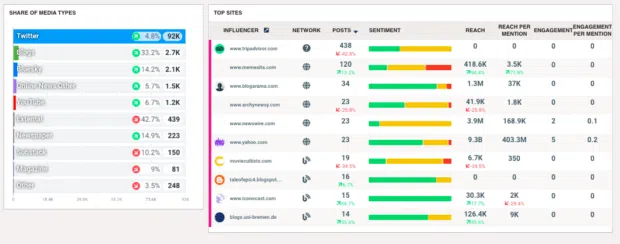
If there’s a negative conversation happening, you need to find ways to address it. If it’s glowing, look for ways to lean into and amplify the praise.
How can you use brand monitoring to improve products and services?
When customers talk amongst themselves, they reveal all kinds of information you’d never get from a brand survey.
Keep an eye out for mentions of specific features or aspects of your products or services. This includes both existing features that are inspiring conversation as well as features consumers are expressing desire for. What’s working? What’s not? What new products or features are they hoping you’ll develop?
For example, here we can see that people are talking positively about the protein, fiber, and fats in avocado toast.
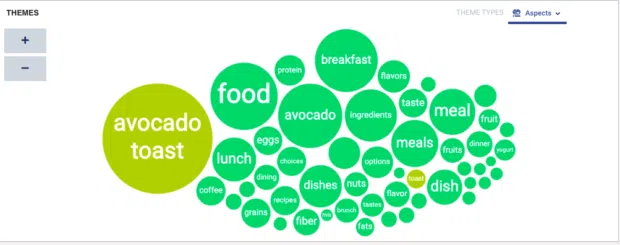
If the avocado toast marketing team had previously focused on the flavor and taste of the dish, this could inspire a new campaign based on nutritional benefits.
How does brand monitoring reveal the competitive landscape?
Monitoring your competition to see what they’re doing right, and wrong, is part of holistic brand monitoring. You can incorporate this info into a competitive analysis and a SWOT analysis.
Take the chance to learn from others’ successes and misses. But also keep an eye out for upcoming product launches or other big moves that you might need to prepare for.
Also watch for new competitors as they emerge.
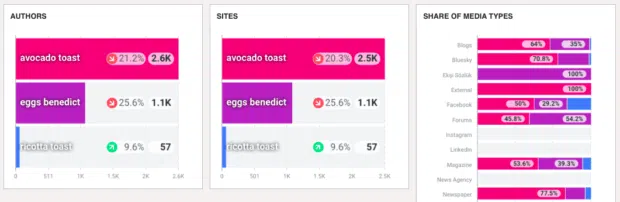
For example, in the breakfast category, avocado toast and eggs benedict should both be keeping an eye on ricotta toast. Sure, it’s a tiny upstart for now, but the conversation is picking up, especially on Facebook and in magazines.
How can brand monitoring help you set realistic benchmarks?
We talk a lot on this blog about setting SMART goals. That is, goals that are:
- Specific
- Measurable
- Achievable
- Relevant, and
- Time-bound
Brand monitoring is critical for knowing whether your goals are achievable. When you know what others in your industry are achieving, you see what’s really possible for your brand. You’ll be able to set goals that push your team to excel, but not to the point of unrealistic expectations.
For example, avocado toast is well behind both ricotta toast and eggs benedict when it comes to positive sentiment. The marketing team might want to adjust sentiment goals upward based on these competitive benchmarks.
How does brand monitoring help you spot trends?
You don’t operate in a vacuum. A solid brand monitoring strategy keeps your online presence ahead of industry and consumer trends.
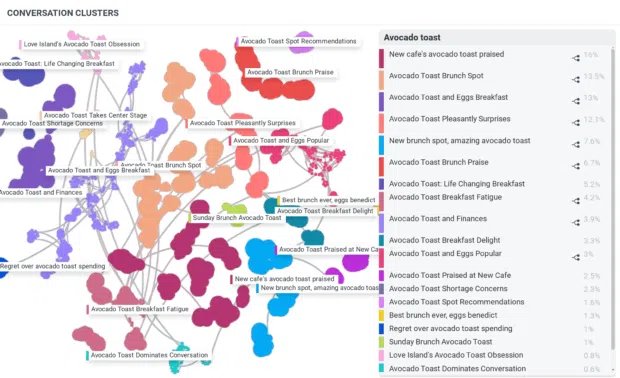
On the consumer side, look for changing preferences, new ways of talking about products in your niche, and shifting customer demographics.
Source: Talkwalker
On the industry side, brand monitoring ensures you’re up to date on any relevant policy changes, technical requirements, or other shifts that might impact your brand.
How can brand monitoring help you source UGC and social proof?
Whether people love your brand or hate your brand, if they feel strongly about you they are probably creating content about you.
We’ve already talked a little bit about some of the ways to address negative opinions. Positive content, on the other hand, can help fill your content calendar and build your online reputation through social proof.
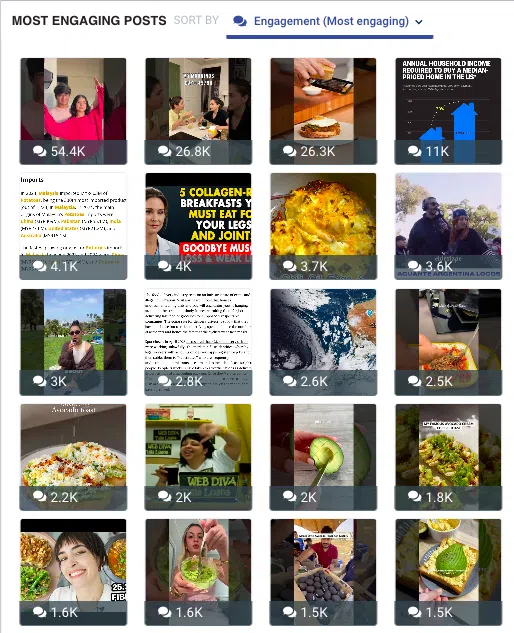
Learn more about how to incorporate user-generated content into your social strategy. Brand monitoring tools can help you find the UGC that’s generating the most buzz and engagement. This is critical when 70% of Gen Z find UGC helpful for buying decisions.
How does brand monitoring help you connect with influencers and journalists?
On social platforms, influencer partnerships are a $33 billion market and a key way to get your brand in front of new audiences. Beyond social networks, journalists covering your industry may be interested to know about newsworthy developments coming from your brand.
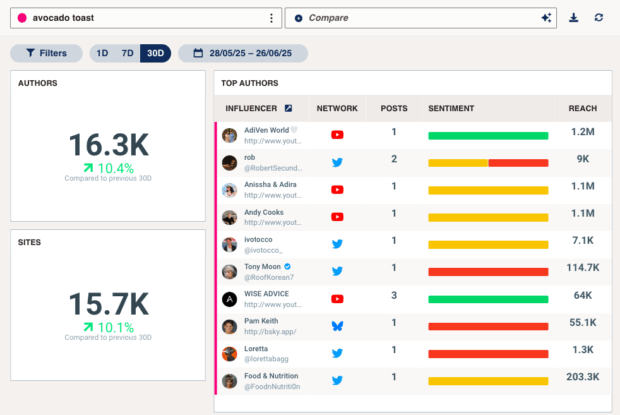
Brand monitoring helps you identify and understand these opinion leaders. Brand monitoring tools can also give you key insights to inform your initial message when you reach out to connect.
How can brand monitoring help with crisis management?
One of the highest-value applications of brand monitoring is catching a crisis before it spirals. A sudden spike in negative mentions, an angry post going viral, a product recall gaining traction on Reddit: these are the kinds of signals that brand monitoring surfaces in real time.
Without monitoring in place, many brands don’t learn about a brewing crisis until it’s already made the news. With it, you can often intervene while the conversation is still small.
Here are some early warning signs to watch for:
- Sudden spike in mention volume: An unusual jump in how often your brand is being discussed, especially outside your owned channels.
- Sharp drop in sentiment: A rapid shift from positive or neutral to negative sentiment across multiple sources.
- Viral negative content: A single post, review, or article gaining outsized engagement and shares.
- Employee or partner controversy: Negative coverage of someone publicly associated with your brand.
- Product complaints clustering: Multiple unrelated people reporting the same issue in a short timeframe.
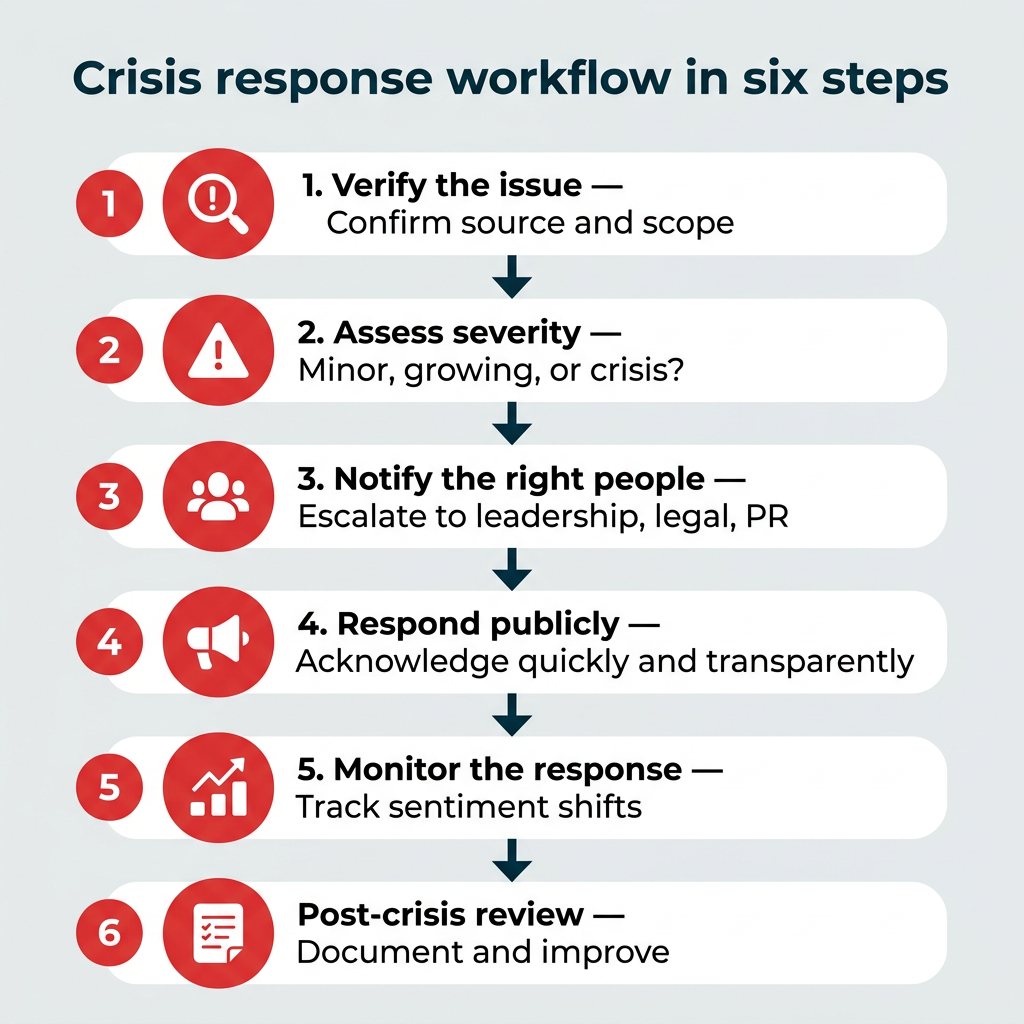
When your monitoring tools flag one of these signals, having a response plan already in place is critical. Here’s a basic crisis response workflow:
- Verify the issue. Confirm the source and scope of the negative conversation before reacting.
- Assess severity. Determine whether this is a minor complaint, a growing concern, or a full-blown crisis.
- Notify the right people. Escalate to leadership, legal, PR, or product teams based on pre-established guidelines.
- Respond publicly (if appropriate). Acknowledge the issue quickly and transparently. Speed matters.
- Monitor the response. Track how sentiment shifts after your response and adjust if needed.
- Conduct a post-crisis review. Document what happened, how you responded, and what you’d do differently.
The brands that weather crises best aren’t the ones that never face them. They’re the ones that see them coming and have a plan ready.
What should you monitor for your brand?
You’re probably already tracking and responding to direct messages and tagged social mentions of your brand. (If you’re not, please, start doing this right away!) But the conversation about your brand online extends well beyond those direct mentions that trigger notifications from the social media platforms themselves.
Here are some important areas to monitor with your brand monitoring tools.
What brand mentions should you track?
This is the most obvious and most important element to keep watch for. But, as we just said, it’s important to look beyond direct @mentions and tags of your brand name or products. Monitor all of the following, including common variations and misspellings:
- Your brand name
- Product names
- Mascot names
- Taglines or slogans
- Branded hashtags
- Executive/C-suite names
You can use keyword combinations to monitor different aspects of your brand health and public perception, like customer service, product quality, and campaign messaging.
What competitor keywords should you monitor?
You can learn a lot from your competitors. You can determine how deep to go on your competitor monitoring depending on how many competitors you have, and how closely their target audience mirrors yours.
For example, Coke and Pepsi would keep very close watch of each other. But they’re probably less concerned about what smaller craft cola brands are doing. They wouldn’t ignore these brands entirely, but they’d focus less of their attention on monitoring their every move.
For your top competitors, you might want to monitor all the same types of mentions and keywords listed above. The key will be to use more complex searches to see when they take action that could impact your brand, like releasing a new product, opening a new store, or launching a new campaign (especially with an industry influencer or spokesperson).
What industry keywords should you track?
Here you’re looking for terms that apply to your industry as a whole. These may be more general, but they give you a bird’s-eye view of what’s happening:
- Industry buzzwords
- Industry hashtags
- Names of new policies or regulations that apply to your industry (or relevant keywords)
- Activists/advocates/thought leaders in your industry
Why should you monitor brand ambassadors and partners?
Aligning your brand with any outside person or company comes with an element of risk, since you can’t control what they say and do. Brand monitoring helps ensure you’re aware of any challenges that could impact your own brand reputation. Here are a few things to monitor:
- Names of influencers and spokespeople
- Names of suppliers, vendors, and distributors
- Names of your shipping companies
What channels should you monitor for brand mentions?
The simple answer is that you should monitor conversations about your brand anywhere they are happening. Of course, when you first start your brand monitoring program, you might not know where brand conversations are happening.
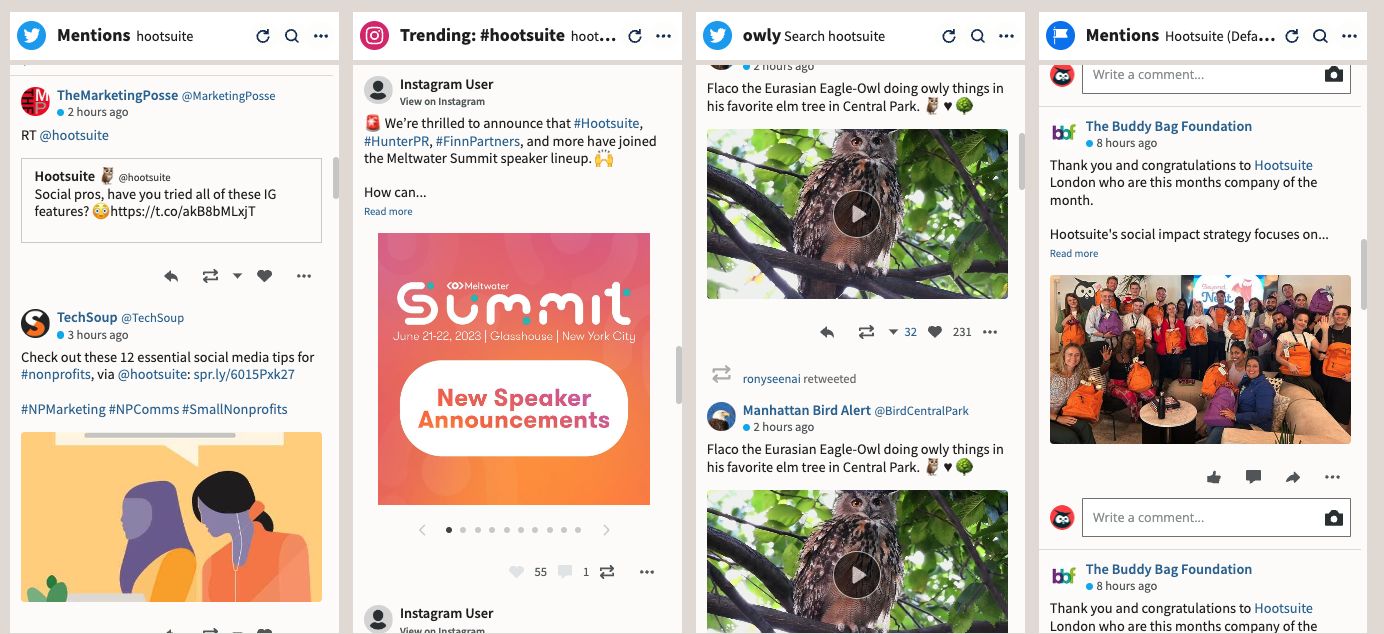
It’s always best to cast a wide net. A good brand monitoring tool will comb through millions of data sources for you. If you’re monitoring manually, you’ll need to be far more selective. Here are some key channels to keep an eye on:
- Social media: Facebook, Instagram, LinkedIn, TikTok, Bluesky, etc.
- Forums: Reddit, Quora, niche forums for your industry
- News sites: News articles from CNN, the BBC, etc., as well as more niche news sites for your industry and press release sites
- Print and broadcast media: Local and national newspapers, magazines, columnists, TV, and radio
- Blogs, newsletters, and podcasts: Hosted/written by relevant thought leaders in your industry
- Review sites: G2, Glassdoor, Trustpilot, etc.
How do you build a smart brand monitoring workflow?
Having the right tools is only half the equation. You also need a workflow that turns raw data into action. Here’s a summary of the seven steps that make up a smart brand monitoring workflow:
- Structure your alerts by urgency level
- Use Boolean operators (or AI) to filter noise
- Segment your monitoring by geography, product, or audience
- Have a plan for what to do with your data
- Put crisis management plans in place
- Engage with opinions about your brand
- Report findings to stakeholders
Now let’s break each one down.
1. How should you structure your alerts?
You don’t need to (and realistically can’t) take action on all of your brand monitoring findings every day. However, some things do require your immediate attention. Structure your alerts so you get the information when you really need it. Here’s a suggested system:
- Real-time alerts: For major dips in sentiment and emerging crises.
- Daily digests: Daily summaries of the conversation about your brand, industry, and competitors.
- Weekly or monthly roundups: Trends in sentiment, conversation volume, and emerging themes for more detailed analysis and strategy building.
2. How do Boolean operators and AI help target your search?
Boolean operators are the “ANDs,” “ORs,” and “NOTs” that allow you to make your monitoring searches much more specific.
AND helps you narrow your search by including more variables. OR broadens by including a number of different possibilities. And NOT excludes terms that could create false positives.
A couple of classic examples here are brands like Apple and Amazon, whose names are real words with their own meanings. NOT Boolean operators can help exclude results about orchards and rainforests.
Tip: Look for a brand monitoring tool that includes an AI-powered query builder. This allows you to state what you’re looking for in natural language rather than typing a long string of Boolean operators.
3. Why should you use segment monitoring?
If you only monitor your brand as a monolith, you can miss important pockets of data that highlight specific threats and opportunities.
For example, maybe people absolutely love one product, but they have some concerns about another. Your overall customer sentiment may still be firmly positive, so you could glaze over the problem. Monitoring at a more segmented level helps you spot more specific opportunities for action.
Try breaking things down by:
- Geography
- Product line
- Target demographic
Boolean operators can help here, or use a brand monitoring tool that can help you automate this.
4. How should you plan to act on your data?
Sure, it’s called brand monitoring. But monitoring is actually only half the job. For brand monitoring to be useful, you need to actually do something with the insights. Rather than gathering data for data’s sake, make a plan for how you’ll put your findings into action.
For example:
- Use customer feedback to guide development and new features
- Use areas of confusion to steer the creation of new help docs or explainers
- Create a marketing campaign based on positive online conversations happening in niche groups
5. Why do you need crisis management plans in place?
You’ll eventually uncover something that requires higher-ups or other teams to step in. It could be an emerging PR crisis, reputational damage, or a product that’s not living up to your brand promise.
Brand monitoring allows you to spot these issues quickly. But to address them quickly, you need a plan in place before they happen. Create very clear guidelines about what kind of findings require escalation and who to notify. (We covered a full crisis response workflow earlier in this guide.)
6. Should you engage with opinions about your brand?
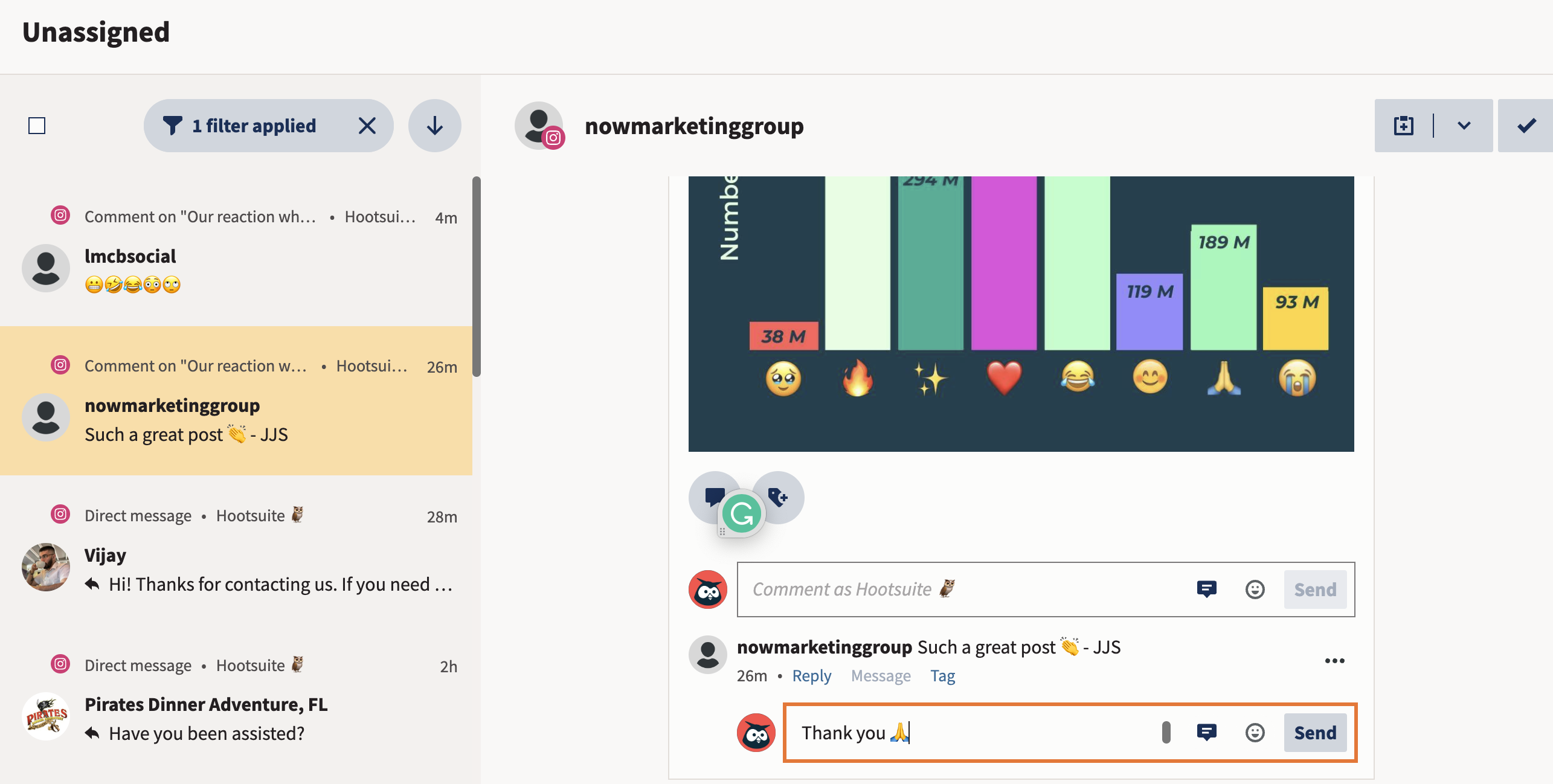
Some people will love you. Some will not. Either way, if people are expressing opinions about your brand, you may want to join the conversation.
Yes, it can be a good idea to engage with even those negative opinions. However, it’s important to remember never to feed the trolls. If you make an honest effort to resolve a negative experience but someone clearly just wants to trash you, it’s okay to back away. Others will see you’ve attempted to resolve the issue in good faith. The key is to show the public that you’re listening.
For positive opinions, engaging is of course a lot more fun. Thank people for their support and start to build relationships. This could lead to a new influencer partnership!
7. How should you report brand monitoring findings to stakeholders?
Brand monitoring data is only as valuable as the decisions it informs. If insights stay buried in a dashboard that only the social team sees, you’re leaving value on the table.
Build a regular reporting cadence that keeps leadership and cross-functional teams in the loop:
- Weekly snapshots for your immediate team: mention volume, sentiment shifts, and anything that needs a quick response.
- Monthly reports for marketing leadership: trend analysis, competitive benchmarking, and campaign impact tied to business KPIs like share of voice, brand awareness, and customer sentiment.
- Quarterly executive summaries for the C-suite: high-level narrative reports that connect brand monitoring insights to revenue, retention, and reputation.
The format matters, too. Dashboards work well for teams that want to explore data on their own. Narrative reports with key takeaways and recommended actions tend to land better with executives. Ideally, your brand monitoring tool lets you create both.
What features should you look for in brand monitoring software?
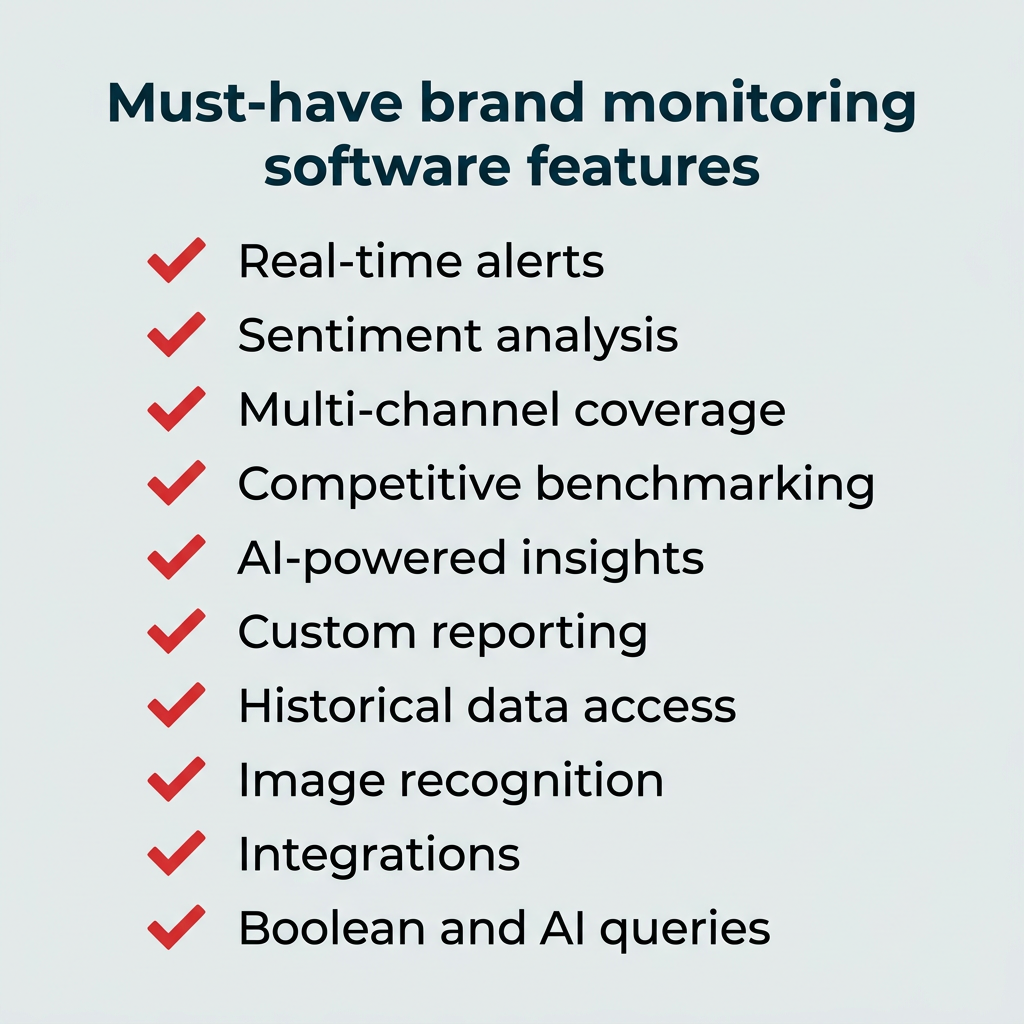
Not all brand monitoring tools are created equal. If you’re evaluating platforms, especially at the enterprise level, here are the features that matter most:
- Real-time alerts: Instant notifications when mention volume spikes or sentiment drops, so you can respond before a situation escalates.
- Sentiment analysis: AI-powered analysis that goes beyond positive/negative to capture nuanced emotions and intent.
- Multi-channel coverage: The ability to track mentions across social media, news, blogs, forums, podcasts, review sites, and broadcast media from a single platform.
- Competitive benchmarking: Side-by-side comparison of your brand’s share of voice, sentiment, and mention volume against competitors.
- AI-powered insights: Automated trend detection, topic clustering, and predictive analytics that surface patterns humans might miss.
- Custom reporting and dashboards: Flexible reporting that lets you build executive-ready summaries and team-level dashboards.
- Historical data access: The ability to analyze past conversations and trends, not just what’s happening right now.
- Visual and image recognition: Detection of your brand logo or products in images and videos, even when you’re not tagged or mentioned by name.
- Integrations: Connections to your existing tech stack, including CRM, helpdesk, and social media management tools.
- Boolean and AI query building: Advanced search capabilities that let you fine-tune what you’re tracking and filter out noise.
The right combination of features depends on your team size, the number of brands you manage, and how deeply you need to analyze the data. Free tools can get you started, but enterprise brands typically need a platform that covers most or all of the above.
What are the best brand monitoring tools in 2026?
There’s no shortage of brand monitoring tools on the market. The best one for you depends on your budget, your team’s needs, and how deeply you need to analyze the data. Here’s a look at the options, organized from free to enterprise-grade.
What are the best free brand monitoring tools?
These tools are a good starting point if you’re just getting into brand monitoring or working with a limited budget.
Google Alerts
Source: Google Alerts
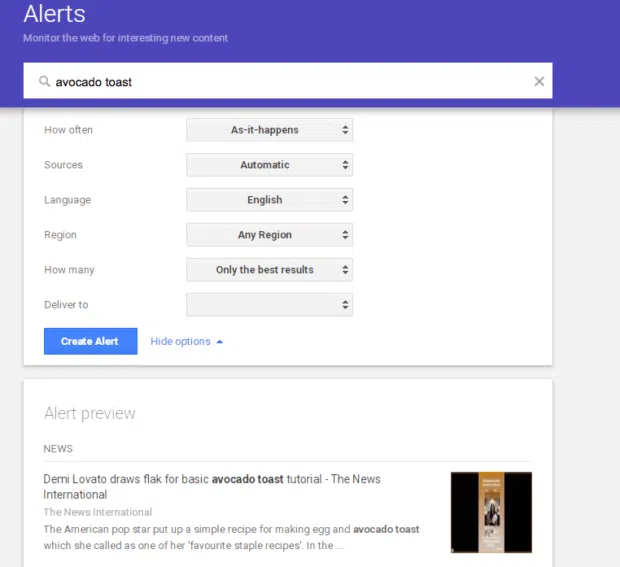
Google Alerts is a free, basic brand monitoring tool that alerts you whenever a new result for your search query appears in Google search results.
You can set alerts for your brand name, product names, competitor names, or industry keywords. Google will email you when new results appear, either as they happen or in a daily or weekly digest.
While Google Alerts is limited to web content indexed by Google (it won’t catch social media conversations or content behind paywalls), it’s a helpful starting point for tracking brand mentions in news articles, blogs, and public forums.
Frequently asked questions
How much does brand monitoring software cost?
What’s the difference between brand monitoring and social media monitoring?
How often should I check my brand monitoring dashboard?
Can brand monitoring help with crisis prevention?
What industries benefit most from brand monitoring?
How does brand monitoring integrate with social media management?
Save time managing your social media marketing strategy with Hootsuite. Publish and schedule posts, find relevant conversions, measure results, and more — all from one dashboard. Try it free today.
The post Brand monitoring: The 2026 guide for business impact appeared first on Social Media Marketing & Management Dashboard.