
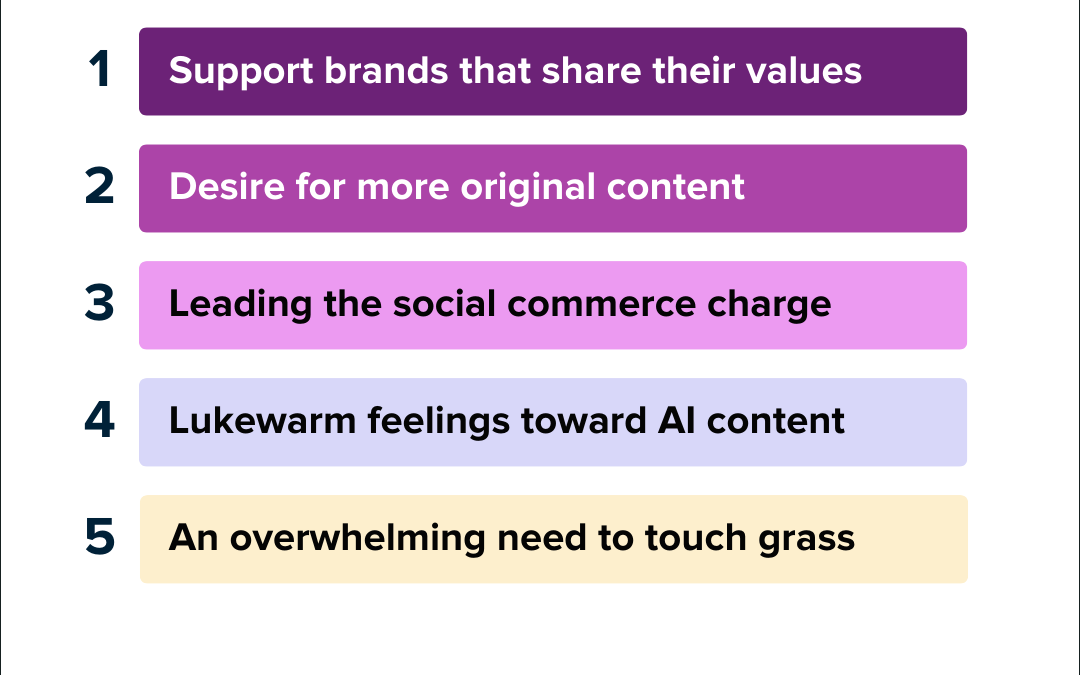
For Australian social media, 2026 is a reset year. The under-16 ban removed an entire age group from major platforms, while user behaviour across channels continues to change.
If your Australian social strategy is still based on last year’s data, now’s the time to update it. Arm your strategy with the latest social media demographics and use them with the best times to post on social media in Australia to rebuild your 2026 content schedule.
Executive Summary: 2026 Australian Social Media Demographics
| Generation | Age bracket (in 2026) | Most popular platforms | Key social behaviours |
|---|---|---|---|
| Gen Z | 16–29 | TikTok, Instagram, YouTube | Social search, visual commerce and short-form video discovery |
| Millennials | 30–45 | Facebook, Instagram, LinkedIn | Multitasking, brand authenticity seeking and B2B networking |
| Gen X | 46–61 | Facebook, YouTube, LinkedIn | Private messaging, brand responsiveness and long-form education |
| Baby Boomers | 62+ | Facebook, YouTube | Legacy platform loyalty, news consumption and family connection |
How has the under-16 ban reshaped social media demographics in Australia?
In December 2025, Australia began enforcing under-16 social media restrictions across major platforms like Facebook, Instagram, TikTok, Snapchat, X, YouTube and Reddit. This ‘ban’ affects Australian marketers in three ways:
- Your reachable audience is older. Gen Alpha and the younger half of Gen Z are off the table. The youngest user you can market to on social media is 16, and most of them already have income or influence over household spending.
- The early loyalty window has closed. Brand discovery on social now happens later, with users who already have buying habits and know what they like. That makes differentiation and conversion harder (and often more expensive).
- Online culture is changing. More adult voices than teen creators on Instagram, TikTok and Snapchat naturally impacts social media trends in Australia. You’ll see more conversations around finances, careers, relationships and lifestyle topics over memes and challenges.
The brands that do best will be the ones that pick up on these shifts early and adjust their content, targeting and messaging to match who’s on these platforms now.
How do social media behaviours differ by generation in Australia?
Every generation uses social media differently. Regardless of who you’re marketing to, it’s crucial to understand these distinctions. Master generational marketing using this breakdown of how each group is using social media in 2026.
Gen Z (16+): Navigating social search and visual commerce
Nicknamed digital natives, Gen Z users (or ‘Zoomers’) were born into the era of the internet. That’s why it’s no surprise they’re some of the most active social media users in the world. Discover how Gen Z is using social media in Australia:
- Gen Z users in Australia spend an average of 8 hours and 40 minutes browsing social media each week. That’s more time than any other generation, which means more chances to reach them, but also more competition for their attention. If you’re not showing up consistently on the platforms they use most, someone else is.
- Australian Zoomers spend most of their social media time on TikTok, followed by YouTube and Instagram. These three platforms should be your priority channels for any Gen Z-focused campaign in Australia. If your budget is spread evenly across every platform, you’re spending in the wrong places. Check out these TikTok video ideas for Australia.
- Gen Z is most likely (57%) to turn to social first for product discovery and holiday gift ideas compared to other generations. According to Sprout Social’s Q4 2025 Pulse Survey, social media is the shopping aisle of choice for this generation. Your content needs to do the selling, because it’s often the first and only touchpoint before a purchase decision.
- When looking for information, 41% of Gen Z prefer using social over traditional search engines (32%) and chat-based AI tools (11%). Sprout’s Q2 2025 Pulse Survey shows social is the dominating search engine for this generation. Your posts should be optimised not just for engagement and conversion, but for discoverability as well.
- Gen Z are the most likely to unfollow, mute or block accounts because their content felt like AI slop. In fact, Sprout’s data shows around 50% of Zoomers have already done so. Your Gen Z audience will cut you off if your content feels low-effort or machine-generated. Authenticity isn’t optional for brands anymore.
- Around 63% of Gen Z consumers are more likely to buy from companies that speak up about specific causes and topics in the news. According to Sprout Social’s 2026 Content Strategy Report, this number is higher than any other generation. You might think you’re playing it safe by staying silent on issues that matter to Zoomers, but it’s giving them a reason to choose your competitor instead.
- Gen Z rarely skip longer videos (>60 seconds) on Instagram and TikTok. Gen Z will watch your long-form content if it’s worth their time. Don’t default to short clips because you assume they won’t pay attention. Test longer formats and let the data guide you.
- Zoomers want to be entertained first and educated second. Sprout’s Q1 2026 Pulse Survey revealed Zoomers want brands to prioritise episodic content (27%), behind-the-scenes content (26%) and memes and skits (30%) more than educational posts (34%) and community-focused content (19%) on social media.
- Gen Z’s #1 ask of brands in 2026 is engaging in smaller digital spaces. According to Sprout’s Q4 2025 Pulse Survey, Zoomers want brands to prioritise interacting with audiences away from the main feed in more intimate spaces like Instagram Broadcast Channels, Reddit and AMAs.
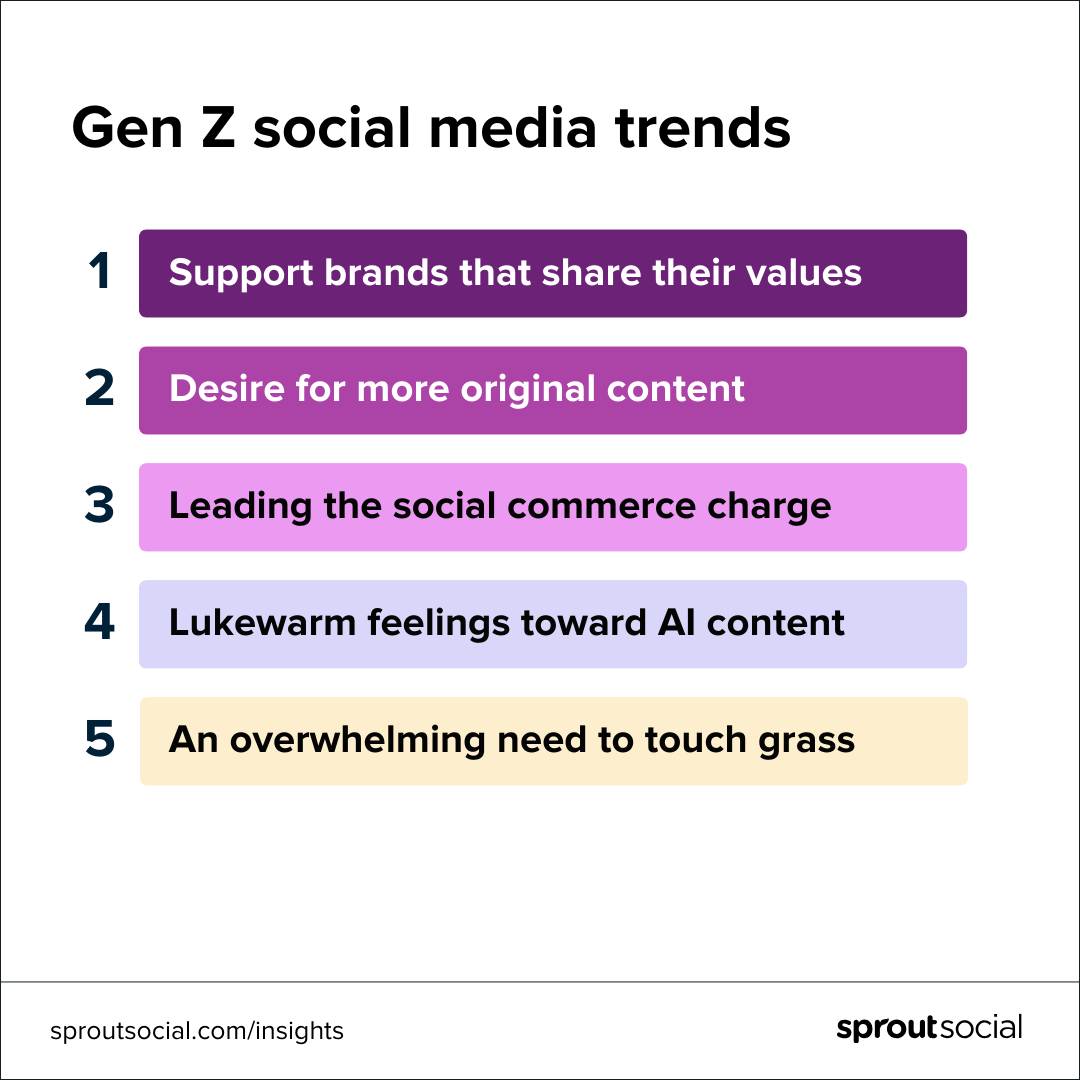
Millennials: Multitasking and craving brand originality
Millennials are the largest working-age group on Australian social media. They use social media avidly, but they’re getting pickier about who gets their attention. This generation grew up watching digital marketing evolve, and they can spot a lazy campaign from a scroll away.
Let’s look at how Millennials are using social in Australia:
- Millennials in Australia spend around 6 hours and 10 minutes browsing social media weekly. That’s about two and a half hours less than Gen Z, but still a significant window. Millennials are intentional with their time online, so your content needs to earn its place in their feed rather than just fill it.
- Australian Millennials spend most of their social media time on Facebook, followed by Instagram and YouTube. Facebook is still the go-to for this generation. If you’re targeting Millennials and you’ve been pulling budget away from this platform, you may be neglecting your most active audience.
- In 2026, Millennials want brands on social to prioritise human-generated content and personalised customer service above everything else. This generation is actively pushing back against generic, automated content. They want to feel like there’s a person behind the brand, and they expect a sincere response when they reach out.
- Millennials are leading adopters of creator-driven platforms like Substack and Patreon. More than half of Millennials (53%) are spending time on platforms built around individual creators rather than algorithms. For marketers, this shows higher interest in deeper, subscription-based relationships.

Generation X: Valuing responsiveness and risk appreciation
Gen X is often overlooked in social media strategy, but they’re one of the most valuable audiences in Australia. They’re at the peak of their earning power and are more active on social than most marketers think. The difference lies in usage: Gen X users treat social media as a practical tool and reward brands that respect their time. Here’s how they show up:
- Gen X users in Australia spend an average of 4 hours and 20 minutes browsing social media each week. Less time on-platform means every impression counts more. Gen X won’t scroll past your brand ten times a day. You get fewer shots, so make each one relevant and worth stopping for.
- Australian Gen X users spend most of their social media time on Facebook, followed by YouTube and Instagram. Facebook is the dominant platform for this generation by a wide margin. If you’re running campaigns targeted at Gen X and not prioritising Facebook, you’re missing where they actually spend their time.
- Gen X still relies on Google to find information, with only 15% using social search. Unlike Gen Z, this audience isn’t looking for products on TikTok or Instagram. According to Sprout’s Q2 2025 Pulse Survey, Gen X is searching on Google first, which means your SEO and paid search strategy matters just as much as your social content when reaching Gen X.
- According to Sprout’s Q2 2025 Pulse Survey, half of Gen Xers said social media had no impact at all on their financial decisions. For this generation, social media builds awareness and trust over time rather than driving impulse purchases. Think long-term brand building with this audience, not flash sales and limited drops.
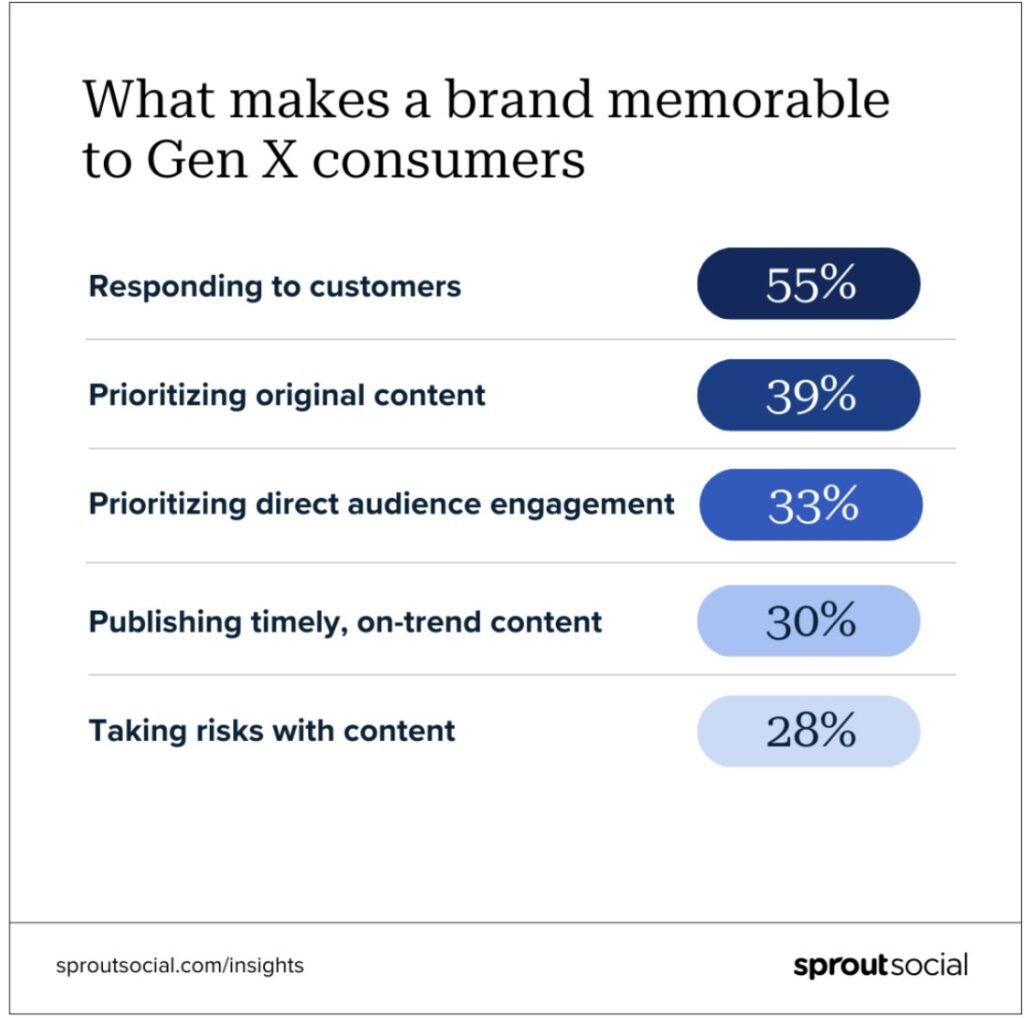
- The top traits that make a brand memorable to Gen X are responding to customers (55%), prioritising original content (39%) and engaging directly with their audience (33%). Gen X notices when you reply. More than half say responsiveness is what makes a brand stand out. If your response times on Facebook are lagging or your DMs go unanswered, you’re losing credibility with this generation.
Baby Boomers: Staying loyal to legacy platforms and news consumption
Baby Boomers spend the least time on social media, but they bring decades of brand loyalty and the highest disposable income of any generation. They’re also the hardest audience to win over. What moves Boomers is consistency, quality and feeling like a brand respects their time. Here’s what the data tells us:
- Baby Boomers in Australia spend an average of 3 hours and 5 minutes browsing social media each week. That’s less than half of what Gen Z spends. Instead of scrolling endlessly, Boomers check in, engage with what’s relevant and move on. Your content needs to deliver value up front or it won’t get a second look.
- Australian Baby Boomers spend most of their social media time on Facebook, followed by YouTube. Facebook is where this generation lives online, and YouTube is a distant second. If you’re targeting Boomers, your Facebook strategy needs to be strong. Spending on TikTok, Snapchat or even Instagram to reach this audience is largely wasted budget.
- Most Baby Boomers (67%) turn to TV first to discover breaking news. Only a quarter find social media useful for this purpose. Boomers don’t treat social media as a news source the way younger generations do. They come to these platforms for connection, not information. Your content strategy for this audience should lean into practical value and relatability rather than trendy or flashy topics.
- Sprout’s data shows nearly half of Baby Boomers said a brand’s values had zero impact on purchase decisions. This is a sharp contrast to Gen Z, where brand values drive buying behaviour. For Boomers, product quality, price and reliability matter more than your mission statement.
- Boomers expressed the strongest dislike for AI slop, with 56% saying they would be very unlikely to interact with it. More than half of Boomers will disengage the moment content feels automated. Considering this generation has the lowest tolerance for AI-generated filler, your content aimed at Boomers needs a distinct human touch.
What are the age demographics for the most popular social media platforms in Australia?
Australia has a huge social media audience, but each platform attracts a different kind of user. Some are used by just about everyone, while others lean younger, more professional or more interest-driven. It’s important to understand who actually uses each platform before you plan your content or campaigns so you allocate your budgets correctly.
| Platform | Largest age group | Gender distribution (AU) | Primary use case |
|---|---|---|---|
| 25–44 (43.6%) | 50.9% female, 46.6% male | Local community and groups | |
| 25–34 (29.7%) | 54.8% female, 44.6% male | Influencer commerce and aesthetics | |
| TikTok | 25–34 (45.6%) | 46.4% female, 53.6% male | Entertainment and social search |
| 25–34 (39.5%) | 47.2% female, 52.8% male | B2B thought leadership |
You can also check out more social media statistics for Australia here.
Who uses Facebook the most in Australia?
Facebook’s biggest audience in Australia is adults aged 25 to 44, with the largest segment being men aged 25–34 (12.2%), followed by women aged 25–34 (11.3%).
Overall, Facebook’s ad audience skews slightly female, with 50.9% female and 46.6% male. The platform is most popular with broad adult audiences rather than teens or very young users.
Who is the primary audience for Instagram in Australia?
Instagram’s primary audience in Australia is younger adults, especially the 18–34 age group. Its largest audience segments are women aged 25–34 (15.2%), men aged 25–34 (14.5%) and women aged 18–24 (11.2%).
Overall, Instagram also skews female, with 54.8% female and 44.6% male in its ad audience. In other words, Instagram is strongest with younger Millennial and Gen Z adults, particularly women. If you’re looking for content inspiration, check our guide to business Instagram ideas for Australian brands.
How does the LinkedIn demographic serve B2B marketers?
LinkedIn is valuable for B2B marketers because its Australian audience is concentrated in working age adults, especially 25–54-year-olds. The biggest segments are men aged 25–34 (20.6%), women aged 25–34 (18.9%) and men aged 35–54 (14.4%).
LinkedIn also reports a potential ad reach of 18 million in Australia. However, that figure is based on registered members, not active users. Still, the age profile makes the platform especially useful for reaching professionals and decision-makers in a B2B context. Check out these LinkedIn post ideas for Australian brands to gather inspiration.
What is the average age of a TikTok user in Australia today?
On average, most TikTok users in Australia are now Gen Z and Millennial adults instead of teens, and the under-16 ban will likely accelerate that shift.
The platform’s largest audience segments are men aged 25–34 (26.3%), women aged 25–34 (19.3%), women aged 18–24 (15.0%) and men aged 18–24 (13.1%). After that, the audience drops sharply in older brackets. Find out more TikTok statistics for Australia here.
What is the demographic breakdown for YouTube in Australia?
YouTube has one of the largest, most diverse audiences in Australia. Its potential ad reach is 21 million, which is around 77.7% of the total population. YouTube also has an almost even gender split of 50.8% female and 49.2% male.
By age, YouTube is spread across every adult group rather than concentrated in one narrow segment. The largest shares are women 65+ (8.9%), women 35–44 (8.7%), women 25–34 (8.4%), men 25–34 (8.4%) and men 35–44 (8.4%). Even the younger and older brackets are all sizeable, making YouTube a truly cross-generational platform in Australia.
Who uses Pinterest, Snapchat and X (formerly Twitter)?
Pinterest in Australia skews heavily female and younger adult. The largest age group on the platform is 25–34 (32.7%), followed by 18–24 (27.6%). Together, they make up about 60.3% of Pinterest’s ad audience in Australia. The audience is also strongly female-led, with women making up about 72.2% of the total.
Snapchat is more balanced by gender, with 51.4% female and 48.2% male, but it’s strongest with younger adults. Its largest segments are women aged 18–24 (20.0%) and men aged 18–24 (18.9%), showing that Snapchat is still primarily a younger platform in Australia.
X (formerly Twitter) is a smaller but distinctly male-leaning platform. Its ad audience is 70.7% male and 29.2% female, with the biggest segments being men aged 35–49 (17.6%), 25–34 (26.9%) and 18–24 (15.9%).
How do Australian demographics impact social commerce and news consumption?
Australians don’t use social media the same way across generations, and the gap is widest when it comes to two things: buying and staying informed.
Understanding where each age group falls on both can help you decide what role your social content needs to play for each audience.
Social media for commerce
According to Australia Post’s 2026 eCommerce Report, around 60% of Australian shoppers now use social media to discover products. And one in two have bought something after seeing it on social media. But that behaviour skews heavily toward younger users.
Let’s break down some Australian social commerce stats by generation:
- Gen Z: 69% of Australian Zoomers use social media for product discovery. They’re also the generation most likely to complete a purchase without leaving the platform.
- Millennials: 47% shop online weekly, with the highest share of total retail spend going to online purchases at 28.5%.
- Gen X: 32% shop online weekly, and more than half say they go online specifically to take advantage of promotions rather than to browse or discover.
- Baby Boomers: Just 23% shop online weekly. 80% say product quality is the most important factor in their purchase decisions. Interestingly, social media plays almost no role in their buying journey.
For marketers targeting Gen Z and Millennials, social content needs to sell. For Gen X, social builds familiarity, but promotions and deals close the sale. For Boomers, social is a trust signal at best, and your product pages and reviews do most of the work.
Social media as a news source
The generational divide in Australia on news consumption is also worth noting:
- Gen Z and Millennials prefer social media over TV for news. Their social feeds are a mix of headlines, creator content and brand posts all competing for attention.
- Gen X flips the order, preferring TV first, then YouTube, then social media. Their news habits are more deliberate and less trend or feed-driven.
- Baby Boomers in Australia don’t rank social media in their top three news sources at all. Over half prefer TV, followed by newspapers and then radio.
What this means for marketers
This data points to a major takeaway for brands.
Instead of asking “where does each generation spend time?” you need to ask “what job is social media doing at each stage of their purchase decision?”
- For Gen Z, social is the entire funnel, from discovery to checkout.
- For Millennials, it’s discovery and validation, but they’ll often finish the purchase elsewhere.
- For Gen X, it’s barely part of the funnel at all unless there’s a promotion attached.
- For Boomers, social’s value is long-term brand recognition instead of conversion.
The same logic applies to news.
When Gen Z and Millennials scroll past a headline and then see your ad, those two pieces of content shape each other. Your brand exists in the context of their news feed. For Gen X and Boomers, those experiences are separate. They get news from TV and read your social post in a completely different headspace.
Build your content calendar with these distinctions in mind. A single post published across every platform with the same objective and audience will underperform for all of them.
How can you use these Australian social media demographics to refine your strategy?
Australian social media demographics show you where to focus, but the biggest advantage comes from turning that insight into action.
That’s where a platform like Sprout Social helps. Use it to track audience behaviour, monitor conversations with social listening, measure performance by channel and spot where exactly your target demographic is most engaged. Try Sprout Social free for 30 days.
The post Social media demographics Australia: 2026 age & user statistics appeared first on Sprout Social.